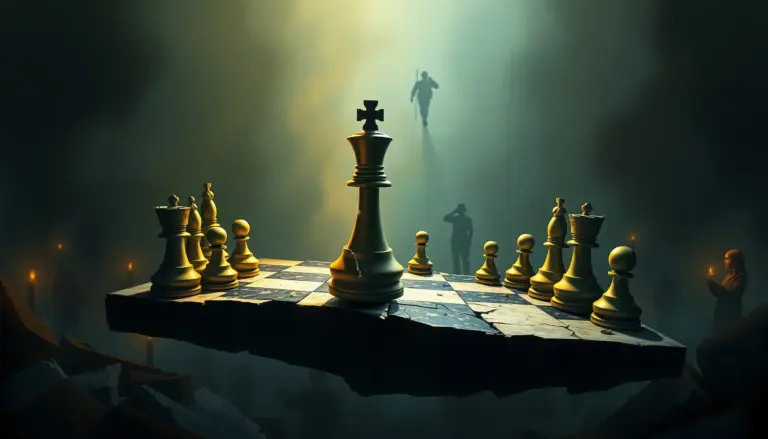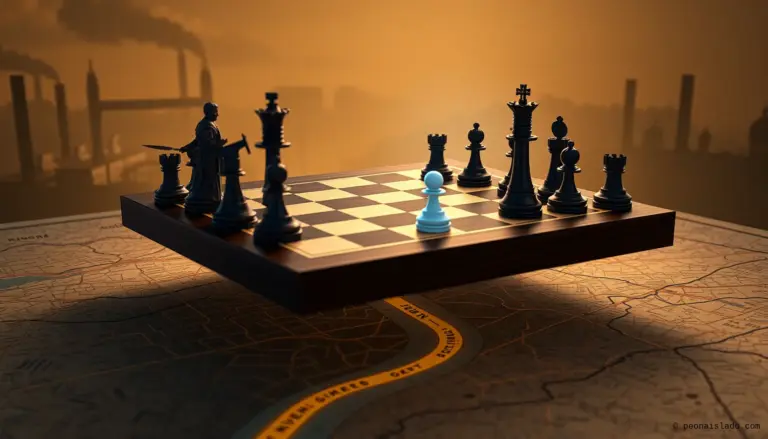
Chess has been for centuries the scene of intellectual battles where the human mind faces off at its best.. Considered by many as the mental sport par excellence, Its competitive nature sparks passionate debates: is it really the most demanding in the world? Unlike other strategy games or intellectual disciplines, Chess combines unique elements such as the absence of chance, tactical depth and psychological pressure in real time. But, What differentiates it from other equally demanding mental activities? In this article, We will explore the characteristics that make chess a mental sport like no other., analyzing its complexity, its impact on the brain, its evolution as a competitive discipline and how it compares to other activities that also test human intelligence. In the end, We will try to answer if it deserves the title of “the most competitive mental sport in the world”.
The strategic complexity: a universe of possibilities
chess is, first of all, a perfect information game. Unlike poker or bridge, where chance and hiding cards play a crucial role, In chess, both players have access to all the information available from the first move. This characteristic makes it a purely intellectual battlefield, where each decision must be calculated with millimeter precision. According to the mathematician Claude Shannon, The number of possible games in chess exceeds the number of atoms in the observable universe, estimated at 10120 (the call “Shannon number”). This figure, although theoretical, illustrates the vastness of the decision tree a player must navigate.
The strategic depth of chess is not limited to the number of possible moves, but to their quality. An error in a play can be irreversible, and the ability to anticipate long-term consequences is what separates grandmasters from casual players. For example, in high level games, players analyze variants that extend up to 20 o 30 moves ahead, evaluating not only the current position, but also the opponent's possible responses and counterresponses. This ability, known as “deep calculation”, It is one of the most difficult to master and requires years of practice and study.
Besides, Chess requires a balance between tactics and strategy. Tactics refer to specific sequences of movements that seek an immediate advantage, like a checkmate or material gain. The strategy, instead, involves long-term plans, how to control the center of the board, weaken the opponent's pawn structure or activate your own pieces. Mastering both aspects is essential, and the ability to switch between them depending on the circumstances is what defines elite players.. In this sense, Chess is not just a game of memory or calculation, but also creativity and adaptability.
The impact on the brain: training for cognitive excellence
Numerous studies have shown that chess has a profound impact on brain development.. Playing chess regularly improves cognitive skills such as memory, the concentration, problem solving and logical thinking. A study published in the *New England Journal of Medicine* found that people over 75 years practicing challenging mental activities, like chess, had a lower risk of developing dementia. This is because chess stimulates neuroplasticity, that is to say, the brain's ability to form new neural connections and adapt to new challenges.
But chess not only benefits memory or logic. It also has a significant impact on emotional intelligence and stress management.. In high level competitions, Players must deal with the pressure of making decisions in limited time, often under the gaze of thousands of spectators or with million-dollar prizes at stake. A study conducted by the University of Chicago in 2011 revealed that chess players develop a greater tolerance for frustration and a superior ability to manage anxiety in high-pressure situations. This is because, during a game, every mistake can be costly, and learning to recover from them is a crucial skill.
Another fascinating aspect is how chess activates multiple areas of the brain simultaneously.. A neuroimaging study conducted by the University of Konstanz in Germany showed that, during a game, regions such as the parietal lobe are activated (associated with spatial processing), the frontal lobe (related to planning and decision making) and the limbic system (in charge of emotions). This simultaneous activation of different brain areas is what makes chess such a complete and demanding mental exercise..
The evolution of chess as a competitive sport
Chess has come a long way since its origins in 6th century India.. What began as a pastime for the intellectual elite has become a global sport with millions of practitioners and a professionalized competitive structure.. Nowadays, the International Chess Federation (FIDE) organizes tournaments in more than 190 countries, with a rating system based on Elo, a mathematical method that measures the relative strength of players. This system, developed by Hungarian physicist Arpad Elo, allows you to compare the level of players objectively and has been adopted by other mental sports, like go or scrabble.
The professionalization of chess has led to the creation of elite circuits, such as the Grand Chess Tour or the World Chess Championship, where the best players in the world compete for prizes exceeding one million dollars. These tournaments not only require an exceptional technical level, but also rigorous physical and mental preparation. Elite players usually train between 6 y 8 hours a day, analyzing games, studying openings and working with specialized trainers. Besides, They must maintain strict discipline in their diet, sleep and exercise routine to optimize your performance.
A key aspect of competitiveness in chess is time control. In professional tournaments, Players have a limited time to make their moves, which adds an extra layer of pressure. For example, in quick games (with less than 15 minutes per player), the ability to make quick and accurate decisions is as important as theoretical knowledge. In classic games (with more than an hour per player), mental endurance and the ability to maintain concentration for hours are essential. This combination of speed and precision is what makes chess such a demanding mental sport..
Besides, chess has been able to adapt to the digital age. Platforms like Chess.com or Lichess have democratized access to the game, allowing millions of people to play online and compete in virtual tournaments. This has led to an unprecedented increase in the number of players, but it has also intensified competition. Nowadays, the young players, like the Norwegian Magnus Carlsen or the Chinese Ding Liren, They dominate the international scene thanks to their ability to combine classical knowledge with modern analysis tools., like chess engines (like Stockfish or Leela Chess Zero), that can evaluate millions of positions per second.
Comparison with other mental sports: what differentiates them?
Chess is not the only mental sport that requires a high level of competition. Other disciplines, like go, the bridge, poker or even eSports, They also test intelligence, strategy and mental resistance. However, Each of these activities has characteristics that make them unique, and comparing them can help us understand what makes chess such a special mental sport..
El go: the simplicity that hides complexity
El go, originally from china, It is one of the oldest strategy games in the world. Unlike chess, which is played on a board 64 squares with pieces that have specific movements, Go takes place on a board of 19×19 lines (361 intersections) with black and white stones that do not move once placed. This simplicity in the rules contrasts with an overwhelming strategic depth. While in chess the objective is to capture the king, In go the objective is to control more territory than the opponent.
The main difference between chess and Go lies in the nature of their strategies. in chess, the tactic (specific sequences of movements) It is essential, while in the go the long-term strategy (control areas of the board) dominate the game. Besides, Go has a decision tree even bigger than chess: It is estimated that the number of possible games in Go is 10761, an astronomical figure. However, Go lacks the time pressure and psychological intensity of chess, since the games tend to be longer and less explosive.
The bridge: the game of communication and deception
Bridge is a card game played in pairs., where communication between colleagues is key. Unlike chess, where the information is perfect, In bridge, players must infer their opponents' cards based on subtle cues and the bidding system.. This adds a layer of psychological complexity, since players must learn to “file” your opponents and communicate in a coded way with your partner.
However, Bridge relies heavily on memory and the ability to remember cards that have already been played. Although it is a very demanding mental sport, its collaborative nature and the presence of chance (cards are dealt randomly) They differentiate it from chess, where success depends exclusively on individual skill and calculation capacity.
poker: the psychology of deception
Poker is another mental sport that has gained popularity in recent decades., especially with the rise of online platforms. Unlike chess, poker combines skill with chance, since the players do not know their opponents' cards. This makes it a game of probabilities., where the ability to read rivals and manage risk is as important as technical knowledge.
Poker requires great emotional intelligence, since players must learn to control their emotions and detect the “tells” (unconscious signals) of his opponents. However, the presence of chance and the lack of perfect information keep him away from chess, where each decision is the result of a cold and objective calculation. Besides, in poker, a player can win a hand with a weak hand if he manages to deceive his opponents, something that does not happen in chess, where the strength of the position is objective.
eSports: the fusion of reflexes and strategy
eSports, like *League of Legends* or *Dota 2*, have gained ground as mental sports in the digital age. These games combine real-time strategy with quick reflexes and hand-eye coordination. Unlike chess, where reflection time is more flexible, In eSports, decisions must be made in fractions of a second, which adds an extra layer of stress.
However, eSports rely heavily on muscle memory and reaction capacity, skills that are not so relevant in chess. Besides, the collaborative nature of many eSports (it is played in teams) differentiates them from chess, what is an individual sport. Although eSports are mentally demanding, Their focus on speed and coordination distances them from the strategic depth and patience that chess demands..
Conclusion: Does chess deserve the title?
After analyzing the characteristics that make chess a unique mental sport, we can conclude that its combination of strategic complexity, brain impact, competitive evolution and psychological demand position it as one of the most competitive mental sports in the world. Its absence of chance, The depth of its decisions and the pressure it exerts on the human mind differentiate it from other disciplines such as go, the bridge, poker or eSports, each with its own strengths and challenges.
Chess not only tests calculation skills and memory, but also creativity, mental resilience and emotional intelligence. Your competitive structure, with elite tournaments and an objective ranking system, makes it a sport where individual merit is the only determining factor. Besides, its ability to adapt to the digital age, without losing its classic essence, demonstrates its validity and relevance in the modern world.
However, the title of “most competitive mental sport” it is not absolute. Other disciplines, like go or bridge, offer equally profound intellectual challenges, although with different approaches. What is undeniable is that chess represents the maximum expression of pure mental competition., where the human mind faces itself in an uncompromising duel. In a world where artificial intelligence already surpasses humans in this game, Chess remains a reminder of how far human intellectual capacity can go when subjected to rigorous training and limitless competition..
Ultimately, Although the debate about which is the most competitive mental sport may continue, chess, with its rich history, its strategic depth and its impact on the brain, stands as a strong candidate for the throne. More than just a game, It is a mirror of the human mind in its constant search for excellence.