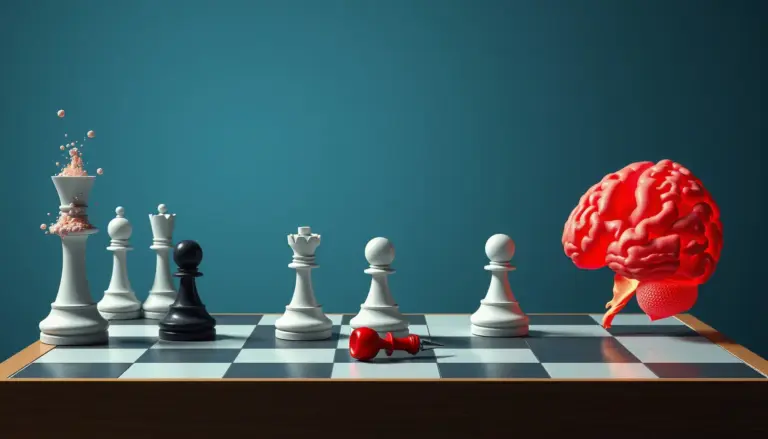
Chess has been the intellectual battlefield par excellence for centuries., where the strategy, Creativity and analytical skills are tested in every movement. However, in recent decades, the emergence of artificial intelligence (IA) has radically transformed the way professionals prepare, compete and understand the game. What started as an analysis tool has evolved into an indispensable ally, capable of challenging even grandmasters and redefining the limits of what is possible on the board. But, To what extent has AI changed the preparation of chess players?? Is it a revolution that democratizes knowledge or a dependency that threatens the human essence of the game? In this article, We will explore the profound impact of AI on professional chess, from its influence on training to its role in the evolution of openings, going through the ethical dilemmas and the new skills it requires of the players.
AI as a personalized trainer: beyond books and teachers
Before the arrival of AI, The preparation of a professional chess player depended largely on his ability to study classical games., memorize openings and work with human coaches. The chess books, like those of My System by Aron Nimzowitsch o Think like a great teacher de Alexander Kotov, They were the bible of entire generations. However, these resources, although valuable, They had limitations: They were static, they did not adapt to the level of the player and, in many cases, They became obsolete over time.
AI has changed this paradigm by offering personalized and dynamic training. Programs like Stockfish, Leela Chess Zero o AlphaZero They not only analyze games with a depth unattainable for a human, but also identify patterns, specific weaknesses and opportunities for improvement for each player. For example, A grandmaster can upload his own games to a platform like ChessBase o Lichess and receive a detailed report on your recurring errors, the openings in which he loses the most time or the positions in which his evaluation differs from that of the engine.
But the real qualitative leap is in the ability of AI to simulate game scenarios. Unlike a human trainer, who can propose exercises based on your experience, AI generates complex and personalized positions, adapted to the player's style. For example, If a chess player has difficulties with rook endings, AI can create a series of progressive exercises, from basic to advanced, with immediate feedback. This not only speeds up learning, but it also makes it more efficient, since the player does not waste time on concepts that he already masters.
Besides, AI has democratized access to high-level training. Before, Only players with financial resources could afford elite coaches or trips to tournaments to face strong rivals.. Hoy, Anyone with a computer and internet connection can analyze their games with state-of-the-art engines, study the most modern openings or even play against AI versions that imitate the style of the best players in the world. This has leveled the playing field., allowing emerging talent from anywhere in the world to compete at the highest level.
The revolution in openings: when theory is written in seconds
The study of openings has always been one of the cornerstones of chess preparation. For centuries, players spent hours memorizing variants, analyze reference games and anticipate the opponent's responses. However, AI has transformed this process into something almost unrecognizable. What once required years of study can now be solved in a matter of seconds, and what was once considered innovative can become obsolete in weeks.
One of the most significant changes is the speed with which AI discovers and perfects new opening lines. Before, A theoretical novelty could take months or even years to be refuted or accepted by the chess community.. Hoy, engines like Stockfish o AlphaZero can analyze millions of positions in minutes, identifying weaknesses in classic openings and proposing alternatives that humans would never have considered. For example, the King's Indian Defense, a popular opening in the years 70 y 80, has seen how AI has found defensive resources that were previously thought impossible, forcing players to rethink their approach.
But the impact goes beyond mere variant optimization.. AI has introduced completely new concepts in chess, like the positional dynamics o to material compensation evaluation. For example, AlphaZero, developed by DeepMind, demonstrated that in certain positions it is preferable to sacrifice material in exchange for initiative or spatial control, even when traditional engines evaluated the position as unfavorable. This has led professional players to rethink their intuition and adopt a more flexible approach., where the value of the pieces is no longer absolute, but relative to the context of the position.
However, This revolution has also generated challenges. Overreliance on AI in opening preparation can lead to a homogenization of the game, where all players follow the same lines recommended by the engines, reducing creativity and the surprise factor. Besides, The speed with which theories are updated makes it almost impossible to stay up to date without spending a disproportionate amount of time studying. This has led some players to specialize in very specific openings., mastering a few lines perfectly instead of having a broad but superficial repertoire.
Another side effect is dehumanization of the preparation. Before, Players developed their own style based on their understanding of the game and their experience.. Hoy, many blindly trust AI recommendations, even when they contradict your intuition. This can be dangerous, since the AI, although powerful, does not always take into account psychological factors or the opponent's playing style. For example, an aggressive player might feel uncomfortable in a position that the AI evaluates as slightly favorable, simply because it doesn't suit your way of playing.
The ethical dilemma: How far should AI help go??
The integration of AI into professional chess has raised a number of ethical questions that go beyond mere training efficiency.. One of the most controversial is the use of engines during games, either directly or indirectly. Although the rules explicitly prohibit the use of electronic devices during tournaments, the line between AI preparation and “technological doping” has become increasingly diffuse.
The most famous case was that of Hans Niemann, a young American grandmaster accused in 2022 of cheating in a game against Magnus Carlsen, the then world champion. Although the tests were inconclusive, The scandal revealed a growing problem: the difficulty of detecting the use of AI in real time. Today's engines are so powerful that even a superficial analysis of a position can reveal the best play, and some players might be tempted to use hidden devices or even receive signals from accomplices off the board.
But the ethical dilemma is not limited to fraud. There is also the question of whether AI is distorting chess as a mental sport. If a player can win games simply by following the recommendations of an engine, where is the human merit? Some argue that AI is raising the level of the game, forcing players to be more precise and creative. Others, instead, They believe that it is eliminating the human factor, reducing chess to a competition of who has the best algorithm.
Another ethical aspect is access inequality. Although AI has democratized training in many aspects, It has also created a gap between those who can afford the most advanced tools and those who cannot.. For example, a player with access to AlphaZero or to private databases of AI-analyzed games will have a significant advantage over someone who only uses free engines like Stockfish. This raises questions about fairness in professional chess, especially in a sport where success increasingly depends on technology.
Finally, there is the debate about the future of chess. If AI continues to advance at the current pace, Will there come a time when humans can no longer compete? Some experts, like the former world champion Garry Kasparov, They argue that AI is not a threat, but an opportunity for humans to evolve. Kasparov has pointed out that, just like athletes use technology to improve their performance, Chess players can use AI to take their game to the next level. However, Others fear AI will eventually make human chess irrelevant, turning it into a mere spectacle where players imitate machines instead of expressing their own creativity.
The new skills of the modern chess player: beyond calculation and memory
While AI has radically changed the way chess players prepare, It has also redefined the skills that are valued in a professional player. Before, Success in chess depended largely on calculation ability, memory and experience. Hoy, although these skills are still important, Others have emerged that are equally or more relevant in the age of AI.
One of the most important is the ability to filter information. In a world where AI generates enormous amounts of data, the real challenge is not accessing information, but knowing what information is relevant. A player who tries to memorize all the variants recommended by an engine will end up overwhelmed and confused. Instead, Those who can identify the key patterns and strategic ideas behind AI plays will have a significant advantage. This requires a deep understanding of the game, not only of its rules, but of its fundamental principles.
Another crucial skill is adaptability. As we mentioned before, AI is constantly updating opening theory, meaning that a player cannot rely on a fixed repertoire. instead, You must be able to adjust your strategy on the fly, based on the latest trends and the style of your rival. This is especially important in quick or blitz games., where there is no time to consult databases or engines. For example, a player faced with a theoretical novelty in the opening must be able to improvise and find creative resources, instead of depending on what you have memorized.
The time management has also acquired a new dimension. Before, players spent hours analyzing complex positions, trusting your intuition to make decisions. Hoy, AI can resolve those positions in seconds, which means that time is no longer a resource for analysis, but for strategic reflection. A modern player must know when to trust his instinct and when to go deeper into a line, balancing AI precision with human creativity. This is particularly relevant in games with classic time control., where every minute counts.
Finally, the emotional intelligence It has become more important than ever. The pressure to compete in an environment where AI sets the standard for perfection can be overwhelming. Players must learn to manage frustration when they make mistakes, even if these are minimal by AI standards. Besides, must develop the ability to cheat to his rivals, using psychology to induce errors or create doubts. For example, a player may choose a theoretically inferior line if he knows that his opponent is not familiar with it, instead of blindly following AI recommendations.
In this new panorama, Chess players are no longer just strategists, but also information managers, quick adapters y psychologists. AI has raised the bar for what is considered a good player, but it has also created opportunities for those who know how to take advantage of its advantages without falling into its traps..
Conclusions: between revolution and adaptation
The emergence of artificial intelligence in professional chess is not a simple evolution, but a revolution that has redefined the foundations of the game. From personalized preparation to the transformation of openings, going through the ethical dilemmas and the reconfiguration of the skills necessary to compete, AI has left an indelible mark on every aspect of chess. However, This change has not been uniform.: while some see it as an opportunity to raise the level of the game, others perceive it as a threat to the human essence of chess.
The truth is that AI has democratized access to knowledge, allowing players from all over the world to compete on equal terms with grandmasters. But, at the same time, has created new inequalities, where those with access to the most advanced tools start with a significant advantage. Besides, has accelerated the pace of the game to unsuspected limits, forcing players to constantly adapt or fall behind. Openings are no longer studied for years, but they are updated in weeks, and what today is a theoretical novelty can tomorrow be refuted by an engine.
The ethical dilemmas, for his part, remain unresolved. The line between legitimate AI preparation and technological fraud is becoming thinner, and the pressure to keep up with AI's standards of perfection can be overwhelming.. However, It is also true that AI has opened up new creative possibilities, challenging concepts that were taken for granted and forcing players to think more flexibly and outside the box.
Ultimately, The future of professional chess will depend on how players, coaches and organizations adapt to this new reality. AI is not going away, and its influence will continue to grow. But chess is not just a game of calculations and algorithms.: It is a mental sport where creativity, intuition and psychology play a fundamental role. The challenge for modern chess players will be to find the balance between harnessing the advantages of AI and preserving what makes human chess unique.. Those who manage to master this balance will not only survive in the age of AI, but they will prosper, taking the game to new heights that not even machines can predict.