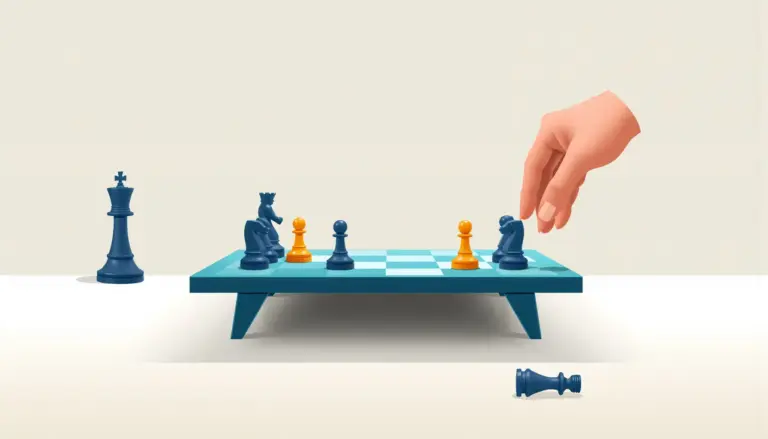
Imagine a place where silence is not absence, but presence. Where each move on the board is not just a play, but an act of introspection. The wellness retreats that make up the chess as a digital disconnection tool they are redefining the concept of relaxation: It's not about running away from the world., but to reconnect with the mind in its purest state. In a context where digital hyperstimulation fragments our attention, chess emerges as an oasis of concentration, a ritual that requires flow —that state of total absorption that, according to positive psychology, is key to happiness—. But, How does this ancient game transform a wellness retreat into a mental reconnection experience??
Chess as an antidote to digital fragmentation
The digital age has turned us into multitasking beings, but also in victims of scattered attention. Studies such as those from the University of California reveal that, on average, a person checks his phone 150 times a day, interrupting concentration cycles every 11 minutes. In this scenario, chess acts as a mindfulness exercise in motion: Each game requires total immersion, where time dissolves and the mind focuses on the here and now. It is no coincidence that withdrawals like those of Chess & Chill in Portugal or The Mindful Move in Costa Rica have gained popularity. These spaces combine the practice of chess with breathing and meditation techniques, creating an environment where digital disconnection is not a renunciation, but one reconquest the ability to think without distractions.
But chess in these retreats goes beyond concentration. It's a metaphor for decision making.: each movement forces us to evaluate risks, anticipate consequences and assume responsibilities. In a world where decisions are often made on impulse—whether responding to an email or choosing which series to watch—, chess teaches patience and deliberation. As psychologist Barry Schwartz points out in The Paradox of Choice, the abundance of options does not make us freer, but more anxious. The board, instead, simplifies: there is only 64 boxes and 32 parts, but infinite possibilities. This paradox—limitation that generates creativity—is what makes it therapeutic..
The science behind “jack dead” to stress
The relationship between chess and stress reduction is not anecdotal. A study published in Frontiers in Psychology (2021) showed that playing chess activates the prefrontal cortex, the same brain region associated with emotional regulation and resilience. Besides, reduces levels of cortisol—the stress hormone—by 25% after alone 30 minutes of play. But, Why does it work better than other relaxing activities like yoga or reading??
The answer is in its nature activa. Unlike passive meditation, chess requires constant participation: it is not enough to observe, you have to decide. This dynamic makes it a form of cognitive behavioral therapy in real time. For example, in retreats like those of Chess Retreat Bali, Participants learn to identify negative thought patterns—such as rumination—and replace them with logic-based strategies. The board thus becomes a mirror of the mind: if a player repeats the same mistakes, It's not for lack of skill., but by ingrained mental patterns. Recognizing them is the first step to changing them.
Another key factor is the perceived control. In a world where many aspects of life are beyond our control—from the global economy to social media—, Chess offers a space where the rules are clear and the results depend exclusively on our decisions.. This sense of agency is essential for psychological well-being, As the psychologist Martin Seligman points out in his theory of positive psychology. At the retreats, This dynamic is enhanced by combining the game with workshops work stress management, where participants apply board lessons to real situations, such as negotiations or interpersonal conflicts.
The board as a bridge between cultures and generations
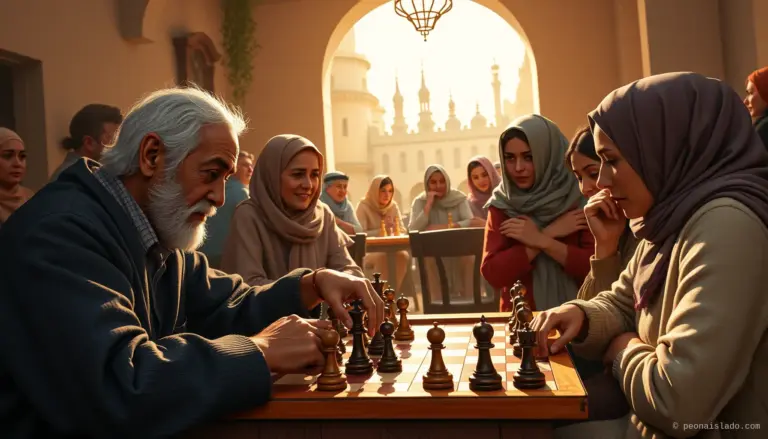
One of the most fascinating aspects of chess retreats is their ability to bring people of different ages together., cultures and backgrounds. In an increasingly polarized world, chess acts as a universal language, where differences fade before the logic of the game. Withdrawals like Chess in the Wild in Canada or Sahara Chess Camp in Morocco they take advantage of this quality to create cultural immersion experiences. For example, in the Sahara desert, Participants play games under the stars while learning about the history of the shatranj, the Persian version of chess that gave rise to the modern game.
This intercultural dimension is not just anecdotal. According to a UNESCO report (2022), chess encourages cognitive empathy —the ability to understand another's point of view—by forcing players to anticipate the opponent's intentions. In multigenerational retreats, like those of Chess & Wisdom in Greece, This skill translates into deep dialogues between young people and older adults, where the board becomes an excuse to share experiences. As anthropologist Clifford Geertz points out, the games are “cultural texts” that reveal values and worldviews. in chess, these layers of meaning unfold in each game, making the game much more than a competition: It is an act of cultural translation.
From theory to practice: how to design a chess and wellness retreat
Hosting a chess and wellness retreat doesn't just require a board and pieces, but one architecture of disconnection. The first step is to choose an environment that encourages immersion: natural spaces, like forests or mountains, They are ideal because they reduce external stimuli and facilitate concentration. Withdrawals like Chess & Nature in Norway they take advantage of this principle, combining outdoor games with meditative walks.
The second key element is the curator of activities. A successful retirement is not limited to playing chess, but also integrates workshops that delve into its benefits. For example:
- Workshops flow: Based on the principles of Mihaly Csikszentmihalyi, These exercises teach participants to enter states of deep concentration, applicable to both chess and everyday life. In retreats like those of Chess Flow Retreat in Spain, games are combined with breathing and visualization exercises.
- Cognitive therapy: Inspired by the work of Vladimir Rašković—a pioneer in the use of chess in psychiatry—, These workshops help identify dysfunctional thinking patterns. For example, A player who always sacrifices pieces out of impulsiveness can learn to recognize this behavior and replace it with more thoughtful strategies..
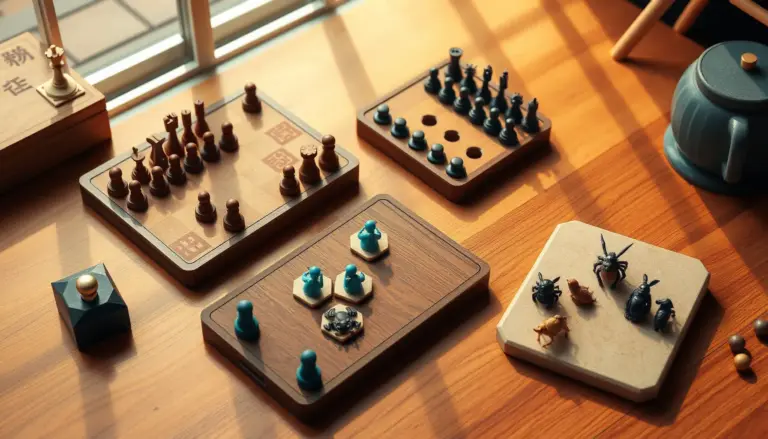
- Intercultural connection: Thematic games, like him medieval chess or the xiangqi chino, allow you to explore the historical roots of the game while encouraging dialogue between participants from different backgrounds.
The third pillar is community. The most successful retreats are not just individual, but collective. In Chess & Community in Mexico, For example, Team tournaments are organized where participants must collaborate to solve tactical problems. This dynamic reinforces the sense of belonging and turns chess into a tool of social cohesion, something especially valuable in a world where loneliness is a silent epidemic.
The future of withdrawals: chess, technology and well-being
Although chess is an ancient game, Wellness retreats are incorporating technology in innovative ways. Platforms like Chessable o Lichess They are used to analyze games and offer feedback in real time, while virtual reality tools allow you to play in immersive environments, like floating boards in space or games under the sea. However, The challenge is to integrate these technologies without losing the analog essence of the game. Withdrawals like Digital Detox Chess in Germany they address this dilemma: during the day, participants play with physical boards and wooden pieces; at night, analysis sessions are organized with AI, but always in a group, to maintain the human component.
Another emerging trend is the combination of chess with other wellness disciplines.. In Chess & Yoga in India, For example, The games are interspersed with sessions of hatha yoga, where body movements are synchronized with game strategies. The idea is that, just as chess trains the mind, yoga trains the body, creating a holistic balance. This merger is not new: in ancient Persia, the players of shatranj they practiced zurkhaneh —a traditional martial art—to improve your physical and mental endurance. Hoy, This synergy is reinvented in retreats that seek not only to disconnect, sino reconnect body and mind.
Conclusion: chess as a reconnection ritual
In a world obsessed with speed, chess and wellness retreats offer something radical: the opportunity to slow down. But it is not a passive disconnection, but of an active reconnection with the essential: the ability to think, decide and connect with others. chess, with its unique combination of logic, creativity and strategy, It becomes the perfect vehicle for this trip. As the great teacher Savielly Tartakower said: “Chess is the gymnastics of the mind”. At wellness retreats, This gymnastics becomes a ritual of self-discovery, where each game is a metaphor for life: a balance between risk and prudence, between attack and defense, between the self and the other.
The invitation is open. It's not about becoming a great teacher, but to rediscover the pleasure of thinking without haste, to play without distractions, to connect without intermediaries. On a board 64 casillas, the digital world fades, and all that remains is the pure essence of the human mind: your ability to create, anticipate and, above all, be present.