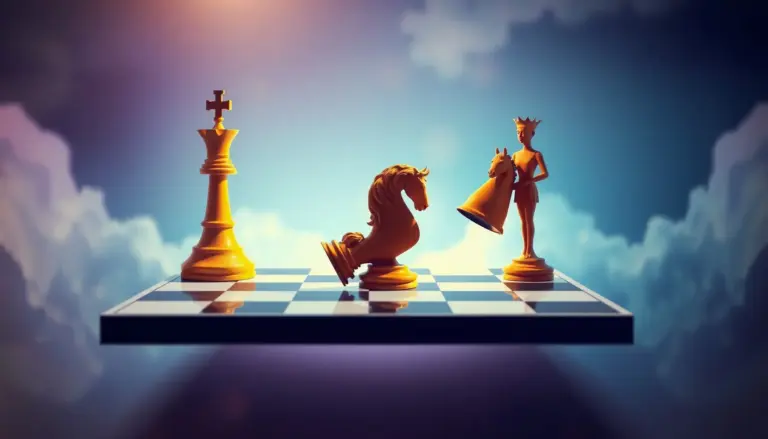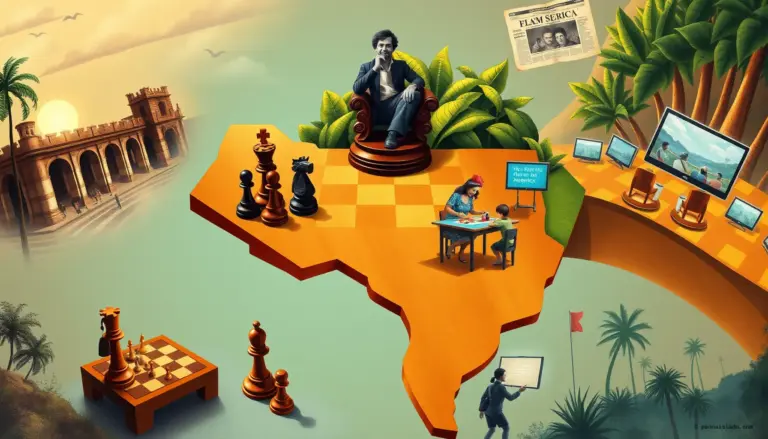
The chess board, that microcosm of 64 casillas, has witnessed quiet revolutions that redefined not only the game, but also the culture, power and even human psychology. Between the 15th and 16th centuries, a radical transformation shook its foundations: the counselor's piece, limited to diagonal and single-step movements, metamorphosed into the lady, the invincible queen capable of dominating the board in all directions. This change, apparently technical, it was not coincidental. It arose in a context where Europe emerged from the medieval shadows, and figures like Isabel la Católica embodied the new paradigm of female leadership. Was chess a mirror of its time or, on the contrary, a catalyst that accelerated the evolution of strategy and society?
The counselor who became queen: anatomy of a revolution
Before 1475, The piece that we know today as a lady was the fers or advisor in the shatranj persa, a game inherited from India and perfected by the Arabs. His movement was modest: a single diagonal step, like a restricted bishop. However, in Renaissance Europe, where the Italian and Spanish courts competed for influence, chess became a symbol of power. The transformation of fers In a lady it was not a simple aesthetic whim; responded to a strategic and symbolic need. Chronicles of the time suggest that the new piece reflected the rise of women like Isabel la Católica, whose political and military astuteness redefined the concept of leadership in the Iberian Peninsula. chess, So, It stopped being a game of slow patience and became a dynamic battlefield, where the queen—like the queens of the time—could decide the fate of a game in a few moves.
This evolution was neither immediate nor uniform.. In Italy, For example, the lady acquired her power before other places, and its adoption generated resistance. Some purists argued that the change distorted the essence of the game, while others celebrated it as a necessary innovation. The truth is that, by the end of the 15th century, the new rule had spread throughout Europe, laying the foundations of modern chess. This process not only altered the mechanics of the game, but also influenced the cultural perception of chess: of being an aristocratic pastime, became a reflection of the political and social complexity of the time.
Isabel la Católica and the founding myth of the lady
The theory that links the lady's transformation to Isabel la Católica is not mere speculation. The queen of Castile, whose coronation in 1474 marked the beginning of an era of unification and expansion, He personified the Renaissance ideal of leadership: a combination of cunning, ambition and ability to move on multiple fronts. in chess, the queen became the most powerful piece, able to control the board with unprecedented freedom. Was this not a reflection of how Elizabeth managed her kingdom?? Her marriage to Ferdinand of Aragon, The Reconquest of Granada and the financing of Columbus's voyage are examples of strategic movements that changed the course of history, just like the queen on the board.
However, The connection between Isabel and chess goes beyond the symbolic. Historical documents reveal that the queen was passionate about gambling, and it is said that he even participated in games against ambassadors and nobles. In a context where chess was a metaphor for war and diplomacy, The figure of Isabel as a player acquires a deep meaning. It is not unreasonable to think that its influence, direct or indirect, contributed to the redefinition of the piece. After all, chess has always been a game of mirrors, where the rules and pieces reflect the values and power structures of their time.
Chess as a laboratory of modernity
The lady's revolution was not an isolated event, but part of a broader process of cultural transformation. In the same period, Europe witnessed the birth of the printing press, the expansion of global trade and the emergence of new ways of thinking. chess, in this context, It became a laboratory where ideas about strategy were experimented, power and decision making. The new lady, with its ability to move in all directions, symbolized the flexibility and adaptability that were beginning to be valued in Renaissance society. It was no longer enough to follow rigid rules; Success depended on the ability to innovate and anticipate the rival.
This change also had psychological implications. medieval chess, with its slow pace and emphasis on defense, reflected a more conservative mentality. Instead, modern chess, with his dynamism and his focus on the attack, best suited the spirit of an era that celebrated boldness and creativity. To the lady, as the centerpiece of this transformation, became a symbol of how the game could evolve to fit the needs of its time. It is no coincidence that, in the following decades, Chess became popular among the intellectual and political elites, from Leonardo da Vinci to the Medici. As the article on medieval chess, the game had been Christianized and adapted to European values, but it was in the Renaissance when it reached its most sophisticated and strategic form.
The Lady's Legacy: from the court to the digital age
The queen revolution not only changed chess, but also laid the foundation for its global expansion. In the 16th century, The game had already established itself as an essential pastime in European courts., and its popularity did not stop growing. To the lady, with its indisputable power, It became a symbol of the human capacity to reinvent itself and adapt to new challenges.. Hoy, in the digital age, chess continues to evolve, but the essence of the queen—her versatility and her ability to decide the course of a game—remains intact..
Curiously, The figure of the lady has also been the subject of contemporary debates. Some theorists argue that his power unbalances the game, while others see it as a representation of gender equality on the board. The truth is that, beyond interpretations, the queen remains a reminder of how chess, as a reflection of society, can be transformed to adapt to the values of each era. In a world where strategy and adaptability are more important than ever, The lesson of the invincible lady is still valid: power does not lie in rigidity, but in the ability to move with intelligence and boldness.
Conclusion: chess as a mirror of history
The transformation of the lady in the 15th century was not a simple change of rules, but a cultural milestone that reflected and accelerated the transformations of its time. From the courts of Isabel la Católica to the digital boards of the 21st century, the lady has been a symbol of power, innovation and adaptability. Its evolution reminds us that chess is not just a game, but a universal language that has accompanied humanity in its search for strategy, meaning and connection. Hoy, when chess experiences a new renaissance thanks to digital platforms and series like The Queen’s Gambit, It is more relevant than ever to understand its historical roots. Why, in the end, Every game we play is an echo of those silent revolutions that, more than five centuries ago, they changed the fate of the game forever.