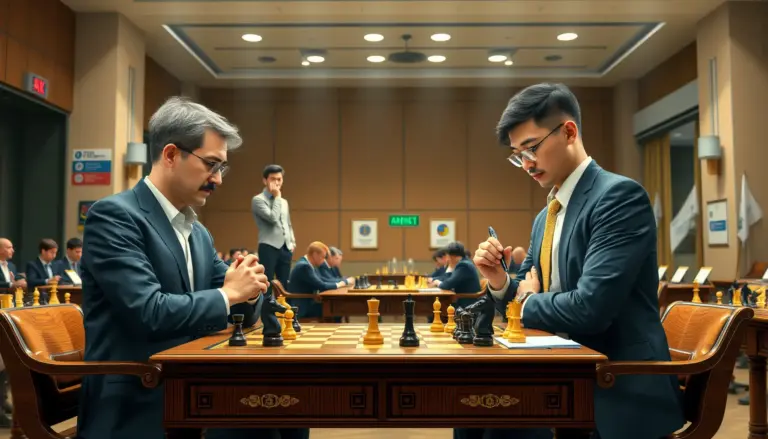
In a city where school dropout statistics painted a gray future, a chess club emerged as a beacon of hope. This was not an isolated project., but a meticulously designed strategy to reconnect young people with learning, patience and self-esteem. This is not a fictional story, but the true story of how the school chess became an antidote to desertion, transforming lives with every move on the board.
chess, more than a game, It's a metaphor for life: teaches planning, to anticipate consequences and assume responsibilities. In contexts of vulnerability, These lessons are invaluable.. Studies show that regular practice improves concentration, memory and logical thinking, essential skills for academic success. But, how a simple board 64 Casillas achieved what public policies and social programs had not achieved?
Chess as a bridge between school and community
The club was not born in a traditional classroom, but in a community space where chess became a universal language. The key was in its inclusive approach: It wasn't about creating champions., but to create an environment where each child, regardless of your level, could feel part of something bigger. This philosophy resonated with the principles of social chess, that prioritizes human connection over excessive competition.
The workshops were designed to be accessible, with dynamics that combined play with recreational activities. For example, giant boards were used in public squares, where children could “live” the games, moving the pieces like on a theater stage. This approach not only made chess more attractive, but also encouraged social interaction, reducing the isolation that often precedes dropping out of school. The strategy was not new: in libraries and cultural centers around the world, Chess has proven to be a powerful tool for inclusion, but here it was taken a step further by integrating it directly into the daily lives of young people.
The results were tangible. in two years, the dropout rate in schools near the club decreased by 30%, a figure that surprised even the most skeptical. But the numbers only told part of the story. What was truly transformative was the change in the students' attitude: They stopped seeing school as an obligation to perceive it as a space of opportunities. Chess taught them that every move—or every decision—has consequences., and that perseverance is the key to overcoming obstacles.
Empathy as a strategy: how chess teaches you to see others
One of the most innovative aspects of the project was its focus on empathy. In an environment where violence and disconnection were commonplace, chess became an exercise in mutual understanding. The children learned to anticipate their opponent's moves, but also to recognize your emotions: frustration over a mistake, the satisfaction of a good strategy, respect for the rival.
This approach had a direct impact on school coexistence. Conflicts between students decreased significantly, since chess gave them tools to resolve differences peacefully. Instead of resorting to aggression, they learned to negotiate, to give in and look for creative solutions. A parallel study revealed that students who participated in the club showed a 40% less disruptive behavior in the classroom, a fact that reinforces the idea that chess not only improves academic performance, but also the school climate.
But empathy was not limited to relationships between colleagues. The club's teachers and mentors took an active role in the lives of the young people, becoming reference figures. This link was crucial for those students who came from complex family backgrounds, where emotional support was scarce. chess, in this sense, acted as a bridge between school and home, offering children a safe space where they feel heard and valued.
Discipline without punishment: chess as a pedagogical tool
Discipline is a recurring theme in education, but it is rarely approached from a constructive perspective. in this club, A model was implemented based on the self-regulation, where children learned to manage their emotions and behaviors through play. For example, a simple rule was established: if a player lost control during a game, had to stop, breathe and reflect on your mistake before continuing. This practice not only improved concentration, but also taught them how to handle frustration, an essential life skill.
The approach contrasted radically with traditional methods of discipline, which are usually based on external punishments or rewards. Here, the motivation was intrinsic: The children wanted to improve because they enjoyed the game and because they saw the results of their effort. This paradigm shift had a ripple effect in other areas of his life.. Many of them began to apply the same strategies in their studies, setting clear goals and constantly working to achieve them.
Besides, Chess offered them a framework to understand the importance of failure. In a society that glorifies immediate success, learning to lose became a valuable lesson. The club's mentors emphasized that every defeat was an opportunity to learn., and that true victory was in the ability to get up and move forward. This resilient mindset was key for many students to overcome discouragement and persist in their studies., even when circumstances turned adverse.
Chess as therapy: healing in 64 casillas
For some young people, the chess club was much more than a learning space: It was a refuge. In a city where violence and poverty marked the lives of many, the board became a symbol of hope. Therapeutic chess, an emerging discipline that uses play to address emotional and cognitive problems, played a fundamental role in this process.
One of the most emblematic cases was that of Daniel, a teenager who had dropped out of school after the death of his father. Mired in depression, Daniel found a way to channel his pain in chess. through the game, He learned to focus his mind on something concrete, moving away from the negative thoughts that paralyzed him. Over time, chess became his therapy, helping him rebuild his self-esteem and reintegrate into the educational system. Stories like Daniel's are not isolated: in crisis contexts, Chess has proven to be an effective tool to treat disorders such as anxiety, ADHD and post-traumatic stress.
The club also implemented specific workshops for young people with learning difficulties, using chess as a tool to improve memory and attention. For example, Exercises were designed where children had to remember sequences of movements or anticipate plays, which strengthened their cognitive abilities. These workshops not only benefited the students, but also raised awareness in the community about the importance of inclusive education.
The legacy: a replicable model to transform communities
The club's success was no coincidence, but the result of a well-planned strategy that combined pedagogy, psychology and community. Its impact transcended the city's borders., inspiring other localities to adopt similar models. But, What made this project so effective??
First of all, its focus on chess culture as a tool for social transformation. The club did not limit itself to teaching the rules of the game, but integrated it into the daily lives of young people, making it a symbol of resistance and improvement. In second place, its ability to adapt to the needs of the community. Workshops were designed with students' specific challenges in mind., from lack of motivation to emotional problems.
Finally, the project demonstrated that chess can be a bridge between generations and cultures. In an increasingly divided world, the board became a space where young people from different backgrounds could meet, share experiences and learn from each other. This community dimension was key to its sustainability, since it generated a sense of belonging that transcended the school environment.
The chess club that reduced school dropouts is not just a success story, but a reminder that the most effective solutions to social problems are often within our reach. Sometimes, just one board, some pieces and the will to change the rules of the game.
In a world where education faces increasingly complex challenges, Chess emerges as a powerful tool to reconnect young people with learning. It is not a magic remedy, but of an approach that, when implemented with vision and commitment, can transform lives. The lesson is clear: in every game, there is an opportunity to teach, to heal and to build a better future.