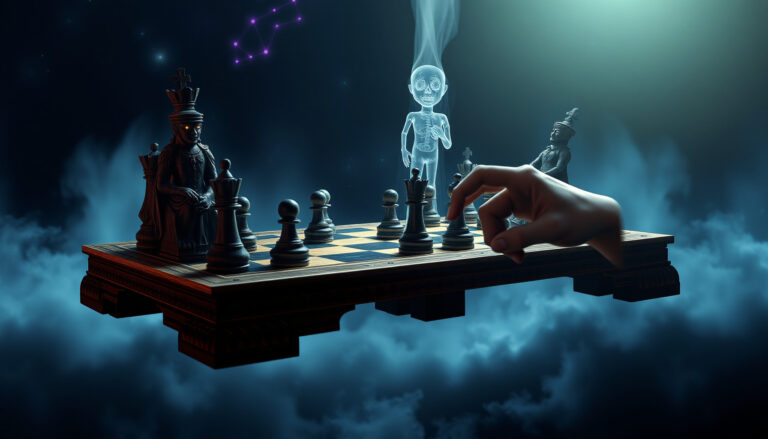
For centuries, Chess has fascinated millions of people around the world, not just as a strategy game, but also as a field where prodigies capable of challenging the limits of human intelligence emerge.. Names like Bobby Fischer, Magnus Carlsen and Judit Polgár have fueled the myth that some players are born with an innate gift, an almost supernatural ability to understand the board. But, do they really exist “chess prodigies” or are they the result of methodical training, an iron discipline and a conducive environment?
This question has generated debates among scientists, psychologists and trainers, and the answer is not as simple as it seems. While some studies suggest that genetics play a key role in the development of cognitive abilities, Others argue that chess is a mental sport that, like any other, It is mastered with practice and dedication. In this article, We will explore the roots of this phenomenon, analyzing everything from biological factors to the training methods that have turned mere mortals into masters of the game. We will discover if talent is a gift from birth or if, on the contrary, It is the fruit of constant and well-directed effort.
The myth of innate talent: what does science say?
For decades, The idea that chess grandmasters are born with a genetic predisposition has been widely accepted. However, modern science has challenged this belief, proving that the human brain is much more malleable than previously thought. Studies carried out by psychologist Anders Ericsson, pioneer in the theory of “deliberate practice”, suggest that talent is not a determining factor, But what really matters is the quality and quantity of training.
Ericsson and his team analyzed musicians, athletes and chess players, concluding that those who reached levels of excellence did not do so because of a natural gift, but to accumulate at least 10.000 hours of focused practice before the 20 years. In the case of chess, This translates into solving thousands of tactical problems, study grandmaster games and compete in tournaments from an early age. But, Does this mean that anyone can become a prodigy with enough training?
Not quite. Genetics does influence aspects such as working memory, ability to concentrate and processing speed, key skills in chess. A study published in the journal Intelligence in 2016 found that elite players tend to have higher gray matter density in areas of the brain related to planning and decision making. However, These traits are not exclusive to prodigies: can develop over time. What differentiates great teachers is not so much their genetics as their ability to optimize your training and maintain constant motivation.
Another key factor is brain plasticity. chess, being a game that requires a high level of abstraction, stimulates the creation of new neural connections. A study from the University of Konstanz (Germany) showed that chess players develop a greater ability to recognize visual patterns and anticipate moves, skills that get stronger with practice. This suggests that, although some may have a head start, the brain adapts and improves over time, regardless of starting point.
The role of the environment: How environment shapes prodigies
Although genetics and practice are essential, The environment in which a chess player grows up can be the decisive factor that propels them towards greatness. Historically, many prodigies have arisen in families where chess was a central part of their lives. For example, the Polgár sisters (Judith, Susan and Sofia) They were educated from 3 years by his father, László Polgar, who firmly believed that genius was not innate, but the result of a specialized education. Your method, based on early immersion and constant competition, resulted in three of the best players in history.
This case is not isolated. Magnus Carlsen, current world champion, learned to play 5 years thanks to his father, a chess enthusiast who taught him the basic rules. However, what really made the difference was access to resources: books, analysis software, local tournaments and, later, professional trainers. The environment not only provides the tools, but also the motivation and emotional support necessary to persevere.
A study carried out by the University of Oxford in 2018 analyzed 500 elite players and found that the 80% of them had been exposed to chess before the 6 years, and the 90% They came from families where at least one of the parents had knowledge of the game. This suggests that the family environment acts as a catalyst, accelerating the learning process and reducing the difficulty curve.
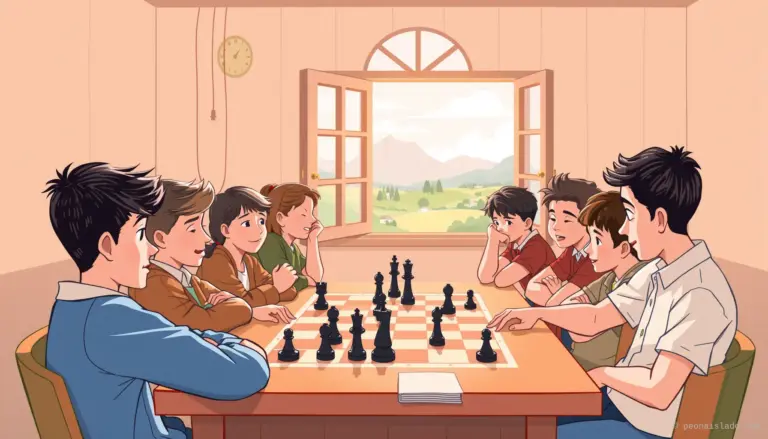
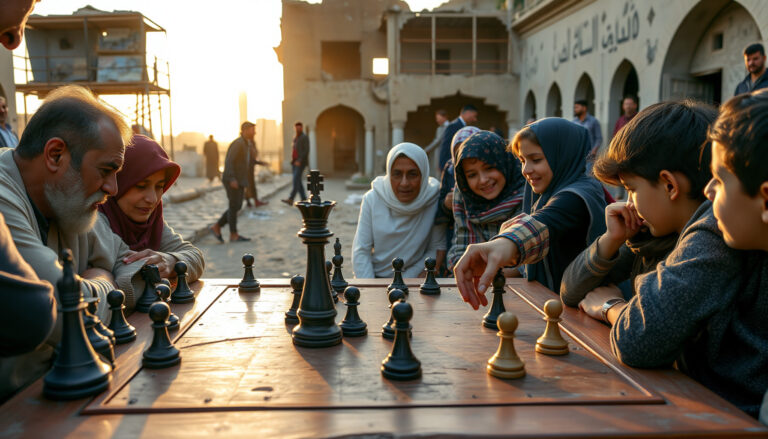
But the environment is not limited to the home. Countries like Russia, India and China have produced a disproportionate number of great teachers thanks to structured training systems, specialized schools and a culture that values chess as an intellectual sport. In the former Soviet Union, For example, chess was part of the school curriculum, and children with aptitudes were identified and trained from an early age. This systematic approach shows that, with the right conditions, talent can be cultivated on a large scale.
The psychology behind success: beyond intelligence
Chess is not just a game of logic and strategy; It is also a psychological battle where mental resistance, Stress management and the ability to continuously learn make the difference. Many prodigies do not stand out solely for their IQ, but for his growth mindset, a concept developed by psychologist Carol Dweck. According to this theory, people who believe that their abilities can be developed through effort (growth mindset) are more likely to achieve success than those who think that talent is fixed (fixed mindset).
A clear example is that of Viswanathan Anand, Indian former world champion, who attributes his success not to an innate gift, but to their ability to learn from defeats. Anand has mentioned in multiple interviews that each lost game was an opportunity to analyze his mistakes and improve.. This attitude contrasts with that of players who, in the face of failure, they get discouraged and abandon, believing that “They weren't born for this”.
Another crucial psychological aspect is frustration tolerance. Chess is a game where defeat is inevitable, even for the best. Prodigies are not immune to mistakes, but they have developed mechanisms to manage them. A study published in Frontiers in Psychology in 2020 analyzed 200 elite players and found that those with greater emotional resilience had a 30% more than likely to maintain high performance over the long term. This is because, instead of obsessing about failures, focus on them as part of the learning process.
Besides, the intrinsic motivation plays a key role. Players who enjoy the improvement process, beyond the results, they tend to persist longer. Bobby Fischer, one of the most famous prodigies in history, I spent hours analyzing games just for the pleasure of discovering new ideas. this passion, combined with almost obsessive discipline, It is what led him to master chess at an early age.. However, It is also a reminder that success in chess does not guarantee emotional well-being., as his later life demonstrated.
The method behind the prodigies: training vs. inspiration
If talent is not enough and the environment is only part of the equation, What makes some players reach superhuman levels while others fall by the wayside?? The answer lies in the training method. Prodigies not only play more games than the rest; They do it in a structured way, focusing on their weaknesses and constantly seeking challenges that take them out of their comfort zone.
One of the pillars of elite training is deliberate practice, a concept that goes beyond simply playing games. It consists of:
- Game analysis: Study your own and other people's games to identify errors and recurring patterns.
- Tactical problem solving: Work on calculation and visualization exercises, like those found in books like 1001 Chess Exercises for Beginners o platforms like Chess.com.
- Training with stronger rivals: Play against higher level opponents to expose yourself to new ideas and strategies.
- Preparation of openings: Memorize theoretical lines and understand the plans behind each variant.
- Pressure simulations: Practice in tournament conditions, with limited time and controlled stress.
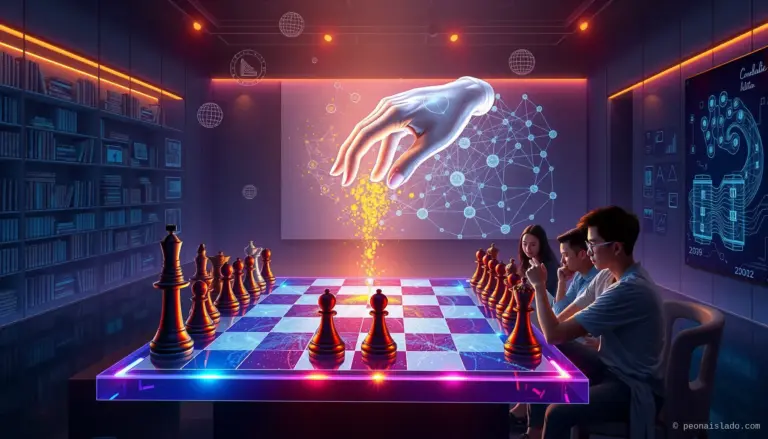
An example of this approach is that of Fabiano Caruana, who to the 14 years he already dedicated 6 daily hours to chess, divided between theoretical study, quick games and analysis with your coach. This level of dedication is not accidental: great teachers don't just accumulate hours, but they make the most of them, using tools like chess engines (Stockfish, Leela Chess Zero) to correct your mistakes with surgical precision.
But training is not limited to the technical. Prodigies also develop physical and mental preparation routines. Magnus Carlsen, For example, includes yoga and meditation sessions in your training to improve your concentration, while Hikaru Nakamura has spoken openly about the importance of sleep and nutrition to maintain optimal performance. This shows that, in modern chess, success depends on both mental preparation and technique.
However, there is an element that cannot be taught: the creativity. Players like Mikhail Tal or Garry Kasparov stood out not only for their precision, but for their ability to find unexpected solutions in seemingly equal positions.. This spark of genius is difficult to quantify, but it arises from the combination of exhaustive training and an open mind to experimentation. In other words, inspiration does not come without perspiration.
Conclusions: Are chess prodigies born or made??
After analyzing the genetic factors, environmental, psychological and methodological aspects surrounding chess prodigies, The answer to the initial question is not absolute., sino a combination of both elements. It cannot be denied that some players start with certain advantages, such as a greater memory capacity or a predisposition to concentrate. However, These characteristics are not decisive on their own.: without a stimulating environment, a deliberate practice and a resilient mindset, Even the most promising talent can fall by the wayside.
Science has shown that the human brain is capable of adapting and improving with training, and chess is a clear example of this. Players like Magnus Carlsen or Judit Polgár did not reach the top because of a magical gift, but for years of hard work, family support and an obsession with perfecting every detail. This does not mean that anyone can become a world champion with enough effort., but yes talent without discipline rarely reaches its full potential.
Ultimately, Chess prodigies are the result of a complex equation where genetics provide the raw material, the environment offers the tools, Psychology builds mental strength and the method transforms all this into excellence. As the great teacher Savielly Tartakower once said: “Chess is the art of analysis”. Y, like all art, requires both inspiration and perspiration. The next time you see a child 10 years defeating an experienced adult, remember that behind that “genius” there are hours of study, tears of frustration and a passion that transcends the ordinary.
So, Are chess prodigies born or made?? The truth is that they are made, but with a base that, in some cases, can ease the way. The important thing is not whether talent is innate or acquired., but how we grow it and what we do with it.