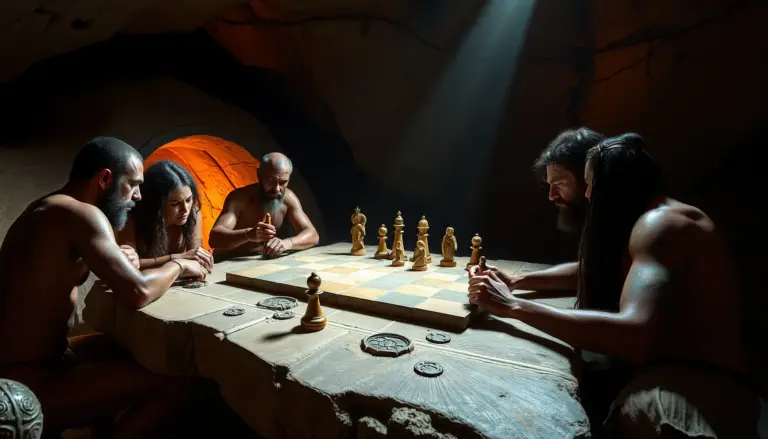
Chess is a game that has transcended its status as a hobby to become a tool for personal transformation.. Many associate it only with strategic movements on a board., but its influence goes much further. In this article, We will explore how chess can change lives without needing to touch a single piece., acting as a mirror of our decisions, emotions and growth. From improving cognitive skills to building resilience, Chess reveals itself as a silent teacher that shapes our mind and character. Through personal experiences and scientific studies, We will discover that its true power lies in what it teaches us off the board.
Chess as a school of critical thinking
Chess is not just a game of memory or calculation; It is a discipline that trains the mind to analyze complex situations clearly.. Studies such as those carried out by the London Institute of Cognitive Neuroscience have shown that chess players develop a greater ability to evaluate options, anticipate consequences and make decisions under pressure. This ability is not limited to the board: carries over into everyday life, where every choice—from a difficult conversation to a career decision—can be approached with a more structured approach.
The fascinating thing is that this training does not require playing games. Simply watching grandmaster games, like those of Magnus Carlsen o Garry Kasparov, allows you to internalize thought patterns. Analyze your strategies, understand why they sacrifice a piece or how they manage time, Teaches how to break down problems into manageable parts. This mentality, applied to personal or professional projects, reduces anxiety about the unknown and encourages a proactive attitude.
Besides, chess cultivates metacognition, that is to say, the ability to reflect on one's own thinking. By questioning why we choose one movement over another, We learn to identify cognitive biases and correct reasoning errors. This constant practice of self-assessment is invaluable in a world where impulsive decisions often lead to regrets..
emotional management: lessons from the board
One of the most underrated aspects of chess is its ability to teach emotional intelligence.. A game can last hours, and in that time, players face a rollercoaster of emotions: frustration over a mistake, euphoria for a brilliant play, anxiety about the ticking clock. Learning to manage these emotions is crucial, both in game and in life.
A study published in the journal Frontiers in Psychology found that chess players develop greater tolerance for frustration and better emotional regulation. This is because chess forces you to confront the consequences of each decision without the possibility of blaming external factors.. If you lose, you can't attribute it to the referee or luck; just your own choices. This absolute responsibility fosters humility and resilience.
But how to apply this outside the board? Imagine an argument with a loved one. Instead of reacting with anger, chess teaches you how pause, Evaluate possible responses and choose the one that minimizes harm. It also helps you accept that you won't always win., but that each “defeat” It's an opportunity to learn. This mentality transforms failures into steps, not in obstacles.
Even in work environments, where stress and pressure are constant, chess lessons are useful. Know when “sacrifice” An idea to gain a stronger position—as in chess a pawn is sacrificed to control the center—can be the key to successful negotiations or effective leadership..
Patience and long-term vision
In an era of instant gratification, chess is a reminder that the best results take time. A well-played game is not won in the first moves, but with a coherent strategy that is developed over hours. This lesson applies to any meaningful goal.: build a career, cultivate a relationship or even learn a new language.
The positional game theory, popularized by players like José Raúl Capablanca, emphasizes the importance of long-term planning. Instead of looking for checkmate in three moves, chess teaches you to value position, strengthen the pieces and wait for the right moment to attack. This philosophy contrasts with the modern mentality, where many abandon projects at the first obstacle.
A clear example is that of entrepreneurs. Many fail because they expect immediate results., but those who adopt the chess mentality—analyzing the market, adjusting their strategy and being patient—are more likely to succeed. Chess also teaches accept ties, that is to say, to recognize when it is better to consolidate what has been achieved than to risk everything for an uncertain victory.
This patience is not passivity, but a form of discipline. As he said Emanuel Lasker, world champion during 27 years: “in chess, like in life, the most dangerous adversary is oneself”. The real battle is not against the opponent, but against impatience and lack of vision.
Chess as a metaphor for human relationships
Chess is not a solitary game; It is a dialogue between two minds. Every opponent's move is a response to your actions, and vice versa. This dynamic reflects how we interact with others in real life.: our decisions influence those of others, and their reactions, in turn, shape our next actions.
This metaphor is especially useful in the area of personal and professional relationships.. For example, in a negotiation, Understanding that your counterpart has his or her own goals—as in chess each player seeks to control the center—allows you to anticipate their moves and find common ground.. Chess teaches that cooperation, even in a competitive game, may be more effective than direct confrontation.
Besides, chess encourages strategic empathy. When trying to predict the opponent's moves, you develop the ability to put yourself in their place, a key skill for resolving conflicts. A study of the University of California found that chess players have a greater ability to understand the intentions of others, which improves your social skills.
Even in conflict situations, chess offers valuable lessons. Instead of responding aggressively, you can opt for a solid defense - as in chess the sicilian defense to counter attacks—and wait for the right moment to propose a solution. This mentality not only avoids unnecessary escalations, but also strengthens trust in relationships.
Conclusions: chess as a lifestyle
Chess is much more than a game; It is a philosophy of life that transcends the board. Through your lessons, we have seen how it shapes critical thinking, strengthens emotional intelligence, cultivate patience and improve human relationships. The most surprising thing is that these benefits do not require mastering openings or memorizing variants; It is enough to internalize its principles and apply them on a daily basis..
As he said Bobby Fischer, “chess is life in miniature”. Each game is a reflection of our decisions, emotions and ability to adapt. By adopting your mentality, we not only improve in the game, but we also become more resilient versions, strategic and empathetic of ourselves. The board can be a space for competition, but his teachings are universal: they remind us that, in the end, true victory is not in defeating others, but in surpassing ourselves.
If you have not yet explored chess beyond its moves, I invite you to do it. Not as a player, but as a student of his lessons. Why, as we have seen, chess can change your life without you having to move a single piece.