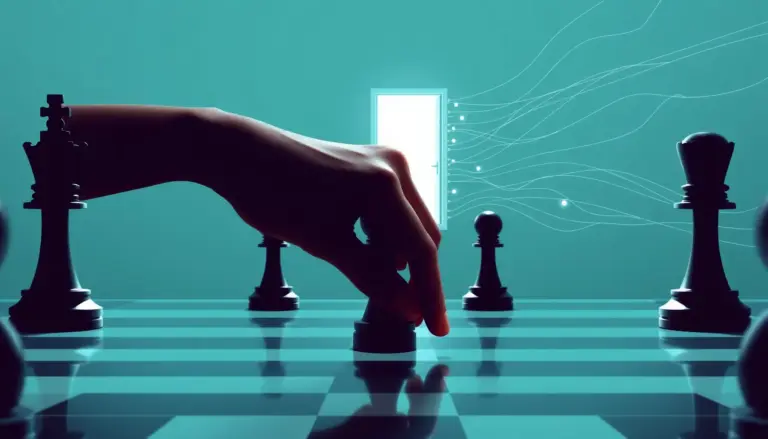
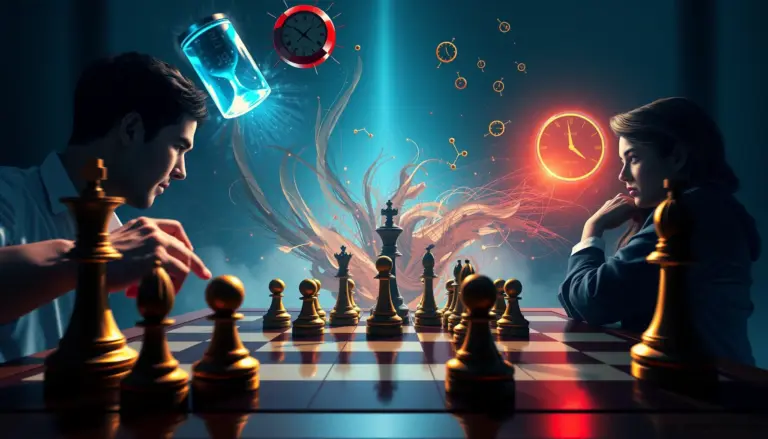
Chess has been the realm of the human mind for centuries., a battlefield where strategy, creativity and emotion are intertwined in every movement. However, in the age of artificial intelligence, where machines like Stockfish or AlphaZero outperform grandmasters with almost inhuman precision, a fascinating question arises: Is chess still an essentially human game? Prima facie, the answer seems obvious: computers dominate it. But if we go deeper, we discovered that chess, more than just a set of rules, It is a mirror of what makes us human. It is not just about calculating variants or evaluating positions, but to understand the psychology of the rival, to take risks, to feel the pressure of time and, above all, to create beauty on a board. Machines can win, But can they really *play* like we do?? This article explores why, even in the hands of algorithms, chess preserves its most human essence: the ability to tell stories, to challenge the limits of imagination and connect people beyond cold logic.
Chess as a universal language of intelligence
Chess is not just a game; it is a language. A system of symbols and rules that transcends cultures, languages and times, allowing two people to communicate without the need for words. This quality makes it one of the purest expressions of human intelligence., comparable to music or mathematics. But, unlike other games, Chess requires a unique combination of cognitive skills: memory, calculation, intuition and, above all, the ability to anticipate the intentions of others.
The machines, for his part, They have proven to be masters in this language. Programs like Stockfish o Leela Chess Zero They analyze millions of positions per second, Finding plays no human could conceive. However, are “intelligence” It's different. While a human player looks for patterns, emotions and narratives on the board—such as heroically sacrificing a piece or constructing an elegant attack—, Computers operate under pure optimization logic. There is no passion in your movements, just efficiency.
This poses a paradox: If chess is a reflection of intelligence, why do we feel that machines, despite its technical superiority, They don't play it *like we do*? The answer is that human chess is not limited to solving problems; also creates them. A great teacher not only calculates variants, but choose a style, an identity. Bobby Fischer preferred chaotic positions where his tactical genius shined; Anatoly Karpov, instead, mastered the art of patience, suffocating his rivals with positional maneuvers. These decisions are not just technical, sino aesthetic. And therein lies the human: in the ability to choose, to be wrong, to be surprised.
The psychology of the board: when the rival is a mirror
One of the most fascinating aspects of chess is its psychological dimension.. Each game is a duel not only of ideas, but of personalities. An aggressive player will seek to complicate the position, while a defensive one will try to simplify it. This interaction goes beyond pure logic: involves reading the rival, anticipate their fears and exploit their emotional weaknesses.
The computers, instead, They are immune to these mind games. They don't feel pressure, they don't doubt, they don't get frustrated. In 1997, when Deep Blue defeated Garry Kasparov, the world celebrated (or regretted) the triumph of the machine over man. But what many overlooked was that Kasparov didn't lose just because of technical errors., but because Deep Blue couldn't be intimidated. Kasparov, accustomed to dominating his rivals with his imposing presence and aggressive style, he encountered an opponent who did not react to his provocations. The machine had no ego, I wasn't afraid, I had nothing to lose.
This absence of psychology in computers reveals something profound about human chess: It's not just about winning, but how to earn. A player may sacrifice a piece not because it is the objectively best move., but because he knows that his rival will feel pressured. You can choose a passive defense not for lack of options, but to provoke the opponent's impatience. These decisions, which often go against the “perfect logic” of the machines, They are what make chess a deeply social game. Even alone, in front of a board, the human player is always in dialogue with another human being, whether it is your rival, your coach or even your own shadow.
Creativity as an act of rebellion
If chess were just a math problem, machines would have solved it decades ago. But it's not. The board is a canvas where creativity flourishes, where rules are only the starting point for invention. Great players like Mikhail Tal or Magnus Carlsen do not limit themselves to following theoretical principles; they challenge them, they twist them, they reinvent them. Of, For example, He was famous for his intuitive sacrifices, plays that often did not stand up to deep analysis but left their rivals paralyzed by their audacity. Carlsen, instead, prefers positions that are apparently simple but full of nuances, where every little detail can tip the balance.
This creativity is, in essence, an act of rebellion against predictability. The computers, no matter how much they analyze, They cannot replicate that spark of originality that arises from human experience. A clear example is the concept of zugzwang (a position where any movement worsens the player's situation). for a machine, It's just another piece of data in your database.. for a human, It's an irony of fate, a psychological trap that can lead to despair. Creativity in chess is not measured only in brilliant plays, but in the ability to see what others do not see, of breaking patterns and finding beauty in the unexpected.
Besides, Creativity in chess is linked to uncertainty. A human player accepts that he cannot calculate all the variants, You should trust your intuition and your experience. The machines, instead, They seek to eliminate uncertainty at all costs. This difference is crucial: Human creativity arises precisely from the acceptance of the unknown, of the willingness to take risks. In that sense, chess is a microcosm of life itself, where decisions are not always made with perfect information, but with courage and vision.
Chess as a metaphor for the human condition
Beyond pieces and movements, Chess is a powerful metaphor for human existence. Each game is a journey with a beginning, a development and an end, full of unexpected twists, mistakes and moments of genius. life, just like chess, It's not just about achieving a goal, but about how the path is taken. A player can win a game with a brilliant move, but if the process was boring or predictable, the triumph loses part of its meaning. In the same way, in life, not only the result matters, but the way we face challenges.
The computers, with its utilitarian approach, they don't understand this dimension. for them, chess is an optimization problem: find the move that maximizes the chances of victory. But humans live it differently. A player can choose an opening not because it is the best, but because you like his style. You can accept a draw in a winning position because you value rest more than risk. These decisions, which often seem irrational from a purely technical perspective, They are what give depth to the game. chess, in human hands, becomes a narrative, in a story with characters (the pieces), conflicts (attacks and defenses) and an outcome that, although determined by the rules, always has an emotional component.
This narrative dimension is what makes chess so addictive.. It is no coincidence that large tournaments attract thousands of spectators, even among those who do not master the rules. People don't just go to see who wins; you are going to witness a human drama, where every move can change the fate of the game. The machines, no matter how much they calculate, They can't generate that emotion. Your game is cold, perfect, but soulless. And it is precisely that human imperfection—our mistakes, our doubts, our ability to surprise ourselves—what makes chess so fascinating.
Conclusions: the board as a mirror of what makes us human
Chess has evolved alongside humanity. From its origins in India as a military strategy game to becoming a global phenomenon, has witnessed scientific revolutions, wars and technological advances. Hoy, in the age of artificial intelligence, seems to have lost its exclusivity as a human domain. Machines play it better than us, They calculate faster and make fewer mistakes. But, paradoxically, It is precisely this technical superiority that highlights what is most human about chess..
Chess is not just a game of rules; It is a space where our emotions are manifested, our creativity and our ability to connect with others. Computers can win games, But they can't feel the thrill of an unexpected sacrifice, nor the frustration of an avoidable mistake, nor the satisfaction of a victory achieved with ingenuity. They cannot understand chess as a metaphor for life, where every decision has consequences and where the path is as important as the destination.
In a world increasingly dominated by algorithms, Chess reminds us that intelligence is not measured only in bits and calculations. It is measured in stories, in passion and the ability to find beauty in the imperfect. Machines can be invincible, but chess is still our game because, in the end, It is a reflection of what makes us human: the ability to dream, to make mistakes and create something unique in each game. That's why, although computers play it, Chess will never cease to be the most human game of all.