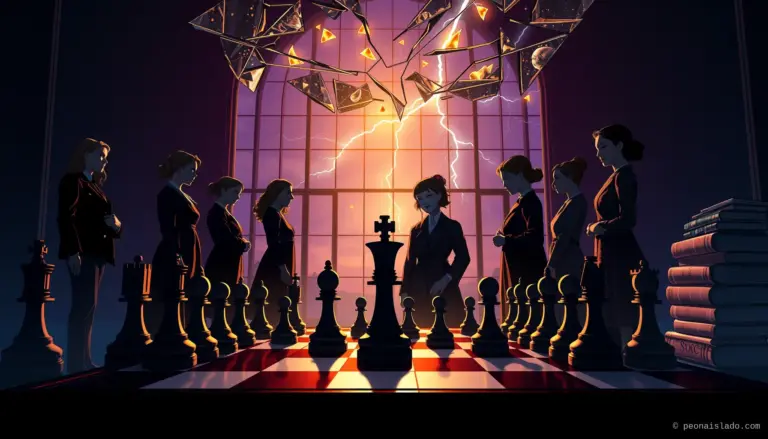
In recent years, Few series have captured the public's imagination like The Queen’s Gambit. This Netflix production, based on the novel of the same name by Walter Tevis, It not only became a cultural phenomenon, but also sparked renewed interest in chess on a global level.. The Beth Harmon Story, A chess prodigy battling her personal demons as she climbs the ladder of success in a male-dominated world., has been acclaimed for its immersive storytelling and visual aesthetic. However, beyond entertainment, an inevitable question arises: To what extent is the representation of chess and Beth Harmon's life in The Queen’s Gambit reflects reality? Or is it, instead, a fiction carefully constructed to captivate the viewer?
In this article, We will explore the layers of this phenomenon, analyzing everything from the veracity of chess tournaments and strategies to the psychological and social aspects that surround the protagonist. We will unravel which elements of the series are faithful to the history of chess and which are creative licenses, as well as the impact that this fiction has had on the public perception of the game. In the end, we can answer if The Queen’s Gambit is an authentic portrait or a work of art that, like the queen's gambit that gives it its name, sacrifices reality in pursuit of a more powerful narrative.
Chess on the screen: a faithfully represented game?
One of the first questions that arise when analyzing The Queen’s Gambit is whether the chess shown in the series is technically accurate. For experienced players, the answer is, to a large extent, affirmative. The series had the advice of professional players, as Grandmaster Garry Kasparov and Coach Bruce Pandolfini, who assured that the games, openings and strategies were realistic. For example, The games that Beth plays against rivals like Benny Watts or Vasily Borgov are based on real historical games, although adapted for the plot.
However, there are aspects that, for narrative needs, are simplified or exaggerated. One of the most obvious is the speed with which Beth learns and masters the game. in real life, Becoming a great teacher requires years of study, practice and participation in tournaments. Beth, instead, Go from beginner to elite player in a matter of months, something that, although inspiring, it's not realistic. Besides, the series omits technical details such as the use of chess clocks in quick games or the importance of post-game analysis, key elements in competitive chess.
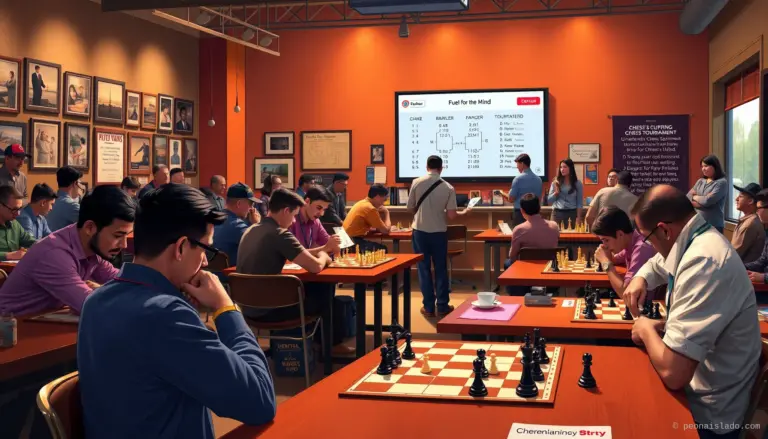
Another point to consider is the representation of the tournaments. While in the series the championships seem like glamorous and almost cinematic events, reality is more modest. Chess tournaments are usually quiet spaces, with players focused on their games and little room for external drama. The series, instead, exaggerates the tension and spectacle, something understandable from an entertainment point of view, but far from real experience.
Beth Harmon: A realistic portrait of a chess genius?
The protagonist of The Queen’s Gambit es, definitely, one of the most fascinating elements of the series. Beth Harmon is presented as a chess prodigy, a young woman with an innate ability to visualize the board and anticipate moves with almost supernatural precision. But, Do people like Beth really exist in the chess world??
The answer is complex. Although it is true that some players, like Bobby Fischer or Magnus Carlsen, They have shown exceptional talent from an early age, Beth's genius goes beyond the ordinary. Your ability to play entire games in your mind, no need for a physical board, It is a skill that some great teachers develop, but not with the ease shown in the series. This type of visualization takes years of practice and is not something that happens overnight..
Besides, the series explores the relationship between genius and self-destruction, a recurring theme in the representation of artists and athletes. Beth struggles with drug and alcohol addiction, a battle that, although dramatic, not necessarily representative of the majority of chess players. While it is true that some historical players, like Fischer himself, faced mental problems, It is not a general rule. The series, in this sense, opt for a darker and more complex narrative, that reinforces the myth of “tortured genius”, but that does not always reflect reality.
Another interesting aspect is Beth's loneliness.. In competitive chess, players are usually part of communities, clubs or teams, where the exchange of ideas and camaraderie are essential. Beth, instead, She is portrayed as a solitary figure, whose genius isolates her from the rest. This representation, although effective from a dramatic point of view, is not entirely faithful to the experience of most chess players, who find in the game a form of social connection.
The impact of The Queen’s Gambit in modern chess
Beyond its fidelity to reality, The Queen’s Gambit has had a tangible impact on the world of chess. Since its premiere in October 2020, The series has generated an unprecedented increase in interest in the game. Platforms like Chess.com reported an increase in 400% in the number of new users, and sales of chess boards and books on the subject skyrocketed. This phenomenon, known as the “Queen’s Gambit effect”, demonstrates the power of the media to influence popular culture.
But, what's behind this sudden interest? In part, It's because of the way the series humanizes chess.. Traditionally seen as an elitist or boring game, The Queen’s Gambit presents it as an exciting activity, strategic and accessible. The series also challenges gender stereotypes, showing a woman competing and beating men in a field historically dominated by them. This message has especially resonated with women and girls., inspiring them to explore chess as a viable option.
However, the impact has not been uniform. While some new players have remained committed to the game, others have lost interest once the novelty of the series wore off. Besides, competitive chess remains a demanding world, where talent and dedication are essential to stand out. The series, by simplifying some aspects of learning, may have created unrealistic expectations in some viewers.
On the other hand, the phenomenon has had a positive effect on the visibility of chess. Tournaments such as the World Chess Championship have received greater media attention, and figures such as Magnus Carlsen have gained popularity. There has even been talk of a possible “Renaissance” of chess, similar to what happened in the years 70 with the confrontation between Fischer and Spassky. In this sense, The Queen’s Gambit has achieved something that few productions have done: turn a board game into a cultural phenomenon.
Fiction as a mirror of reality: what does it tell us The Queen’s Gambit about chess and society?
Beyond its impact on chess, The Queen’s Gambit is a reflection on universal themes such as talent, ambition, loneliness and personal improvement. The series uses chess as a metaphor for life, showing how strategic decisions on the board can reflect the choices we make off it. In this sense, Fiction not only entertains, but also invites reflection.
One of the most interesting topics that the series addresses is the role of women in a world dominated by men.. Beth Harmon not only competes in a male field, but it does it in a time, the years 60, in which women were systematically excluded from spaces of power. Your success, although fictitious, raises questions about gender barriers and how these have been perpetuated in fields such as chess. Although today there are more women competing at a high level, Chess remains a sport with a significant gender gap. The series, by showing Beth as an almost invincible figure, can serve as inspiration, but also as a reminder that equality in this area is still far from being achieved.
Another relevant aspect is the representation of addiction and mental health.. Beth Harmon fights her dependencies as she tries to reach the top of chess, a duality that reflects the pressure to which many geniuses and artists are subjected. The series does not glorify addiction, but rather shows it as an obstacle that must be overcome. This approach has been praised for its honesty, although it has also generated debates about whether or not the series romanticizes suffering as part of the path to success.
Finally, The Queen’s Gambit reminds us that fiction, although it is not an exact reflection of reality, can influence how we perceive the world. The series has not only changed the way many people view chess, but it has also opened conversations about topics such as gender, genius and resilience. In this sense, Its value goes beyond historical or technical accuracy: It is a work that, like the queen's gambit, sacrifices some truths in pursuit of a more powerful and transformative narrative.
Ultimately, The Queen’s Gambit It is a work that oscillates between reality and fiction, but whose impact is undeniably real. Through its protagonist, the series invites us to question the limits of talent, social barriers and the price of success. Although not everything it shows is faithful to the experience of chess players, Its ability to inspire and generate debate makes it a cultural phenomenon worthy of analysis.
In the end, the question about whether The Queen’s Gambit Is it fact or fiction? There may not be a single answer.. Like chess itself, the series is a game of strategies, where every movement has a purpose and every sacrifice seeks a greater reward. What is true is that, beyond its veracity, has achieved something extraordinary: make the world look at chess with new eyes again, and maybe, for the first time, see in it a reflection of your own battles and triumphs.