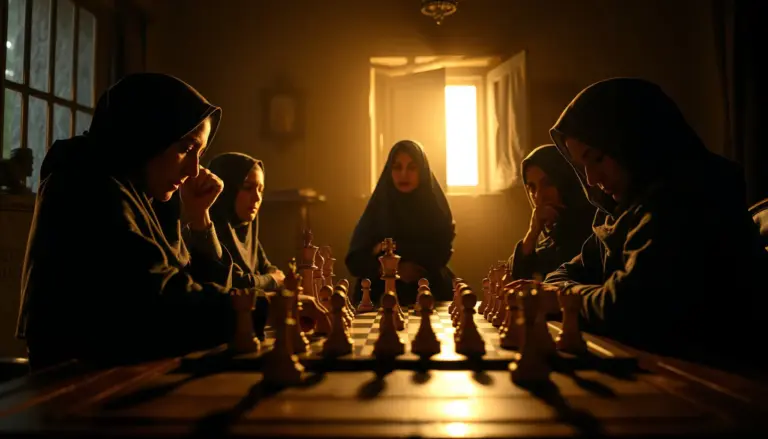
Imagine for a moment that your city becomes the epicenter of an intellectual battle where every movement, each strategy, is decided in silence. We are not talking about a conventional sports competition, but from a local chess tournament, where tension is not measured in sweat or speed, but in the ability to anticipate, calculate and, above all, understand that each piece on the board is a reflection of larger decisions that transcend the game. Organizing an event like this is not just about bringing together players and boards; is to create a space where logic, ethics and community are intertwined in 64 casillas. But, where to start?
The seed: define the purpose beyond checkmate
Before sending the first invitation or reserving a space, it is crucial to ask: what do we want to achieve with this tournament? The answer may seem obvious —”let people play chess”— but the depth of a local event lies in its ability to connect with the community. A tournament can be a tool for inclusion, as demonstrated by initiatives in prisons of Argentina, where chess becomes a bridge to social reintegration. Or it can be a space to promote gender equality, challenging stereotypes in a historically male-dominated sport, as analyzed in our article on chess pioneers.
Defining the purpose also involves deciding the format. Will it be a tournament open to all levels, from beginners to experts? Or will it be focused on specific categories, as youth or veterans? Here, he swiss system emerges as the most democratic option, allowing players of different levels to compete without the pressure of a knockout system. If you want to delve deeper into how this system works and how to read round pairs, we recommend our complete guide on swiss rounds.
The logistics board: permissions, spaces and resources
Organizing a local tournament is, in essence, a project management exercise. The first step is to ensure adequate space. It's not just about finding a place with tables and chairs, but to guarantee an environment that invites concentration and respect. Public libraries, cultural centers or even universities tend to be ideal allies, since they not only offer infrastructure, but also a context that raises the prestige of the event.
However, space is just the beginning. It is necessary to manage permits with local authorities, especially if the tournament will attract a significant number of participants. In some cases, It may be helpful to partner with local chess clubs or regional federations, who not only provide experience, but also credibility. Besides, It is essential to consider aspects such as accessibility for people with disabilities, security and, of course, the logistics of chess clocks. Will they be digital or analog? This decision may seem minor, but as we explain in our article on analog watches vs. digital, The type of watch can influence the dynamics of the game and the experience of the participants.
Another critical aspect is the budget. Although a local tournament does not require the same level of investment as an international event, It is important to plan for expenses such as registration on matchmaking platforms (como Chess-Results o Swiss-Manager), the purchase or rental of equipment, and the possible hiring of certified referees. Here, creativity can be an ally: look for local sponsors, like cafes or bookstores, not only helps cover costs, but also strengthens ties with the community.
The ethics of the game: rules, refereeing and chess culture
A chess tournament is not just a competition; It is a microcosm where not only tactical skills are tested, but also integrity and respect. For this reason, It is essential to establish a clear ethical framework from the beginning. This includes defining the tournament rules, like time control (classic, quick blitz), and ensure that all participants know them. But beyond the written rules, There is an unwritten code of etiquette that every organizer must promote.. From not distracting opponents to handling draw offers with sportsmanship, These details make the difference between a mediocre tournament and a memorable one. To delve deeper into this topic, We invite you to read our Guide to chess tournament etiquette.
Arbitration is another fundamental pillar. Having trained referees not only ensures that the rules are applied fairly, but also gives confidence to participants. In local tournaments, It may be tempting to do without professional referees to reduce costs, but this decision can be expensive: Bad refereeing can generate conflicts, demotivate players and damage the reputation of the event. If it is not possible to hire certified referees, at least make sure those who take on this role are well informed and impartial.
Besides, It is important to consider how situations such as ties or claims will be handled.. Will board offers be allowed?? How will disputes be resolved?? Here, transparency is key. Establishing a clear protocol for these cases and communicating it to participants before the tournament avoids misunderstandings and guarantees that everyone plays under the same conditions.. If you have questions about how to handle ties, our article on how to manage table offers offers practical strategies to maintain competitiveness without sacrificing fair play.
The community as a protagonist: dissemination and participation
A local chess tournament does not exist in a vacuum; Your success depends on the ability to connect with the community. The diffusion is, therefore, an aspect as important as logistics or arbitration. Hoy, Social networks are powerful tools to reach a wide audience, but it is crucial to adapt the message to the medium. Platforms like Instagram or TikTok can be ideal to attract young players, while Facebook groups or specialized forums can be more effective in reaching experienced players.
However, dissemination should not be limited to digital. Posters in libraries, universities or community centers, as well as advertisements on local radio stations, They can be just as effective, especially in cities where chess has not yet achieved mainstream status. Besides, It is important to think about how to make the tournament attractive to different audiences. Will there be categories for children? Will parallel workshops or talks be offered?? Initiatives like these not only increase participation, but they also help position chess as an accessible and enriching activity..
Another key aspect is the participation of local or regional figures. Inviting a chess master or a prominent player in the area can be a great incentive for participants., especially if a simultaneous exhibition or strategy talk is offered. This not only raises the level of the tournament, but also generates a sense of belonging and pride in the community.
The legacy: beyond the last movement
A local chess tournament does not end when the winner is announced. True success is measured by the impact it leaves on the community.. Did the event attract new players?? Did you encourage the creation of a local chess club? Did it generate interest in schools or cultural centers? These are the questions every organizer should ask themselves when evaluating the legacy of their tournament.
One way to ensure that the event has a lasting impact is to document it. Post featured matches, interviews with participants or even a photographic summary not only serves as a record, but it may also inspire others to organize their own tournaments. Besides, It is important to collect feedback from participants. What worked well? What could be improved? This type of information is invaluable for those who wish to repeat the experience or scale the event in the future..
Finally, It is crucial to recognize that a local chess tournament is much more than a competition. It is an opportunity to strengthen community ties, promote values such as respect and patience, and demonstrate that chess is a universal language that transcends ages, genres and cultures. As our article on chess as a universal language, This game has the power to bring people together in ways that few other sports or activities can match..
Organizing a local chess tournament is, ultimately, an act of faith in the transformative power of this ancient game. It's not just about moving pieces on a board, but to create a space where the strategy, ethics and community meet. And although the road may be full of logistical and bureaucratic challenges, the result—a more connected city, a more united community and, above all, a group of people who discover the pleasure of thinking—worth every effort.
So, If you have ever dreamed of turning your city into the scene of an intellectual battle, don't hesitate: the board is ready, the pieces wait, and the first move is yours.