Chess is an ancient game that has evolved beyond its classic rules, giving way to variants that challenge creativity, memory and strategy of the players. While traditional chess remains the king of the boards, modalities like blind chess, he chess 960 (o Fischer Random) and other innovative proposals have gained popularity for their ability to break with convention. These variants not only offer fun and freshness, but also develop unique skills, from mental visualization to adaptation to unpredictable scenarios. In this article, We will explore some of the most fascinating versions of chess, analyzing its rules, benefits and why they have captivated beginners and masters alike. Are you ready to discover a world where the pieces don't always move as you expect??
Blind chess: when the mind becomes the board
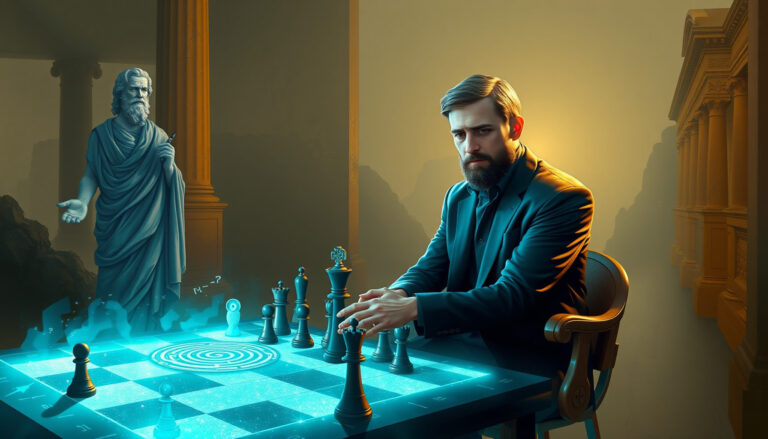
Blind chess is, definitely, one of the most impressive and demanding variants of the game. In this modality, players do not have access to the physical board; instead, They must memorize the position of all the pieces and make their movements based solely on their mental visualization ability. This ability, known as blind calculation, It is one of the most valued in high-level chess, as it allows players to anticipate plays without depending on visual stimuli.
The origin of blindfolded chess dates back to the Middle Ages, where it was used as a way to demonstrate intellectual prowess. However, It was in the 19th century when it began to become popular in tournaments, especially in Europe. Players like Paul Morphy y Alexander Alekhine They were known for their ability to play multiple games simultaneously without looking at the board., an achievement that left his contemporaries astonished.
Playing chess blindfolded not only improves memory and concentration, It also forces the player to develop a deeper understanding of pawn structures., key boxes and strategic plans. However, is not without challenges. Mental fatigue is one of the biggest obstacles, since keeping in mind the exact position of 32 pieces for hours can be exhausting. Besides, a small error in visualization can lead to catastrophic plays, like moving a piece to an occupied square or not perceiving a check.
For those who wish to delve into this variant, It is recommended to start with short games and gradually increase the difficulty. It is also useful to practice with visualization exercises, like trying to remember the position of the pieces after closing your eyes for a few seconds. Over time, the brain adapts and the ability to “ver” the board in the mind becomes more natural.
Chess 960: Bobby Fischer's revolution against memorization
If blindfolded chess challenges visual memory, he chess 960 (aka Fischer Random) He does it with theoretical memory. Created by the legendary Bobby Fischer in 1996, This variant seeks to eliminate the advantage that players who memorize openings have, a problem that, according to Fischer, was ruining creativity in traditional chess. in chess 960, the initial position of the pieces in the first row is determined randomly, following certain rules to maintain game consistency.
The rules of chess 960 They are simple but revolutionary. Before each game, The pieces are placed in the first row as follows:
- The pawns remain in their usual position.
- Bishops must be placed on squares of opposite colors.
- The king must be placed between the two rooks to allow castling.
- The remaining pieces (horses and lady) are distributed randomly in the remaining boxes.
This results 960 possible starting positions, hence the name of the variant. Castling still possible, but its execution varies depending on the initial position of the king and the rooks.
chess 960 has gained popularity in recent years, especially in elite tournaments. Great teachers like Magnus Carlsen y Hikaru Nakamura have participated in events of this type, highlighting their ability to adapt to unpredictable situations. Unlike traditional chess, where the first movements usually follow memorized patterns, in chess 960 Players must rely on their positional understanding and creativity from the first move.
This variant is not only fun, but it also has educational benefits. By eliminating the dependence on memorized openings, players learn to evaluate positions from scratch, which improves your analytical skills and strategic flexibility. Besides, chess 960 It is ideal for those looking for a fresh challenge, since each game is unique and requires a different approach.
Other variants that break with convention
In addition to blindfolded chess and 960, There are other variants that offer unique and challenging experiences. These modalities are not only fun, but they can also help develop specific skills in players. Next, We explore some of the most interesting:
Rapid chess and blitz chess
Although they are not variants in the strict sense, he fast chess (with times of 10 a 60 minutes per player) and the blitz chess (under 10 minutes) require a different way of thinking. Time pressure forces players to make quick decisions, which improves intuition and the ability to evaluate positions in seconds. These modalities are ideal for those seeking excitement and adrenaline.
Team chess
In team chess, several players collaborate to solve a game, either discussing moves out loud or taking turns playing. This variant encourages teamwork, communication and the ability to defend strategic ideas. It is especially popular in clubs and schools, where it is used as a pedagogical tool.
Chess with additional pieces
Some variants introduce new pieces or modify existing rules to create a more dynamic game. For example, he Capablanca chess add two additional pieces: he archbishop (which combines the movements of the bishop and the knight) and the chancellor (which combines the movements of the rook and the knight). These pieces increase the complexity of the game and force players to rethink their strategies..
circular chess
In circular chess, the board is shaped like a ring, which eliminates corners and completely changes the dynamics of the game. Pieces can move in directions that are not possible on a traditional board, which creates completely new attack and defense patterns. This variant is ideal for those looking for a radically different challenge.
Why try these variants?
Chess variants are not just a form of fun; They also offer tangible benefits for players. First of all, break the monotony. Always playing the same openings and defenses can get boring, even for the most passionate fans. Variations introduce novelty and excitement, maintaining interest in the game.
In second place, develop specific skills. As we have seen, Blind chess improves memory and visualization, while chess 960 encourages creativity and positional thinking. Other variants, like speed chess, sharpen intuition and decision making under pressure. These skills are not only useful in chess, but also in everyday life.
Finally, the variants level the playing field. In traditional chess, Players with greater theoretical knowledge usually have an advantage. However, in modalities such as chess 960 or blindfolded chess, experience and creativity outweigh memorization. This makes them ideal for players of all levels., from beginners to grandmasters.
Besides, many of these variants are easy to organize. You don't need a special board to play chess. 960 (just generate a random starting position) not even to practice chess blindfolded (All it takes is a willing partner.). This makes them accessible to anyone with an interest in the game..
Conclusions: chess as a universe of possibilities
Chess is much more than a strategy game with fixed rules; It is a universe of possibilities where creativity and adaptation are as important as theoretical knowledge. Variants like the blind chess and the chess 960 They show that this ancient game can be reinvented again and again, offering unique challenges for players of all levels. From improving memory and visualization to encouraging creativity and positional thinking, These modalities are not only fun, but they also enrich the chess experience.
Exploring these variants is a great way to break the routine and discover new facets of chess.. Whether playing a game of chess 960 to challenge your ability to adapt or trying blindfolded chess to test your memory, Each experience will bring you closer to a deeper understanding of the game. Besides, These modalities are ideal to share with friends, in clubs or even in tournaments, where fun and learning go hand in hand.
In a world where traditional chess continues to dominate, Daring to try something different can be the key to keeping the passion for this game alive.. So next time you sit in front of a board, Consider giving one of these variants a try. who knows, You may discover that your true strength is not in following the rules, but to reinvent them.