In recent years, Belarus has been the scene of one of the most tense political crises in Eastern Europe. After the controversial presidential elections in 2020, which many considered fraudulent, Thousands of citizens took to the streets to demand democracy and the end of the authoritarian regime of Alexander Lukashenko. However, state repression did not take long to arrive: arbitrary arrests, Police violence and systematic censorship became the government's response. In the midst of this climate of oppression, an unexpected phenomenon arose: chess became a symbol of silent resistance. Far from being a simple hobby, This ancient game has become a tool of protest, a coded language to challenge power without saying a word. How does a board 64 Casillas managed to infiltrate the heart of the Belarusian dissidence? This is the story of how chess, with its symbolic load of strategy, patience and endurance, It became a peaceful weapon in the fight for freedom.
Chess as a cultural refuge in Belarus
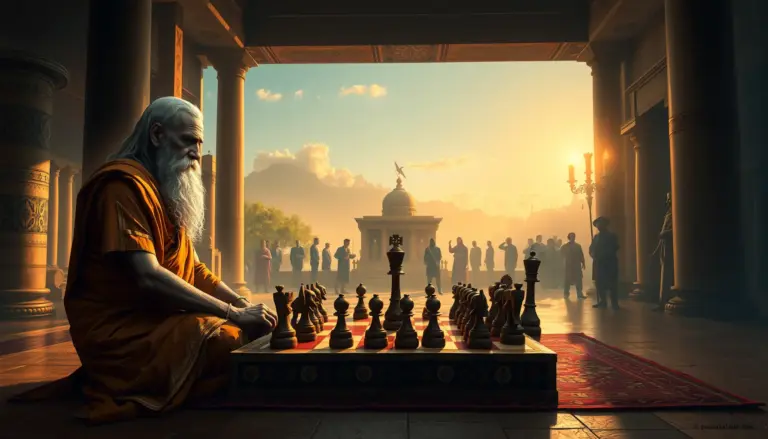
Belarus has a deep-rooted chess tradition, dating back to Soviet times. For decades, chess was promoted as a national sport, with figures like Boris Gelfand, world runner-up in 2012, as maximum exponent. However, beyond sporting achievements, Chess has always been a space of intellectual freedom in a country where political dissidence has historically been persecuted.. In the Soviet era, chess clubs functioned as places for debate and critical thinking, where citizens could express ideas without fear of direct reprisals.
After the fall of the USSR, chess remained relevant, but its meaning evolved. In a context of growing authoritarianism under Lukashenko, the game became a symbolic refuge. The boards were not only a mental escape, but also a way to keep alive the culture of passive resistance. In a country where street protests were repressed with violence, chess offered an alternative: the possibility of challenging the system from stillness, without direct confrontation. This cultural tradition laid the foundations for, decades later, the game took on a new meaning in the context of the protests of 2020.
Chess in protests: from the symbolic to the strategic
When mass demonstrations broke out in August 2020, the regime responded with unprecedented brutality. Security forces detained thousands of people, and social networks were filled with images of police violence. In this scenario, Belarusians sought ways to protest that minimized the risk of repression. It was then that chess emerged as a symbol of resistance non-violent but forceful.
One of the first manifestations of this phenomenon was the appearance of chess boards on the windows of the buildings. The citizens placed white and black pieces in positions that, although seemingly innocuous, conveyed messages of challenge. For example, a white pawn advancing into enemy territory could be interpreted as a gesture of support for the opposition, while a king in check symbolized the pressure on the regime. These actions, although subtle, were difficult to pursue legally, since they did not violate any explicit law.
Another example was the use of chess games in public spaces. Activists began to organize massive meetings in parks and squares, where hundreds of people played simultaneously. These events not only served as a meeting point, but they also sent a clear message: “here we are, defying fear”. chess, with his methodical and thoughtful nature, contrasted with the violence of the regime, reinforcing the idea that resistance could be peaceful but relentless.
Chess as a language of dissent
Beyond its use as a visual symbol, chess became a coded language for dissent. In a country where censorship controls the media and social networks are monitored, Belarusians resorted to chess metaphors to communicate political ideas without being detected. For example, phrases like “The king is in check” o “The white queen advances” became common in everyday conversations, transmitting messages of support for the opposition or criticism of the government.
This language was not only safe, but also inclusive. Unlike street protests, that required physical courage, Chess allowed people of all ages and conditions to participate in resistance. Seniors, children and adults could sit in front of a board and, with a simple movement of pieces, express your discontent. This democratization of the protest was key to keeping the mobilization alive in a context of extreme repression..
Besides, Chess was integrated into the art and culture of the resistance. Musicians, writers and visual artists began to incorporate chess references into their works. Songs with lyrics that talked about “eternal matches” or paintings depicting boards with human pieces went viral. These artistic expressions not only reinforced the symbolism of chess, but also linked it to a broader tradition of fighting for freedom.
The response of the regime and the future of chess as a symbol
As expected, The Lukashenko regime was quick to perceive the threat posed by chess as a tool of resistance.. Although it could not ban the game outright—given its popularity and status as a national sport—, the government implemented measures to deactivate its symbolic power. For example, Mass chess gatherings in public spaces were prohibited, and the authorities began to monitor chess clubs, accusing some of being “centers of political agitation”.
However, These measures only served to reinforce the symbolism of chess. Every time the regime tried to repress its use as a form of protest, Belarusians responded with greater creativity. For example, when games in parks were prohibited, Citizens began to play in their homes and broadcast the games live on social networks, using hashtags like #ChessByBelarus. This constant adaptation showed that chess was not just a passing symbol, but one long term resistance strategy.
The future of chess as a symbol of protest in Belarus is uncertain, but its impact is already undeniable. In a country where freedom of expression is severely limited, play has proven to be a powerful tool to keep hope alive. Besides, Its use as a form of resistance has transcended the borders of Belarus, inspiring similar movements in other countries with authoritarian regimes. chess, with your strategy combination, patience and creativity, has proven that even in the most oppressive contexts, resistance can find unexpected ways to flourish.
Conclusions: chess as a legacy of peaceful resistance
The history of chess in the Belarusian resistance is a testimony to the power of symbols in the fight for freedom. What began as a cultural pastime transformed into a tool of silent protest, capable of challenging an authoritarian regime without resorting to violence. Through boards in windows, games in public spaces and a coded language, Belarusians found in chess a way to keep dissent alive in a context of extreme repression.
This phenomenon not only highlights the creativity of peaceful resistance, but also the ability of symbols to adapt and evolve. chess, with its rich history and its strategic load, proved to be the perfect vehicle to transmit messages of hope and challenge. Although the Lukashenko regime has tried to quell this form of protest, the legacy of chess as a symbol of resistance will endure, inspiring future generations to find new ways to fight for democracy.
Ultimately, The history of chess in Belarus reminds us that resistance does not always require direct confrontation. Sometimes, just one board, a few pieces and the determination of those who refuse to give up. In a world where oppression takes on increasingly sophisticated forms, Belarusian chess is a reminder that creativity and patience can be weapons as powerful as any other.