In a world where success is mainly measured by economic indicators such as Gross Domestic Product (GDP), Bhutan emerges as a beacon of social innovation with its philosophy of Gross National Happiness (GNH) o Gross National Happiness. This small Himalayan kingdom not only prioritizes the well-being of its citizens over material growth, but has integrated unexpected practices to promote inner balance, between them, he chess. How can an ancient game be part of a State policy that seeks collective harmony? The answer lies in the connection between strategy, patience and self-knowledge that chess promotes, values that Bhutan has been able to raise to an institutional level. Throughout this article, We will explore how the GNH redefines progress, the role of chess in this holistic vision and the lessons the world can learn from this unique approach.
El Gross National Happiness: a revolution beyond GDP
Bhutan is not a country that goes unnoticed by chance. In 1972, the fourth king of the country, Jigme Singye Wangchuck, coined the term Gross National Happiness as an alternative to PIB, arguing that true development should be measured by the well-being of people, not because of its economic production. This philosophy is based on four fundamental pillars: sustainable socioeconomic development, preservation of culture, environmental conservation and good governance. Unlike Western models, where economic growth is often accompanied by inequality and stress, The GNH proposes a balance between the material and the spiritual.
What is revolutionary about the GNH is not only its approach, but its implementation. Bhutan has created a Gross National Happiness Index, a tool that evaluates the well-being of the population through 33 indicators grouped into nine domains, as psychological health, use of time, community vitality and cultural diversity. This system allows the government to identify areas of improvement and design public policies that address the real needs of citizens.. For example, instead of building polluting factories, Bhutan invests in free education and universal healthcare, proving that progress does not have to sacrifice quality of life.
But how does this relate to chess?? The answer lies in one of the least obvious domains of GNH: he inner balance. Bhutan understands that happiness is not just an emotional state, but an active process that requires tools to manage stress, cultivate patience and develop resilience. This is where chess comes into the picture as a metaphor and a concrete practice of this balance..
Chess as a tool for personal and social development
Chess is not just any game in Bhutan. From 2015, The government has integrated it into educational and community programs as part of its strategy to promote critical thinking, concentration and emotional intelligence. But its inclusion goes beyond the pedagogical: chess is considered a mirror of life, where each movement reflects decisions that require reflection, patience and acceptance of consequences.
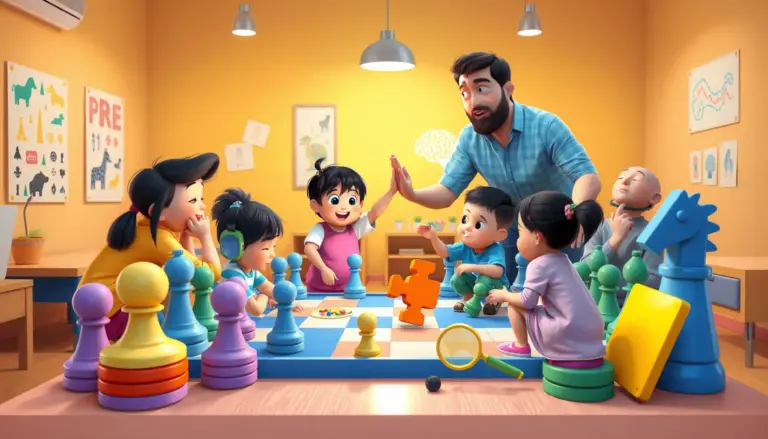
In Bhutanese schools, children learn chess not only as a sport, but as a self-knowledge tool. Teachers use games to teach values such as humility (accept defeat), perseverance (analyze errors) and empathy (anticipate the opponent's moves). A study carried out by the Center for Bhutanese Studies in 2018 revealed that students who participated in chess workshops showed an improvement in 20% in their ability to solve problems and a significant reduction in anxiety levels. These results are not coincidental: Chess activates areas of the brain related to long-term planning and emotional regulation, essential skills for psychological well-being.
But the impact of chess in Bhutan transcends the individual. In rural communities, where access to technology is limited, the game has become a generational bridge. Old people and young people gather in squares and monasteries to play, sharing not only strategies, but stories and traditions. In a country where the 70% of the population lives in rural areas, chess acts as a social lubricant, strengthening community ties and preserving oral culture. Even in Buddhist monasteries, monks practice it as a form of active meditation, where each game is an opportunity to observe the patterns of the mind without attachment to the result.
The science behind chess and happiness
The connection between chess and well-being is not just anecdotal; It is supported by neuroscience and psychology. Studies like those of Max Planck Institute for Human Development have shown that playing chess regularly increases the density of gray matter in the brain, especially in areas related to memory, decision making and emotional control. This results in a greater ability to manage stress and an improvement in cognitive resilience, a key factor in the prevention of diseases such as depression or Alzheimer's.
In the context of the GNH, These benefits take on a collective dimension. Bhutan faces challenges such as the migration of young people to cities or the pressure of globalization, that threaten to erode its social fabric. Chess acts as a antidote to fragmentation, offering a space where age differences, gender or social status are diluted in front of the board. A notable example is the Bhutan National Chess Festival, where thousands of people from all over the country compete in an atmosphere of camaraderie. Unlike Western tournaments, where the emphasis is on victory, In Bhutan the goal is learn from each game, even from the defeats.
Besides, Chess fosters a mindset of continuous growth, something aligned with Buddhist principles that influence Bhutanese culture. in Buddhism, suffering arises from attachment to results, and chess teaches players to focus on the process, not in the outcome. This philosophy is reflected in how Bhutan approaches development: not like a race towards a destination, but like a journey where every step counts. That's why, even in schools, children are evaluated not only on their chess skills, but for his ability to learn from mistakes and maintain a positive attitude.
Global lessons: Can the world learn from Bhutan?
In an era marked by mental health crisis, increased work stress and social disconnection, The Bhutanese model offers valuable clues to rethink development. While countries like Finland or New Zealand have begun to incorporate well-being indicators into their public policies, Bhutan goes a step further by integrating concrete practices – such as chess – into its national happiness strategy. The question is: Can this approach be replicated in societies with very different realities??
The answer is not a simple “Yeah” o “no”, but a call to adapt GNH principles to local contexts. For example, in western cities with high rates of loneliness, chess could be implemented in parks, libraries or community centers as a tool to encourage social interaction. In educational environments, Its inclusion in study plans could help combat attention deficit and improve academic performance. Even in the workplace, Companies could adopt chess as a team building, promoting collaboration and emotional intelligence.
However, the biggest challenge is not technical, but cultural. Bhutan has managed to integrate chess into its social fabric because it sees it as an extension of your values, not like a fad. In the West, where success is measured by productivity and consumption, Adopting practices like chess would require a change in mentality: move from obsession with results to valuing the process, from individual competition to community collaboration. This does not mean abandoning economic progress, sino redefine it to include human well-being.
An inspiring example is the case of Iceland, that in 2012 implemented a national chess program in schools with notable results: students improved their performance in math and reading, and school violence rates decreased. These types of initiatives show that, although Bhutan has unique conditions, your ideas can be adapted. The key is to understand that happiness is not a luxury, but one long term investment in human capital.
Conclusions: chess as a symbol of a balanced future
Bhutan reminds us that development does not have to be synonymous with sacrifice. His philosophy of Gross National Happiness and the integration of chess as a tool for inner balance are a testimony that it is possible to build societies where well-being is not a privilege, but a right. chess, in this context, transcends its status as a game to become a harmony symbol: between mind and emotions, between the individual and the community, between the present and the future.
The lessons from Bhutan are clear. First, that progress must be measured by human flourishing, not only by economic indicators. Second, that seemingly simple practices—like playing chess—can have a profound impact on mental and social health if integrated with intention. And third, that happiness is not a passive state, but the result of deliberate actions that foster connection, reflection and personal growth.
In an increasingly accelerated and disconnected world, The Bhutanese model invites us to pause and ask ourselves: What kind of society do we want to build?? One where success is measured by what we have?, or how we feel and relate? chess, with his 64 boxes and their infinite possibilities, It is a perfect metaphor for this balance. Every game is an opportunity to practice patience, strategy and acceptance, values that Bhutan has managed to elevate to the category of public policy. Perhaps the greatest legacy of this small Himalayan kingdom is not its Happiness Index, but the proof that, when a society prioritizes well-being over excessive growth, everyone wins. Even if, sometimes, you have to lose a game to learn the lesson.