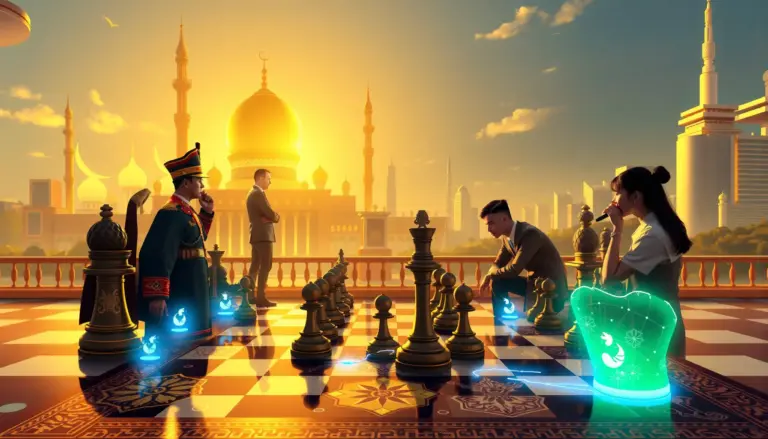
Traveling to an international chess tournament is an experience that transcends the simple act of competing.. It is a ritual of mental preparation, logistics and strategy that requires both off the board and on it. Imagine crossing borders with a chess clock in your suitcase, and rating FIDE that fluctuates with each game and the certainty that, in some corner of the world, an unknown opponent is studying your games with the same intensity with which you analyze theirs. This journey is not just physical; It is an immersion in global chess culture, where every detail—from time zones to gaming room etiquette—can make the difference between success and frustration.
Logistics as the first item: strategic planning
An international tournament does not begin with the first pawn move, but with the flight reservation. The choice of itinerary must be aligned with the rhythms of the tournament: arrive with at least 48 hours in advance to acclimatize to the new environment, avoid the jet lag and familiarize yourself with the competition venue. Many players underestimate the impact of a sudden change in schedule, but studies in chess break show that even a three-hour difference can affect concentration and decision-making under pressure.
Documentation is another critical front. Make sure your passport is valid for at least six months and check if the destination country requires a visa for your nationality. some tournaments, especially those organized by FIDE, require a player license updated, that you can manage through your national federation. Forgetting this detail can mean staying at the door of the tournament, no matter your level of play. Besides, bring digital and physical copies of your rating FIDE and the tournament bases, as some referees require confirmation of your eligibility before allowing you to register.
Luggage should be minimalist but strategic. And essential tournament kit includes not only the chess clock—preferably one you are familiar with—, but also a notebook, replacement pens, a bottle of water and energy snacks such as nuts or protein bars. Avoid heavy foods before games, since digestion can rob you of mental energy. Some players even carry a small travel board to review openings or analyze games between rounds., although this depends on your preparation style.
The Swiss system and the psychology of rounds
Most international tournaments use the swiss system, a format that matches players with similar scores in each round. Understanding how this system works is crucial to managing your energy and expectations.. For example, if you lose in the first rounds, not everything is lost: the algorithm will seek to match you with other players in the same situation, which can give you the opportunity to recover points. However, This also means that every game counts., and a mistake in the initial rounds can condemn you to face lower level rivals in the following, limiting your chances of climbing the rankings.
To navigate the Swiss system successfully, It is useful to study the pairs of rounds published before each match. These documents, which are usually available on the tournament page, They allow you to anticipate possible rivals and prepare specific openings. Besides, Observing your opponents' pace of play in previous rounds can give you clues about their style: Are they positional or tactical players?? Do they prefer center control or asymmetrical pawn structures?? This information is pure gold to adjust your strategy.
Psychology plays an equally important role. In international tournaments, It is common to face rivals with very different playing cultures. For example, the players of the Russian School They are usually experts in technical endings, while the representatives of the Indian School stand out for their creativity in the openings. Adapting to these styles requires mental flexibility and, in some cases, even change your usual approach. A common mistake is to underestimate an opponent because of his rating or nationality, when in reality chess is a universal language where a player “weak” can surprise you with impeccable theoretical preparation.
Etiquette and atmosphere: the unwritten protocol
International tournaments have a code of conduct that goes beyond the official rules. The etiquette in chess includes everything from how to greet your opponent before the game—a firm handshake, without exaggeration—even how to behave during critical moments. For example, It is frowned upon to leave the table in the middle of a tense game., as it can be interpreted as a tactic to distract the opponent. In the same way, Avoiding excessive eye contact or gestures of frustration is key to not revealing your emotions..
The atmosphere in the gaming room also varies by country. In Eastern Europe, For example, tournaments tend to be quieter and more formal, with strict referees who penalize any noise. Instead, in Latin American or Asian tournaments, the atmosphere can be more relaxed, with players chatting between rounds or even sharing analysis. Knowing these cultural differences will help you avoid misunderstandings and better integrate into your environment.. An additional detail: in some countries, like India or China, It is common for players to carry amulets or follow superstitious rituals before games. Respect these traditions, even if you don't share them, It's part of fair play.
Communication with referees deserves a separate chapter. In international tournaments, the official language is likely to be English, but not all referees master it fluently. If you have questions about the rules—for example, how to proceed in case of a zugzwang or a replay of plays—, formulate your questions clearly and concisely. Carry a small dictionary of technical terms in English to avoid confusion. Remember that referees are there to ensure fairness, not to favor any player, so treat their decisions with respect, even if you don't agree.
Technical preparation: beyond the openings
Preparation for an international tournament is not limited to reviewing your favorite openings. You must consider factors such as time control, which may vary depending on the tournament. Some events use increments —additional time for movement—, while others opt for classic controls like 90 minutes to 40 movements. Adapting to these formats requires prior practice, especially if you are used to quick games on online platforms. A common mistake is spending too much time on the first plays, which leaves you at a disadvantage in the critical phase of the middle game.
Another key technical aspect is the management of the rating. If your goal is to improve your FIDE score, You should focus on winning games against rivals with a rating similar or superior to yours. However, if the tournament is a step towards obtaining a title—such as FIDE Master or International Master—, you may need to score specific points in matches against titled players. To better understand how this system works, you can consult the Complete guide to the Elo system, which explains how the variations of rating and what strategies to follow to maximize your profits.
Physical preparation is also essential. Although chess is not a physical endurance sport, prolonged concentration requires good physical condition. Some players incorporate light exercise routines—such as yoga or walking—to keep their minds clear.. Besides, Hydration and a balanced diet are essential to avoid mental fatigue. Avoid alcohol and excess caffeine, as they can affect your calculation ability and your sleep, two pillars of performance in long tournaments.
The trip as a cultural experience
An international tournament is also an opportunity to immerse yourself in a foreign culture. Many players take advantage of the free days between rounds to explore the host city, visit museums or even participate in local activities. For example, in cities like Saint Petersburg or Havana, you can find chess museums that house historical pieces and legendary games. These places are not only a source of inspiration, but they also allow you to connect with the history of the game and understand how it has evolved in different cultural contexts..
Interaction with other players is another enriching aspect. International tournaments bring together people of all ages and backgrounds, from young prodigies to veterans who have competed in the pre-digital era. Take advantage of these meetings to exchange ideas, analyze games or even establish contacts for future training. Many players form support networks that transcend borders, and some even end up traveling together to other tournaments. chess, after all, it's a universal language that unites people beyond linguistic or cultural differences.
However, It is also important to maintain a balance. Don't fall into the trap of socializing too much and neglecting your preparation. Set clear boundaries: For example, Spend your mornings analyzing games and your afternoons exploring the city. Some players keep a tournament diary where they record not only their games, but also his impressions about the place, the rivals and the strategies that worked or failed. This habit not only helps you reflect on your game, but also creates a valuable memory of the experience.
Conclusion: the journey as a metaphor for the game
Traveling to an international chess tournament is, in many ways, a metaphor for life itself. Requires planning, adaptability and the ability to manage both successes and failures. Each game is a unique challenge, just as each host city offers a different experience. But beyond the results, what really matters is the process: the discipline of preparing, the humility to learn from each rival and the resilience to keep going even when things don't go as expected.
chess, after all, It's not just about winning or losing., but to grow as a player and as a person. An international tournament exposes you to new ideas, cultures and ways of thinking, enriching your perspective both on and off the board. So the next time you pack your suitcase for an event of this type, remember that you are not just carrying parts and a watch: you are carrying with you the essence of a game that has united humanity for centuries. and who knows, Maybe on that trip you will find not only a new rival, but also an improved version of yourself.