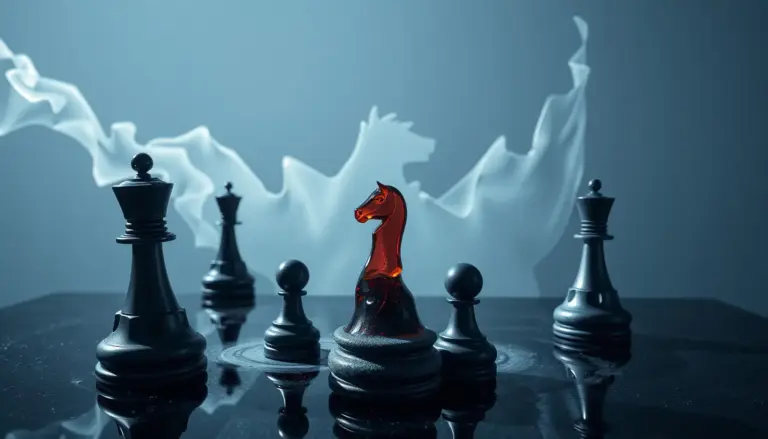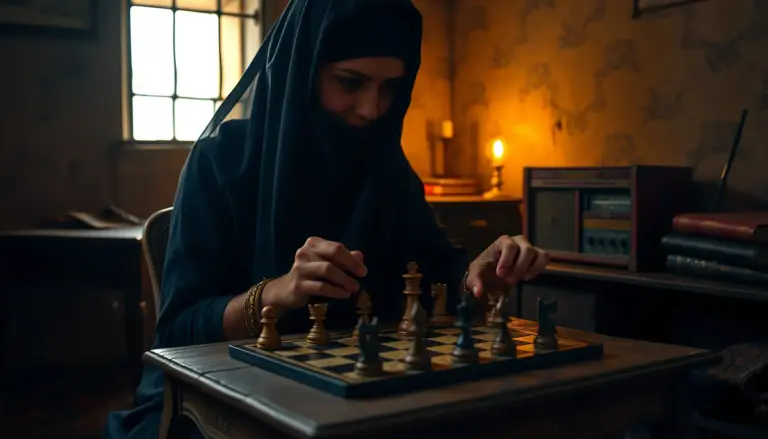
Since chess became a battleground between human and artificial intelligence, the question has resonated strongly: Have we humans already lost to machines?? In 1997, The world witnessed a historic milestone when the supercomputer Deep Blue of IBM defeated the then world champion Garry Kasparov. This event not only marked a before and after in the history of chess, It also redefined the limits of what machines could achieve.. However, more than two decades later, The relationship between humans and machines in chess has evolved in fascinating ways. It is no longer a simple competition, but of a symbiosis where technology expands human capabilities, challenges our creativity and redefines the very concept of intelligence. In this article, We will explore how this dynamic has changed, What role do humans play today in a game dominated by algorithms and if, In fact, The defeat was nothing more than the beginning of a new era.
Chess as a mirror of technological evolution
Chess has been a reflection of human intellectual capacity for centuries.. Its complexity, with more than 10120 possible games (a number greater than the atoms in the observable universe), made it an irresistible challenge for computer scientists. In the years 50, Pioneers like Alan Turing and Claude Shannon began theorizing about how a machine could play chess.. However, it was in the 90 when technology reached a tipping point. Deep Blue, with its ability to evaluate 200 million positions per second, showed that machines could outperform humans in a game considered the “mental sport” par excellence.
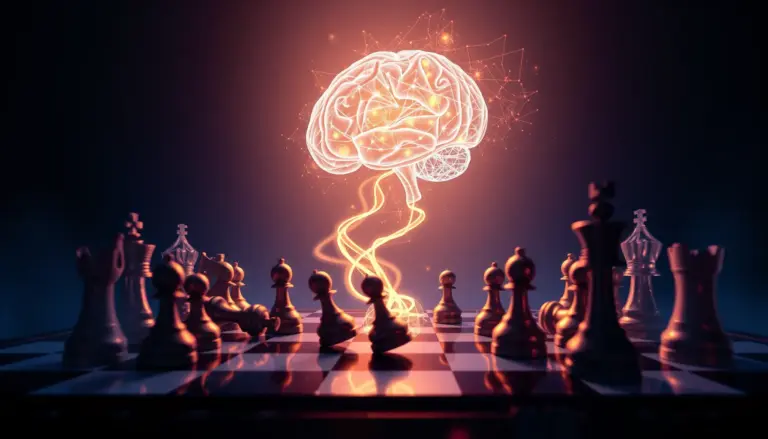
But this victory was not just a technical achievement; was a symbol of how artificial intelligence (IA) could challenge and, in some cases, surpass human cognition. Chess became a laboratory where search algorithms were tested, heuristics and machine learning. Hoy, engines like Stockfish o Leela Chess Zero They are capable of analyzing positions with a depth and precision unattainable by any grandmaster. However, This technological supremacy has not eliminated the human factor. Rather, has transformed it, forcing players to adapt to a new paradigm where the machine is not just a rival, but also a tool.
human adaptation: when the rival becomes an ally
After Kasparov's defeat, many predicted the end of chess as a competitive sport. Why keep playing if the machines will always win? However, the opposite happened: chess experienced a renaissance. Human players began to use AI engines not as enemies, but as coaches. Tools like ChessBase o Lichess allow you to analyze games with millimeter precision, identify errors and discover new strategic ideas. Hoy, An amateur player with access to an engine can analyze a game like a grandmaster would do ago. 30 years.
This symbiosis has led to a fascinating phenomenon: the hybridization of knowledge. Humans no longer depend solely on their intuition or memory, but they integrate the cold analysis of the machine with its creativity. A clear example is the style of players like Magnus Carlsen, current world champion, who has managed to combine the precision of the engines with a unique psychological and positional approach. Carlsen not only studies the lines suggested by the algorithms, but also looks for positions where the machine cannot calculate all variants, thus exploiting its limitations.
Besides, chess has evolved into new forms of competition. Modalities like advanced chess (where players can consult engines during the game) or the chess 960 (a variant with random starting positions) have emerged as alternatives to keep the game fresh and challenging. These innovations demonstrate that, far from giving up, Humans have found ways to reinvent chess in the age of AI.
The limits of the machine: where does artificial intelligence fail?
Despite its technical superiority, machines are not infallible. Its strength lies in its ability to calculate millions of variants in seconds, but this does not make them invincible. In fact, Chess engines have weaknesses that humans can exploit, especially in areas where intuition and creativity are key.
- Positional evaluation: Although the engines are excellent at calculating tactics, your understanding of complex positional concepts (such as pawn structure or space control) remains limited. A human can “to feel” that a position is promising without the need to calculate all the variants, something that a machine cannot do with the same efficiency.
- Psychology and pressure: Chess is not just a game of logic; It is also a psychological duel. Humans can manipulate their opponents, creating traps or taking advantage of their emotional weaknesses. The machines, instead, are immune to these factors, which makes them predictable in certain contexts.
- Creativity in the opening: Engines are usually based on databases of previous games. This means that, in little explored positions, can stay “blank” or propose suboptimal plays. The humans, instead, they can innovate and surprise with original ideas.
A notable example is the game between Stockfish y Leela Chess Zero in it TCEC Superfinal of 2020. In an apparently equal position, Leela sacrificed a piece without clear compensation, something no human would have considered. The machine “vio” a long-term advantage that Stockfish couldn't refute, proving that, in some cases, AI can be more creative than humans. However, This also raises an awkward question.: if machines can be creative, what is left for us humans?
The future of chess: where are we going?
Chess is no longer the same game that Kasparov dominated in the 90. The emergence of AI has accelerated its evolution, taking him into unknown territory. But, what does the future hold for us?
First of all, we are likely to see an increase in hybrid modalities, where humans and machines collaborate in real time. There are already tournaments where players can consult engines during the game, and this trend could spread. This would not only democratize chess (allowing players of all levels to compete on equal terms), but it would also make it more accessible and entertaining for the general public.
In second place, AI could help solve some of the great mysteries of chess. For example, what is the best initial move? Is there a perfect strategy that guarantees victory with white pieces? Projects like ChessBase They are already using engines to analyze openings and endings with unprecedented depth. In the future, we might discover that some classic openings are, In fact, losers, or that certain endings that were believed to be draws are winnable.
Finally, Chess could become a testing ground for AI in other areas. If machines can master a game as complex as chess, What other intellectual challenges could you overcome?? We are already seeing how AI is applied in medicine, finances or even in artistic creation. chess, in this sense, it's just the beginning.
However, This future also poses ethical challenges. If machines can play chess better than any human, What value does human competition have?? Should we accept that, in some fields, AI will always be superior? The answer is not simple, but the truth is that chess has shown that, even in defeat, We humans can find new ways to grow and reinvent ourselves..
Conclusions: did we lose the battle, but we won the war?
The initial question —Have humans already lost to machines in chess??—does not have a simple answer. It is true that, in terms of pure calculation and precision, AI engines vastly surpass us. From Deep Blue until Stockfish, machines have proven time and time again that they can defeat the best human players. However, Reducing chess to a mere competition of brute force would be ignoring its essence.: a game that combines logic, creativity, psychology and art.
What we have witnessed is not a defeat, but one transformation. Humans no longer compete against machines in the traditional sense, but rather they use them as tools to expand the limits of our own game. Players like Magnus Carlsen or Fabiano Caruana not only study the lines suggested by the engines, but they also seek positions where human intuition can overcome algorithmic coldness. Besides, Chess has evolved towards new modalities that keep the competitive spirit alive, proving that human creativity remains irreplaceable.
Ultimately, Chess is a reflection of the relationship between humans and technology. It's not about who wins or loses, but about how both can complement each other. Machines have forced us to rethink what it means to be intelligent, but they have also given us the tools to reach levels of understanding of the game that were previously unimaginable.. Maybe the real victory is not defeating the AI, but learn to coexist with it, taking advantage of his power to bring chess—and, by extension, human intelligence—to new heights.
So, did we lose in chess? The answer is no. Simply, the game has changed, and with him, us too.