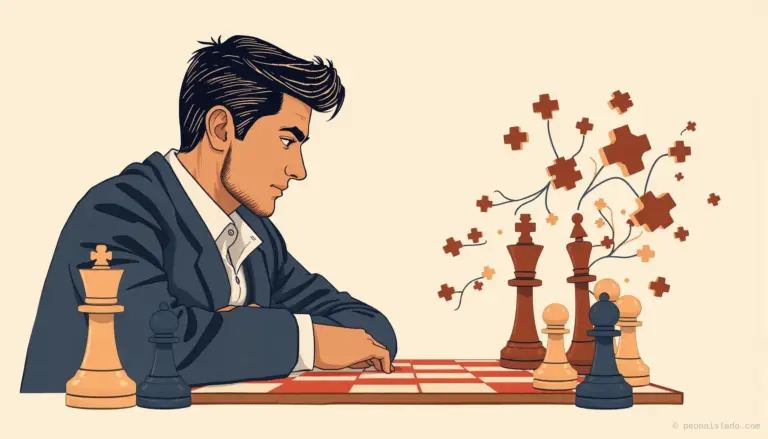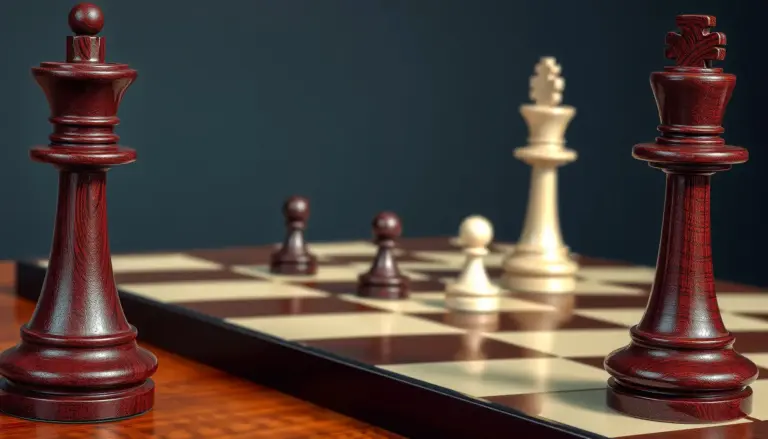
From time immemorial, Chess has fascinated humanity not only as a strategy game, but as a mirror of existence. Writers, Philosophers and thinkers of all ages have resorted to his 64 boxes to explore the complexities of life, decision making and destiny. But, Why does this metaphor resonate so strongly in literature?? chess, with its precise rules and its apparent simplicity, It actually contains a universe of possibilities, where every movement can be a reflection of our daily choices. From the struggle for power to the inevitability of failure, the board becomes a stage where the deepest human conflicts are represented. In this article, We will analyze the reasons why writers have adopted chess as a symbol of life, unraveling its layers of meaning and its validity in contemporary narrative.
Chess as a reflection of the structure of destiny
chess, in its essence, It's a game of causes and consequences.. Each piece has a value and a specific movement, But its true power lies in how it interacts with others.. This dynamic has led writers such as Stefan Zweig in his work *”The chess player”* to use the board as an allegory of human destiny. in the novel, the protagonist, Dr. B., He faces his confinement and his madness through imaginary games, where each play symbolizes your struggle to maintain control in a chaotic world. The metaphor is not accidental: chess, with its combination of freedom and restriction, reflects the tension between free will and the external forces that shape our lives.
Philosophers like Arthur Schopenhauer They also saw in chess a representation of human will. For Schopenhauer, life is a game where the pieces (our desires and decisions) they crash into a board (the world) that imposes limits. However, unlike chess, in life there is no visible opponent, but a series of abstract forces that push us towards unpredictable results. This idea has been taken up by contemporary authors, as Haruki Murakami in *”Kafka on the shore”*, where chess appears as a symbol of the search for meaning in an indifferent universe.
The structure of chess, with its orderly beginning and uncertain outcome, It also evokes the cyclical nature of existence. Each game begins with the pieces in fixed positions, but its development depends on the decisions of the players. This duality between order and chaos is what makes chess such a powerful metaphor.: reminds us that, Although the world may seem governed by rules, chance and human creativity always play a leading role.
The struggle for power and strategy as a narrative
chess is, first of all, a power play. The battle for control of the center of the board, The defense of the king and the capture of rival pieces are elements that have inspired writers to explore themes such as ambition, betrayal and survival. in literature, This fight moves to political scenarios, social and even intimate, where the characters must calculate each movement to avoid defeat.
A classic example is the work *”The seventh seal”* of Ingmar Bergman, where Death challenges the knight Antonius Block to a game of chess. Here, the game not only represents the fight for life, but also the search for existential answers. Every play is a negotiation with the inevitable, and the knight's strategy reflects his desire to postpone the inevitable. this scene, iconic in cinema, shows how chess can condense in one image all the complexity of the human condition.
In Latin American literature, authors like Jorge Luis Borges have used chess to explore power and identity. In his story *”Chess”*, Borges describes an infinite game where the pieces take on a life of their own, symbolizing how power structures can turn against those who created them. This idea resonates with the political reality of many societies., where the rules of the game (whether they are laws, traditions or hierarchies) can be manipulated or subverted.
Chess strategy has also served to analyze the psychology of the characters. A player who sacrifices an important piece to gain future advantage is making a decision that goes beyond cold calculation.: is betting on a long-term vision. This dynamic is reflected in works such as *”The art of war”* by Sun Tzu, where military strategy is compared to chess, but also in modern novels where characters must weigh risks and rewards in high-pressure contexts.
Failure and defeat as vital lessons
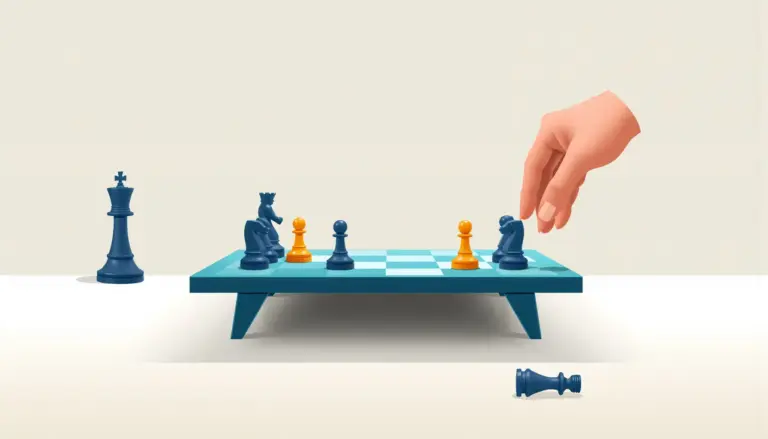
If chess is a metaphor for life, then defeat is one of its most valuable lessons. Unlike other games, in chess there are no technical ties: there is always a winner and a loser. This rawness has led writers to explore failure not as an end., but as a necessary step in learning. Chess teaches that even great masters make mistakes, and that true wisdom is in how you face defeat.
In *”The defense”* of Vladimir Nabokov, the protagonist, Luzhin, He is a chess genius whose obsession with the game leads him to an existential crisis.. The novel explores how perfection on the board can become a prison when translated into real life.. Luzhin, unable to separate the game from its reality, ends up getting lost in a labyrinth of patterns and repetitions. Nabokov uses this story to question whether the pursuit of excellence in a specific area can alienate us from what really matters..
Chess has also been used to talk about resilience. In *”The man who calculated”* of Malba Hold on, the protagonist Beremiz Samir resolves conflicts through chess logic, proving that even in seemingly hopeless situations, There is always a play that can change the course. This idea is central to Stoic philosophy., where failure is seen as an opportunity to strengthen character. Authors like Ryan Holiday in *”The obstacle is the path”* take up this notion, arguing that moments of defeat are what define our ability to grow.
Defeat in chess also has a social component. In many cultures, losing a game is not seen as a simple setback, but as a humiliation. This pressure has led writers to explore themes such as shame, redemption and acceptance. In *”The player”* of Fyodor Dostoevsky, the protagonist, Alexei Ivanovich, go in chess (and in games of chance in general) a way to escape your reality, but ends up trapped in a cycle of self-destruction. The work states that, when gambling becomes an obsession, defeat stops being a lesson and becomes a condemnation.
Chess as a space for creativity and freedom
Despite its strict rules, chess is a deeply creative game. Each game is unique, and players must adapt to their opponent's strategies, improvising on the fly. This duality between structure and freedom has fascinated writers, who see the board as a space where imagination can flourish even within defined limits. chess, in this sense, It becomes a metaphor for life itself.: a field of possibilities where creativity is the key to transcending restrictions.
In *”The chess of life”* of Garry Kasparov, former world chess champion argues that the game is a school of strategic thought. Kasparov, who faced supercomputers like Deep Blue, points out that true mastery is not in memorizing openings, but in the ability to innovate under pressure. This idea has been taken up by writers such as Walter You in *”Maelzel's Chess Player”*, where a seemingly invincible automaton is challenged by a human who discovers that creativity can defeat pure logic. The work states that, in a world increasingly dominated by algorithms, intuition and originality remain powerful weapons.
Chess has also served to explore the relationship between the individual and the rules.. In *”The Queen's Gambit”* of Walter You (and its adaptation on Netflix), the protagonist, Beth Harmon, breaks the conventions of the game by adopting an aggressive and unorthodox style. Her success not only challenges gender expectations in a male-dominated world., but also shows how creativity can subvert established structures. This narrative resonates with literary movements such as surrealism, where art is used to question social norms.
Finally, Chess has been seen as a universal language. In a world divided by cultural and linguistic barriers, The board offers a space where people from different backgrounds can communicate through moves and strategies. Writers like Paulo Coelho in *”The alchemist”* have used this idea to talk about the search for a common destiny. in the novel, the protagonist, Santiago, learn that life, like chess, requires patience, observation and the ability to see beyond the obvious. This optimistic vision of play as a bridge between cultures reinforces its role as a metaphor for human connection..
chess, with its mix of rigor and fantasy, remains an inexhaustible source of inspiration for writers. Through his 64 casillas, the deepest themes of existence have been explored: destiny, the power, failure and creativity. But beyond its symbolism, chess reminds us that life, just like a game, It's a game where every move counts. It's not just about winning or losing, but to learn to play intelligently, passion and, above all, with humanity. In an increasingly complex world, perhaps the greatest lesson of chess is that, in the end, the important thing is not the result, but how we have lived the game.