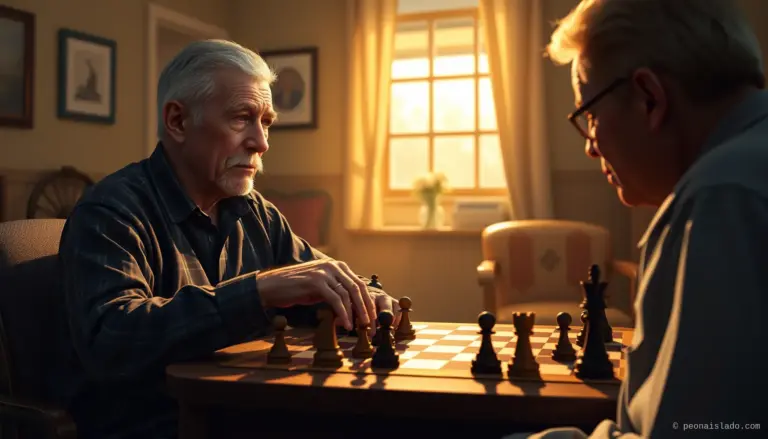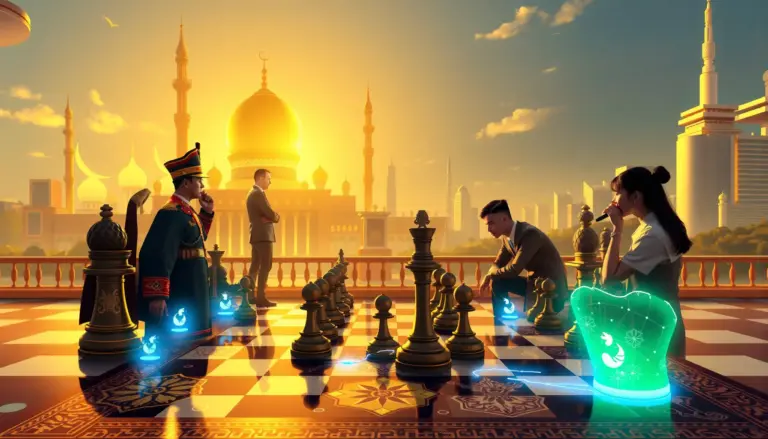
chess, more than a game, It is a mental preparation ritual that transcends borders and eras.. Before the pieces touch the board, Players around the world invoke traditions that mix superstition, mysticism and pure strategy. From offerings to the gods in ancient India to the war dances of African peoples, These practices not only seek victory, but also the connection with something deeper: destiny, concentration or even the divine. What secrets do these pre-game rituals hide and how do they shape the game??
Chess as a bridge between the sacred and the human
in India, cradle of Chaturanga, chess was born as a simulation of battle, but also as a spiritual act. The Brahmins, before playing, they performed puja (offerings) a Ganesha, the god of wisdom, asking for mental clarity. This tradition, documented in texts such as Manasolasa (12th century), reveals how the game was intertwined with philosophy dharma: each movement had to reflect balance, not only on the board, but in life. In Bali, this spiritual connection persists. Over there, Chess is played in temples during Silent (Day of Silence), where games become collective meditations. The pieces, carved in sacred wood, They are not touched with bare hands; white cloths are used as a symbol of purity.
In Africa, chess takes on even more ritualized forms. In Guinea, Baoulé players perform circular dances around the board before starting, invoking the ancestors to guide their decisions. these dances, similar to those used in hunting ceremonies, search “cheat” the rival not with tactics, but with energy. In Ethiopia, he centre (a local variant) It is played in public squares to the rhythm of drums, where the sound marks the time of reflection. Here, chess is not a silent duel, but a community show where strategy merges with music and movement.
Power rituals: when chess is a political weapon
In medieval Europe, chess was a symbol of status and control. The Christian kings, as Alfonso X of Castile, They used it to teach military strategy to their nobles, but also to demonstrate intellectual superiority. In his work Book of Games (1283), The monarch describes how the players had to wear white tunics – a symbol of purity – and recite prayers before starting. This ritual was not innocent: served to remember that chess, like war, It was a game of God, where victory depended on His will. In tsarist Russia, the boyars adopted a similar practice, but with a sinister twist. Before the games, They burned myrrh incense to “drive away bad luck”, a superstition that, according to chronicles of the time, hid a darker purpose: poison the air and weaken the rival.
In the 20th century, Chess became an ideological battlefield. During the Cold War, Soviet players were trained not only in openings, but in psychology. Before the games, They followed a strict protocol: sleep exactly 8 hours, eat an identical breakfast (eggs, black bread and tea) and avoid eye contact with the opponent until the first movement. This ritual, designed to eliminate emotional variables, reflected the regime's obsession with control. As the historian points out David Edmonds, “Soviet chess was not a sport, It was a demonstration of Marxist superiority”.
Modern superstitions: the rituals that decide games
In elite chess, superstitions persist, although adapted to the digital age. Magnus Carlsen, For example, He always wears the same wristwatch at tournaments—a Casio from the '90s—because “it gives you luck”. Garry Kasparov, before each game, He adjusted his chair exactly three times, a gesture that, according to him, “He aligned his energy with the board”. These manias are not whims: Studies in sports psychology show that rituals reduce anxiety and improve performance. A Harvard University experiment (2018) revealed that players who followed a pre-game routine—such as touching the pieces in a specific order—committed a 23% fewer errors in critical positions.
In Asia, These practices acquire an almost scientific nuance. in China, the players of xiangqi (chinese chess) They drink chrysanthemum tea before games, a tradition based on traditional medicine that promotes mental clarity. In Japan, the competitors of shogi they bow to the board, a gesture that symbolizes respect for the game and for the rival. In South Korea, Professional players visit Buddhist temples before tournaments to meditate, a practice that, according to the great teacher Lee Chang-ho, “clear your mind of distractions”.
Ritual as resistance: chess in extreme contexts
In crisis situations, pre-departure rituals take on an even deeper meaning. In the refugee camps of Jordan, Syrian children play chess with pieces carved from animal bones, a practice that not only distracts them from the trauma, but it gives them back a sense of control. Before starting, They recite verses from the Koran to “protect their minds”. In the prisons of Colombia, Inmates organize tournaments where the first move is decided by a draw with dice, a ritual that symbolizes that, even in adversity, chance can be fair.
In Afghanistan, under the Taliban regime, chess was banned because it was considered “a game of infidels”. However, Afghan women practiced it in secret, using boards drawn on tablecloths or even on the floor with chalk. before playing, They performed a ritual of silence: They counted to ten in a low voice, an act of resistance that reminded them that, although the world wanted them silent, his mind was still free. As reported Fawzia Kofi, former Afghan MP, “chess was not just a game for us. It was a way of saying: we exist”.
Why rituals persist in the digital age?
In a world where chess is increasingly played on screens, pre-departure rituals may seem outdated. However, His survival reveals an uncomfortable truth: human beings need symbols. A study from the University of Cambridge (2022) analyzed 500 online chess players and discovered that those who performed some type of ritual—such as adjusting the screen brightness or always using the same desktop background—had a 15% more likely to win long games. The reason, according to researchers, It's psychological: rituals act as “mental anchors”, reducing cognitive fatigue.
Even in modern competitive chess, where technology dominates, rituals are still key. In the Candidates Tournament 2024, American Fabiano Caruana was seen making a peculiar gesture before each game: rubbed his index fingers and thumb, as if measuring something invisible. When asked about the meaning, responded: “It's my way of remembering that chess is not just calculation. It's also art”.
Conclusion: ritual as the essence of the game
Pre-departure rituals are not simple superstitions. They are testimony that chess, more than a logic game, It is a human act deeply rooted in culture, spirituality and even resistance. From the offerings to the gods in India to the defiant silences of Afghan women, These gestures reveal that the board is not just a battlefield, but a mirror of our obsessions, fears and hopes.
In a world where artificial intelligence threatens to reduce chess to algorithms, rituals remind us that the game is still, first of all, a human experience. The next time you sit in front of a board, ask yourself: What ritual do you need to connect not only with the pieces, but with the very essence of chess? Maybe, like in Bali or in the prisons of Colombia, the answer is in what you do before to move the first pawn.