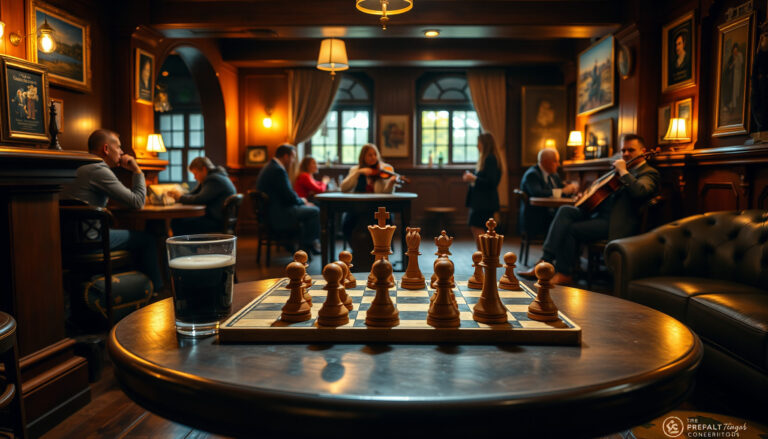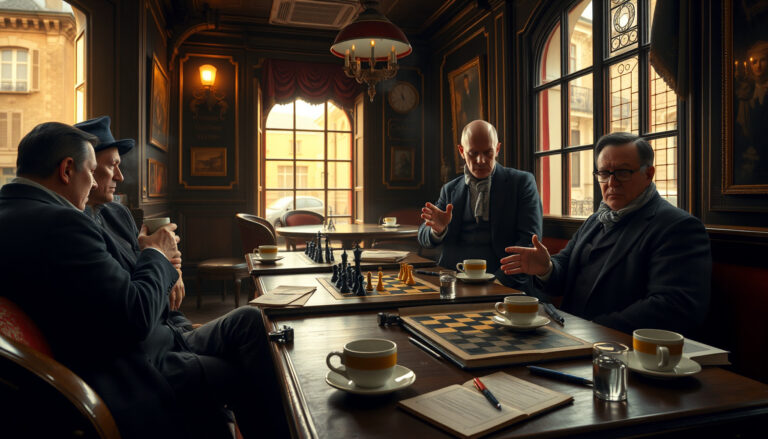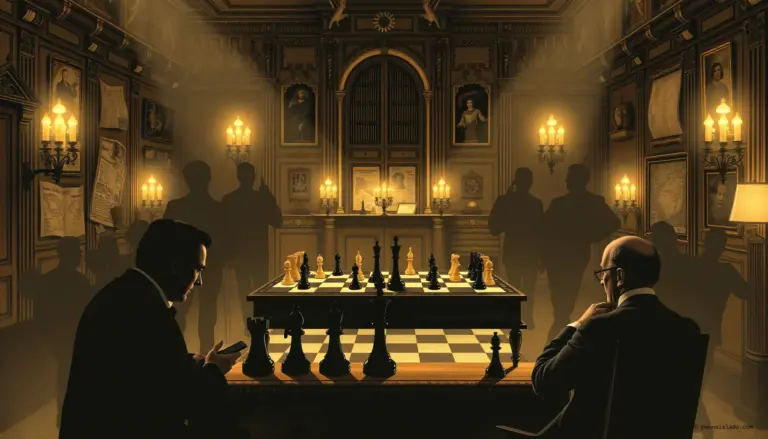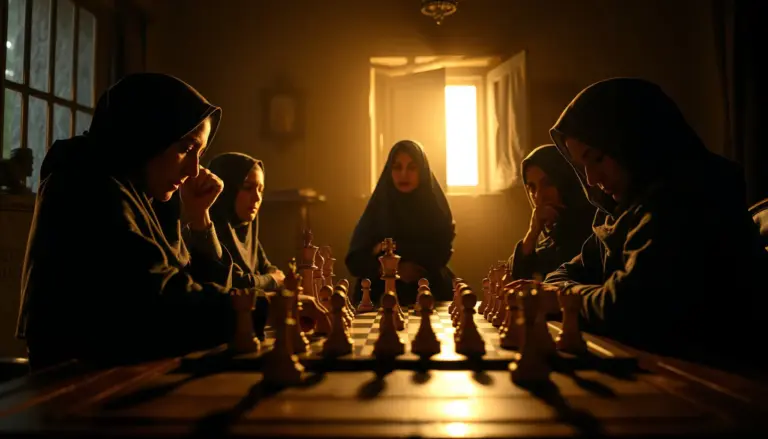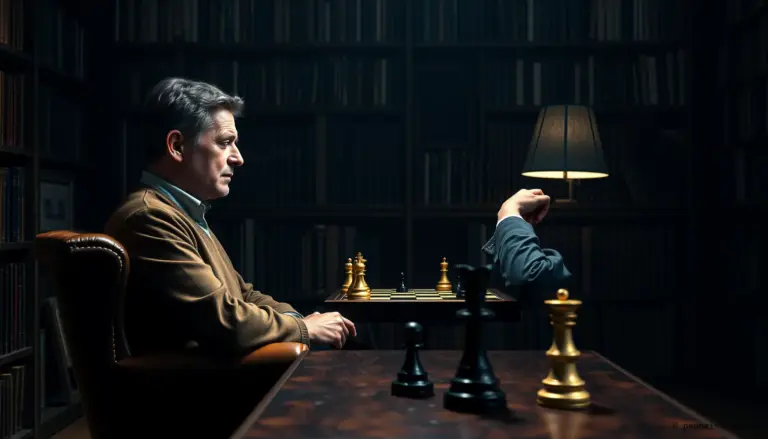
chess, that ancient game that has challenged minds from the Persian palaces to the digital boards of the 21st century, finds in prisons a scenario as unexpected as it is transformative. behind the bars, where time seems to stop and second chances are scarce, chess emerges as a beacon of redemption. It's not just about moving pieces on a board. 64 casillas, but to rebuild lives, weave survival strategies and, in many cases, discover that freedom does not always require keys. The stories that are born behind bars reveal how the chess in life can be a powerful tool to make more conscious decisions, even in the most adverse contexts.
The board as a mirror: what chess reveals behind bars
in prisons, chess is not a simple hobby. It is a microcosm where the internal conflicts of those who play it are reflected.. Each game becomes a metaphor for life: the need to anticipate movements, evaluate risks and assume the consequences of each decision. In an environment where impulsivity and violence are often the norm, chess teaches patience and reflection. A study conducted in United States prisons revealed that inmates who participated in chess programs showed a reduction in 27% in disciplinary incidents. It's not magic, but the result of learning to think before acting, a skill that transcends the board and is applied to everyday life.
But chess in prison goes beyond discipline. For many, It is a way to regain self-esteem. In a place where identity is reduced to an inmate number, the board offers the opportunity to be recognized for something else: creativity, the strategy or even the ability to teach others. In Brazil, the project “Chess that Liberates” has trained more than 5,000 inmates in the last five years, many of whom have found a vocation in chess that allows them to reintegrate into society as instructors or coaches. As psychologist Vladimir Rašković points out, pioneer in the use of therapeutic chess, “the board does not judge. Gives each player the opportunity to reinvent themselves, game after game”.
From cell to checkmate: stories that challenge stigma
Stories of redemption through chess are as diverse as the inmates themselves. There is the case of Juan, a former gang member in El Salvador, who discovered chess in a prison workshop. “Before I solved problems with my fists. Now I solve them with my head”, confessed in an interview. His transformation was not immediate, but each game taught him that decisions have consequences and that, sometimes, the best move is to wait. Hoy, Juan is a chess instructor at a reintegration center and works with young people at risk to prevent them from repeating their past..
Another example is that of Maria, a woman imprisoned in Argentina for crimes related to drug trafficking. In prison, chess became his refuge. “There is no room for weakness here, but chess taught me that strength is not in aggressiveness, but in the strategy”, account. Maria not only improved her game, But he also found a way to connect with his daughter on the board., who taught him to play during visits. This emotional connection was key to his rehabilitation, proving that chess can be a bridge between confinement and the outside world.
These stories are not isolated. In Colombia, the program “Chess for Freedom” has taken the game to more than 30 penitentiary centers, with surprising results. According to data from the National Penitentiary Institute, The inmates who participate in these workshops have a 40% more likely to get benefits such as probation. Chess not only gives them tools for life outside of prison, but also offers them a mental structure that helps them resist the pressure of the prison environment. As an inmate from the Bellavista prison in Medellín explains: “Here chess is more than a game. It is a way to survive with dignity”.
Chess as therapy: beyond the game
The therapeutic power of chess in prisons is no coincidence. Neuroscience studies have shown that playing activates areas of the brain related to planning, memory and emotional control. In an environment where stress and anxiety are constant, chess acts as an emotional regulator. An inmate in a prison in Spain described his experience like this: “when I play, I forget about the bars. I focus on the board and, for a moment, I feel like I'm in control”.
Besides, Chess encourages socialization in a place where relationships are often marked by mistrust. in prisons, The games become spaces for dialogue and mutual respect. In Italy, the project “Chess in Prison” has created internal leagues where inmates compete against each other, but they also collaborate in the organization of tournaments. This sense of community is essential for reintegration, since it teaches social skills that many lost or never developed.
Chess also has an impact on mental health. In UK prisons, It has been used as part of therapies for inmates with depression or anxiety disorders. The structure of the game, with its clear rules and defined objectives, provides a security framework in a chaotic environment. As a report from the University of Oxford points out, “Chess can be an effective tool to treat trauma, as it allows inmates to process their emotions in a symbolic way”.
The challenge of bringing chess to prisons: obstacles and solutions
Although the benefits of chess in prisons are evident, its implementation is not without challenges. The first is institutional resistance. Many prisons see chess as a luxury, not as a necessity. “How do we justify spending money on boards when there is a lack of medicines??”, asked a prison official in Mexico. However, Data shows that investing in chess software can reduce long-term costs, by reducing recidivism and improving the prison climate.
Another obstacle is the lack of trained volunteers.. Teaching chess in prison requires not only technical knowledge, but also pedagogical and psychological skills. In many countries, This work falls to non-governmental organizations or to inmates who already master the game. In Chile, For example, the program “Chess for Reintegration” trains inmates as monitors, which not only improves your self-esteem, but it also gives them a job opportunity when they leave prison.
Finally, there is the challenge of maintaining interest. In an environment where boredom and hopelessness are common, Chess can lose appeal if it is not adapted to the needs of prisoners. That's why, Some programs have incorporated variants such as alternative chess, that introduces more dynamic and less rigid rules. In Brazil, he “Lightning Chess” (blitz chess) has become popular in prisons, since its fast pace best suits the impatience of the inmates.
The future of chess in prisons: a replicable model
The success of prison chess programs has led to international organizations, like FIDE, promote its expansion. In 2023, FIDE launched the initiative “Chess for Freedom”, with the aim of bringing chess to 10,000 prisoners around the world to 2025. The project not only seeks to teach the game, but also create support networks between prisons, allowing inmates to participate in international tournaments through digital platforms.
But the true potential of prison chess goes beyond numbers.. It's about changing the narrative about rehabilitation. As an inmate in a US prison said: “Chess taught me that I am not a number. I am a person with the ability to think, create and change”. In a world where second chances are increasingly rare, chess offers a light of hope, game after game.
Redemption behind bars is not a fairy tale, but a reality built with patience, strategy and the conviction that, even in the darkest places, human ingenuity can find a way. chess, with its mix of art and science, It has become a powerful tool to transform lives. and maybe, in the background, That is your most valuable lesson.: that freedom is not always on the other side of the bars, but in the ability to choose, think and reinvent yourself, regardless of the circumstances.