Imagine a board where the pieces are not visible, but every movement resonates in your mind like a strategic echo. Or a scenario where the initial order of the pieces is an enigma until the first move, defying centuries of memorization. Las fun chess variants They are not just alternative games; They are laboratories of creativity, litmus tests for memory and windows to new ways of understanding strategy. From the blind chess, where the mind becomes the only board, until the chess 960, which democratizes the game by eliminating the advantage of memorizing openings, These modalities reinvent what it means to think like a chess player.. But, what do they really teach us about the game, the human mind and even society?
Blind chess: when the mind becomes a board
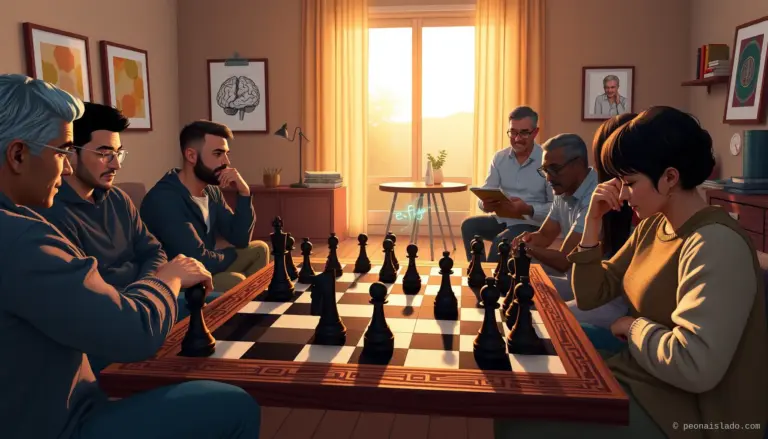
Play blind chess It's like composing a symphony without sheet music.. There are no physical parts, only coordinates that are transformed into mental images, and each movement requires a constant updating of that internal landscape. Great masters such as Paul Morphy or Miguel Najdorf showed that this variant is not a simple show., but a tool to develop what neuroscientists call working memory: the ability to manipulate information in real time without external support.
But the real challenge is not remembering the position, sino calculate. In classical chess, The board acts as a “external hard drive” that frees cognitive resources for strategy. By removing it, the brain must compensate with almost meditative concentration. Studies such as those by psychologist Adriaan de Groot revealed that elite players do not see pieces as static objects, but as nodes in a network of dynamic relationships. This ability, cultivated in blind chess, moves to other areas: from solving mathematical problems to making decisions under pressure in business environments.
However, there is a limit. The Guinness record for simultaneous blindfold games is held by Timur Gareyev, con 48 boards in 2016. Does the cost? Mental fatigue comparable to running a brain marathon. The question is inevitable: How far can the human mind go without collapsing??
Chess 960: the rebellion against memorization
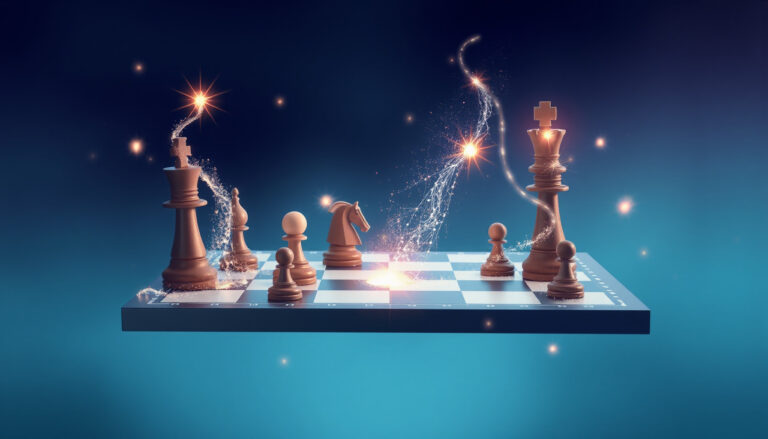
Invented by Bobby Fischer in 2001, he chess 960 (o Fischer Random) breaks the tyranny of memorized openings. Pieces are placed randomly in the first row, respecting only two rules: The bishops must be in spaces of a different color, and the king must remain between the towers. The result are 960 possible starting positions, forcing players to trust their positional understanding from the first movement.
This variant is a mirror of how technology has transformed chess. In the era of engines like Stockfish, where memorization of theoretical lines dominates elite play, he 960 puts creativity back in the spotlight. As GM Levon Aronian explained: “You can't hide behind theory here. Each game is a pure duel of ideas”. But its impact goes beyond. By eliminating the advantage of those who spend hours studying openings, he 960 democratize the game, allowing players with fewer resources to compete on equal terms with professionals.
Curiously, he 960 has also revealed unexpected patterns. Game analysis shows that, even with random positions, players tend to reproduce familiar structures, like fianchettos or pawn centers. This suggests that the human mind seeks order even in chaos., a valuable lesson in understanding how we process information in complex environments.
Rapid chess and its variants: speed vs depth
He blitz (3 minutes per player) and the bullet (1 minutes) They are the speed races of chess. But, What do we sacrifice when we speed up the game?? A study from the University of Oxford found that, in quick games, Players activate the prefrontal cortex less—the area associated with abstract thinking—and the amygdala more, linked to instinctive responses. This explains why tactical errors abound in the blitz., but also why it is a powerful tool to train the intuition.
El GM Hikaru Nakamura, one of the best blitz players in the world, describes this style as “chess in its purest form”. No time to calculate deep variants, Players must trust their positional sense and the ability to recognize patterns in milliseconds. This skill is transferable: in fast chess, players develop a kind of “muscle memory” for positions, similar to how a pianist memorizes scales.
But there is a dark side. Blitz addiction is real. Players like GM Alireza Firouzja have admitted that the format can be “toxic” for long term development, since it reinforces bad habits, like moving on impulse or underestimating the defense. The key, as in everything, is in balance: the blitz as a complement, not as a substitute for classical chess.
Team chess and other social variants
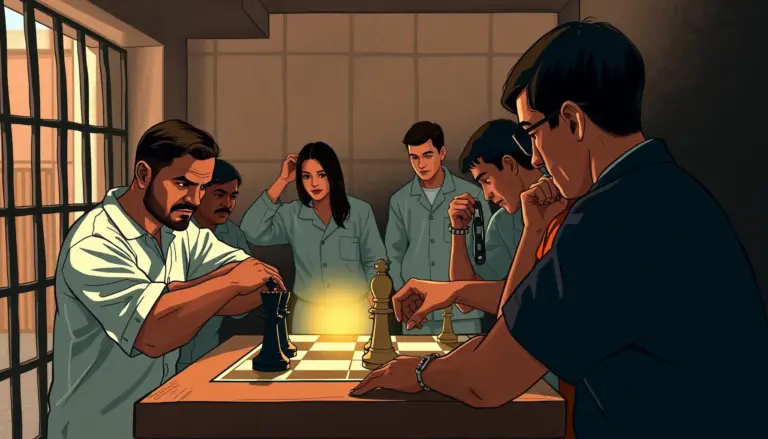
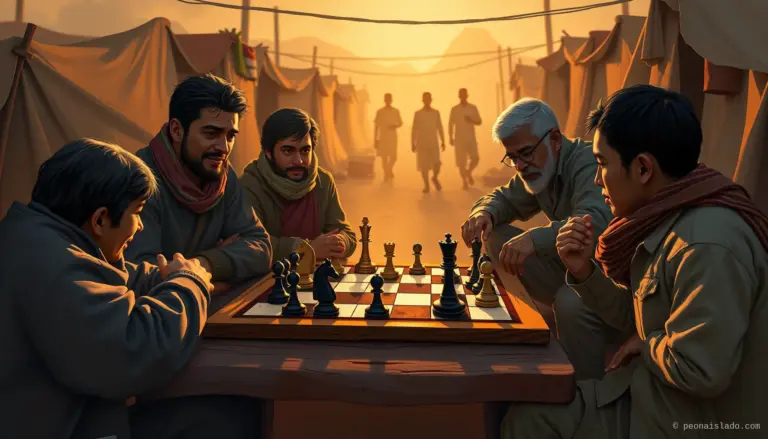
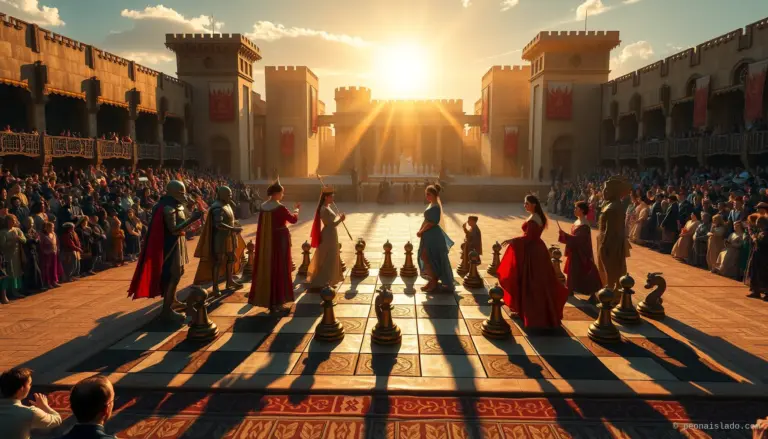
Chess is not always a solitary duel. Variants like the team chess (where several players collaborate on the same board) or the consulted chess (where two or more players discuss moves) They add a social layer to the game. These modalities are especially valuable in educational or therapeutic contexts., as in programs for children with ADHD, where collaboration reduces anxiety and encourages communication.
A fascinating case is bughouse chess, a team variant where players can “market” pieces captured from their companions. Here, strategy becomes chaotic and creative: a captured pawn on one board can become a queen on another, and coordination between players is as important as individual skill. This format has proven to be a bridge between competitive and recreational chess, attracting players who would otherwise abandon the game as too serious.
The future of variants: towards a post-human chess?
The emergence of artificial intelligence has opened new frontiers. Variants like the advanced chess (where players can use AI engines during the game) or the centaur chess (human + AI collaborating) raise uncomfortable questions: Are we evolving towards a game where human creativity merges with algorithmic precision?? El GM Garry Kasparov, after their loss against Deep Blue, predicted that “The chess of the future will be a collaboration between humans and machines”.
But there is a risk. If classical chess is already dominated by the memorization of theoretical lines, What will happen when AI generates openings and plans in real time? Perhaps variants like 960 or blindfolded chess are the last refuge of a game where the human mind can still compete without external help. As the philosopher Walter Benjamin said: “Chess is the game that best reflects the struggle between destiny and freedom”. The fun variants are, in essence, experiments to preserve that freedom.
chess, in all its forms, remains a mirror of the human condition. Whether playing blind, challenging memorization with the 960 or competing against the clock in blitz, each variant teaches us something different: about the mind, creativity and even the limits of our own nature. The next time you sit in front of a board, remember that you are not playing against a rival, but exploring the infinite possibilities of a game that, after fifteen hundred years, we haven't finished discovering yet.