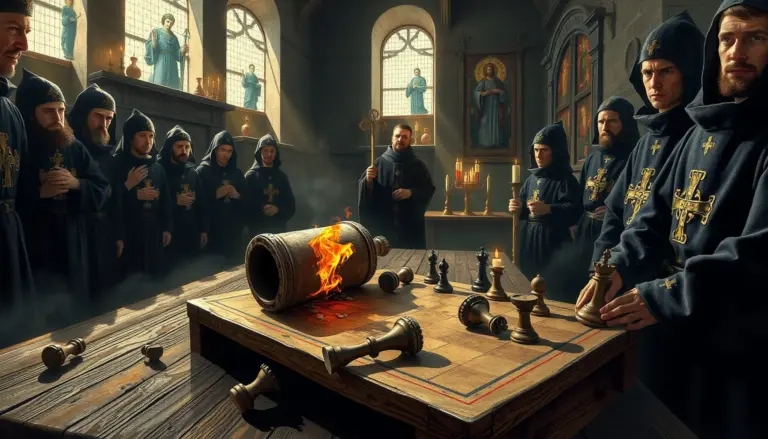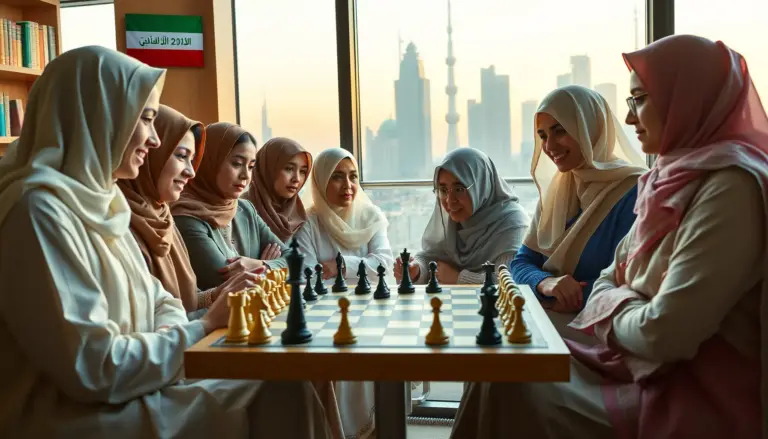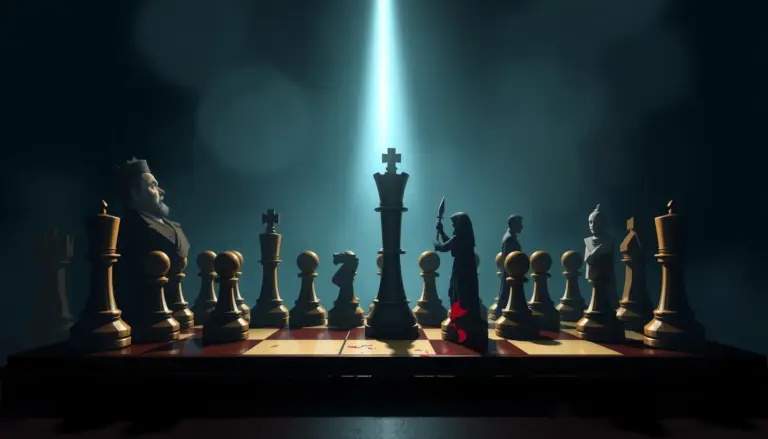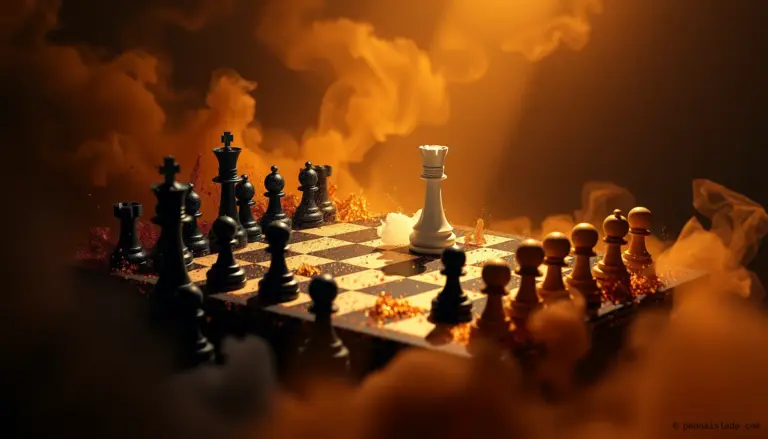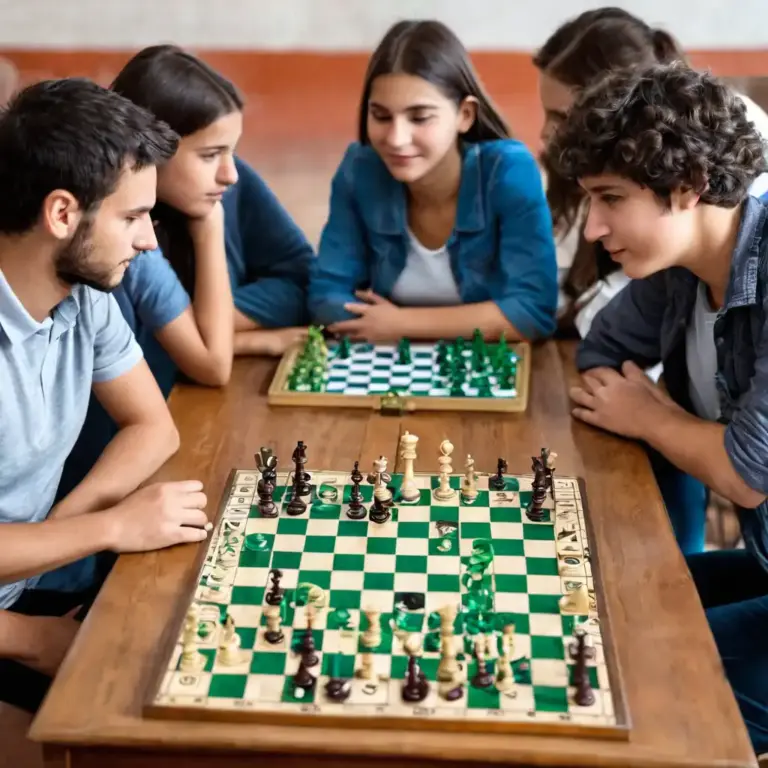
Imagine that your life is a chess board. Every decision, a movement; every obstacle, a rival piece that you must overcome. It's not just a game of kings and pawns, but rather a mirror that reflects the strategies we use—or should use—to navigate the complexity of everyday life.. Chess is not an elitist pastime, but a mental training tool that, applied with intention, can transform the way we solve problems, we manage stress and even relate to others. Isn't it fascinating that a game of 64 Casillas can teach us so much about life?
In this article, We will explore how chess becomes a laboratory for transferable skills: from patience to creativity, through resilience and the ability to anticipate. It's not about becoming a great teacher., but about discovering how the lessons from the board can help you make better decisions, both personally and professionally. Why, after all, Life – like chess – is not won with a single brilliant move, but with a coherent and adaptable strategy.
Chess as a mental gym: beyond memory
When we think about chess, It is common to associate it with pure intelligence or the ability to memorize endless openings. However, Its true value lies in how it trains the brain to process information efficiently.. Studies in neuroscience have shown that playing chess regularly improves brain plasticity, that is to say, the brain's ability to reorganize itself and form new neural connections. This translates into greater mental agility, but also in less obvious skills, like the decision making under pressure o to time management.
A clear example is the concept of zugzwang, a situation in which any movement you make worsens your position. in life, we face similar moments: difficult decisions where all options seem negative. Chess teaches us to calmly evaluate the consequences of each action, Even when the clock is ticking against us. As the article points out “zugzwang: what it is and how to apply it in everyday life”, This notion is not only useful on the board, but also in labor negotiations or personal conflicts, where patience and mental clarity make the difference.
But chess not only strengthens the mind; also frees her. In a world saturated with digital stimuli, where attention is fragmented in seconds, the game requires absolute concentration. Each game is an exercise in mindfulness involuntary: during those minutes or hours, the player is immersed in a state of flow where only the pieces exist, the board and the strategy. This ability to tune out external noise is an increasingly valuable skill., especially in chaotic work environments or in times of personal crisis. How the article explores “Ajedrez and mindfulness: calm for the modern mind”, the board becomes a refuge where the mind can breathe.
Strategy and adaptability: lessons for uncertainty
One of the most persistent myths about chess is that it is a predictable game., where victory depends on following a pre-established script. Nothing could be further from reality. Although openings and endings can be studied, each game is unique, and success depends on the ability to adapt to the opponent's movements. This strategic flexibility is, precisely, what makes chess a perfect metaphor for life.
At work, For example, plans are rarely executed without setbacks. A project can change direction in a matter of days, or a customer may change their requirements at the last minute. Here, chess mentality comes into play: Instead of sticking to a rigid plan, the player—or the professional—must evaluate the new situation and adjust his strategy on the fly. As the article points out “Chess and business: strategic lessons for leaders”, The great teachers are not those who memorize the most variants, but those who know how to improvise when the board deviates from what was expected.
This adaptability also applies on a personal level. Life is full of unexpected events: a disease, a dismissal, a breakup. In these moments, resilience is not about resisting change, but to accept it and look for new routes. Chess teaches us that even when we lose a valuable piece—like the rook or queen—, the game is not lost. The important thing is to stay calm, reassess the position and find opportunities where others only see defeat. This mindset is especially useful in high-pressure contexts., such as those faced by athletes or professionals in competitive environments, as analyzed in “Why athletes give up before they start: psychological keys”.
The board as a mirror: what your playing style says about you
Chess not only reveals how you think, but also who you are. Your playing style—aggressive, defensive, tactical or positional—can be a reflection of your personality and how you approach challenges in real life. For example, players who prefer risky openings, like the Queen's Gambit, They tend to be people who enjoy challenges and are not afraid to take risks.. Instead, those who opt for solid defenses, like the Caro-Kann, They may be more cautious and methodical in their approach.
This connection between chess and personality is no coincidence. How the article explores “What does your chess style say about your personality??”, The board acts as a non-invasive psychological test. For example, Players who sacrifice pieces to gain an advantage tend to be creative and bold, while those who avoid conflict may be more diplomatic in their personal relationships. Recognizing these patterns not only helps you improve your game, but also to better understand your strengths and weaknesses in other areas of life.
But chess can also be a tool for self-knowledge.. Playing against yourself—analyzing past games or simulating scenarios—is a way to identify recurring errors., both on the board and in life. Do you tend to underestimate your rival? Do you give up too soon when things get tough?? These questions, that arise naturally during a game, they can lead you to deeper reflections on how you deal with challenges outside of the game. In this sense, chess becomes a strategic mirror, where every move is an opportunity to learn something new about yourself.
Chess as a social bridge: beyond the competition
Although chess is an individual game, Its true power lies in its ability to connect people. In an increasingly digital world, where face-to-face interactions become scarce, the board acts as a bridge between generations, cultures and social strata. It doesn't matter if you're a kid in a rural school or an executive in a glass tower.: the rules are the same, and the language of chess is universal.
This inclusive quality of the game makes it a powerful tool for community building.. In Medellin, For example, he Isolated Pawn Club has used chess as a way to transform lives in vulnerable neighborhoods, teaching young people not only to play, but also to think critically and resolve conflicts peacefully. Similar stories are repeated in prisons, hospitals and refugee camps around the world, where chess has become a symbol of hope and resilience.
But chess can also be a catalyst for deeper relationships.. Play a game with a friend, a family member or even a stranger is a way to communicate without words, where every movement is a declaration of intentions. In this sense, the game encourages empathy, since it forces you to put yourself in your rival's shoes and anticipate their thoughts. This ability, transferred to daily life, can improve the quality of your personal and professional relationships, making you more aware of the needs and motivations of others.
From theory to practice: how to integrate chess into your life
Until now, We have explored how chess can improve your mind, your strategy and your relationships. But, How to put these lessons into practice? The answer is not to become a professional player, but to incorporate the principles of the game into your daily routine. Here are some concrete ideas:
- Make decisions as if they were movements: Before acting, ask yourself: What are the consequences of this decision? What will my “rival” (the market, a competitor, life itself) in response? This mindset will help you anticipate problems and plan more effectively..
- Practice patience: in chess, moving too fast often leads to disaster. The same thing happens in life. Before responding to an aggressive email or making an impulsive decision, take a moment to calmly analyze the situation.
- Learn from your mistakes: Every lost game is an opportunity to improve. Instead of getting frustrated, Analyze what went wrong and how you could have avoided it. This attitude will help you grow both on the board and in life.
- Play regularly: You don't need to be an expert to benefit from chess. Even a weekly game can be enough to keep your mind agile and apply its lessons in other areas..
- Share the game: Invite friends, family or colleagues to play. Chess is not only fun, but it can also be a way to strengthen ties and learn from others..
As the article points out “Chess that transforms: lessons without moving pieces”, the true value of the game is not in winning, but in how it transforms you as a person. Every game is an opportunity to practice humility, creativity and resilience, skills that will serve you well beyond the board.
Conclusion: chess as a philosophy of life
Chess is not just a game; It's a philosophy in action. Each game is a metaphor for life, where the decisions we make—big or small—determine our course. Learning to play is not about memorizing openings or winning tournaments, but about developing a strategic mindset that allows you to navigate uncertainty with confidence and clarity.
In a world where immediacy and superficiality seem to dominate, chess reminds us of the importance of patience, reflection and adaptability. It teaches us that, even in the most difficult situations, There is always a path—or a movement—that can lead us to victory. Y, above all, shows us that life, like chess, It's not about avoiding mistakes., but to learn from them and move forward.
So next time you sit in front of a board, remember: you are not just playing with wooden pieces or pixels on a screen. You are training your mind to face life's challenges intelligently., creativity and resilience. And so, at the end of the day, is the true victory.