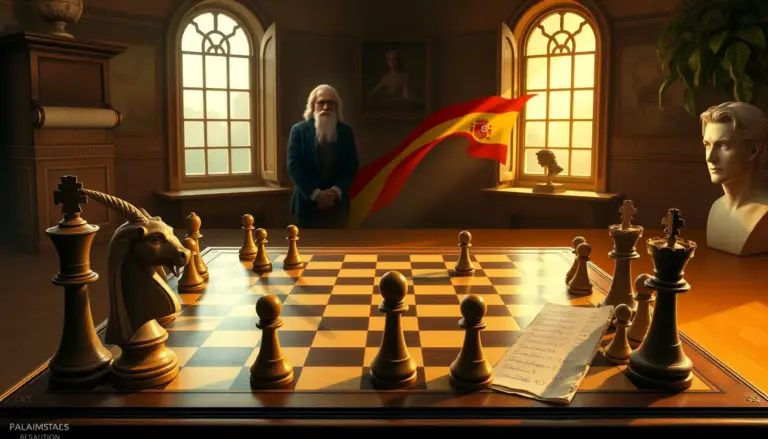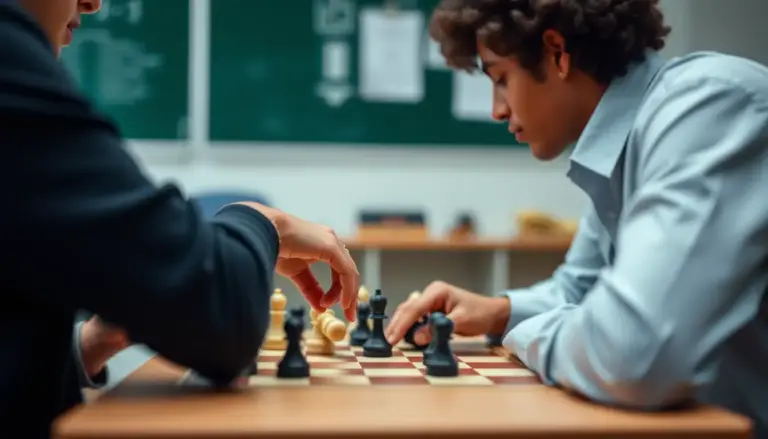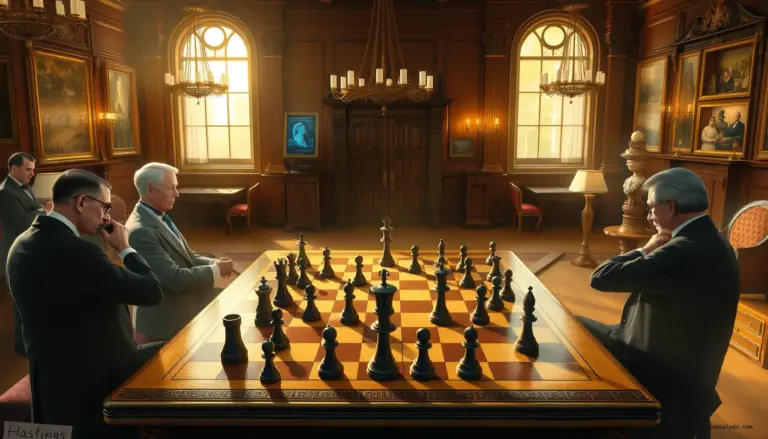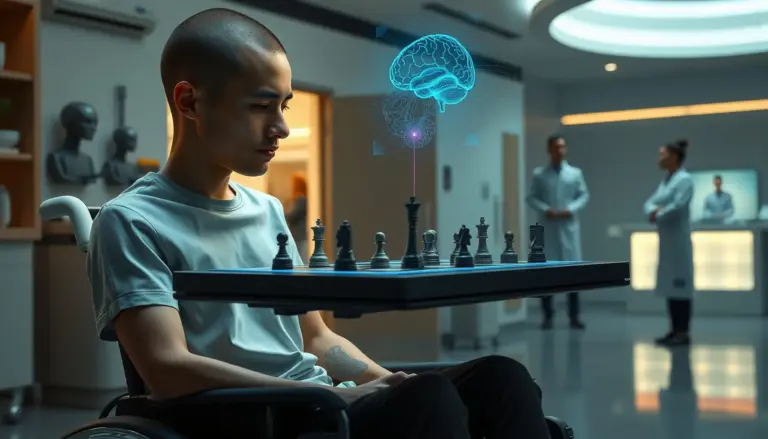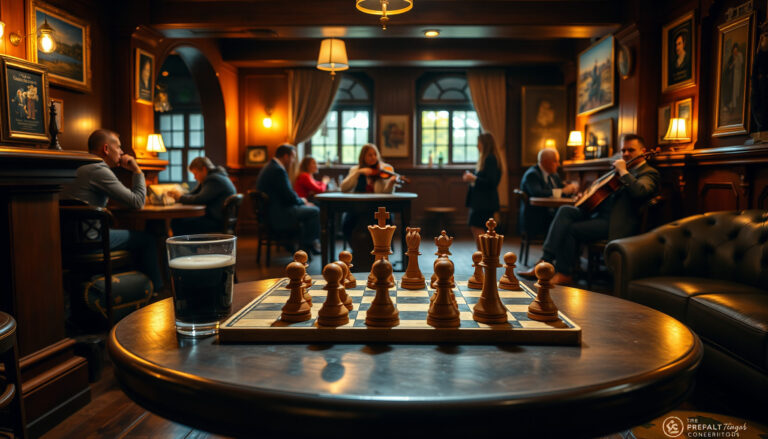
Chess has transcended its status as an ancient game to become a powerful tool for social and cognitive transformation.. In spaces where the human mind faces its greatest challenges—like hospitals, clinics and health centers, the board 64 Casillas reveals himself as an unexpected ally. Can a strategy game ease the pain, speed recovery or even save lives? Science and practical experience suggest yes.. This article explores how chess has been integrated into medical settings, not just for entertainment, but as a therapeutic resource with tangible benefits for patients, health professionals and vulnerable communities.
Beyond its fame as a mental sport, Chess in clinical contexts acts as a bridge between human fragility and resilience. From children with chronic illnesses to older adults in rehabilitation, the game offers a universal language that transcends diagnoses and prognoses. But its impact is not limited to the individual.: in hospitals, chess has become a catalyst for human connections, breaking the isolation that often accompanies illness. How do you achieve this? The answer lies in its ability to stimulate the mind, encourage patience and, above all, return a sense of control in situations where it seems lost.
Chess as therapy: beyond entertainment
The idea of using chess as a therapeutic tool is not new, but its systematic application in hospitals and clinics has gained strength in recent decades. Neuroscience studies have shown that gaming activates multiple areas of the brain., including the prefrontal cortex (associated with decision making), the parietal lobe (related to spatial perception) and the hippocampus (key to memory). In patients with brain injuries, dementia or neurodegenerative disorders, chess can function as a form of “mental gymnastics”, helping to maintain or even recover cognitive functions.
A notable example is the work of the Serbian psychiatrist Vladimir Raskovic, who developed a therapeutic chess method to treat patients with schizophrenia and depression. Rašković discovered that the game not only improved his patients' concentration and memory, but also provided them with a structured framework to express emotions and develop social skills.. In your own words: “Chess is a mirror of the mind. When a patient moves a piece, is revealing how he thinks, how you feel and, the most important thing, how can it change”.
In pediatric hospitals, chess has proven to be especially effective. Children with cancer, For example, They face long periods of hospitalization that can affect their cognitive and emotional development. Programs like “Chess in the Hospital” in Spain they have integrated the game into the routines of these little ones, not just as a distraction, but as a way to keep their intellectual abilities active. A study published in the journal *Pediatrics* found that children who participated in chess activities during their treatment showed a significant improvement in their attention span and mood., compared to those who did not.
The board as an emotional refuge
The disease, whether physical or mental, often accompanied by a feeling of loss of control. Patients may feel trapped in a cycle of uncertainty, dependency and, in many cases, soledad. chess, with its clear rules and predictable structure, offers a space where that feeling of control can be regained. Every move is a decision, and each decision is an opportunity to influence the course of the game. In an environment where options seem limited, the dashboard becomes a microcosm of autonomy.
This effect is particularly visible in mental health units. In psychiatric clinics in countries like Argentina and Colombia, Chess has been used as part of rehabilitation programs for patients with anxiety disorders, depression or post-traumatic stress. The logic of the game—which requires anticipation, planning and adaptation—acts as real-life training. As pointed out in an article about therapeutic chess, “the board does not judge. It doesn't matter if you lose a game; the important thing is that you keep playing, and that is a powerful metaphor for recovery”.
Besides, Chess encourages social interaction in an environment where isolation is common. In waiting rooms, intensive care units or day centers for older adults, the game invites conversation, to friendly competition and, in many cases, to the creation of communities. In hospitals in Brazil, For example, have been implemented “intergenerational chess tournaments”, where patients of different ages and conditions play together. These meetings not only improve the mood of the participants, but also reduce the stigma associated with certain diseases, like Alzheimer's or Parkinson's.
Innovation and challenges in implementation
Although the benefits of chess in clinical settings are clear, its implementation is not without challenges. One of the main obstacles is the lack of resources and trained personnel to run therapeutic chess programs.. In many hospitals, especially in developing countries, chess is seen as a “luxury” instead of a necessity. However, Initiatives such as those of the Kasparov Foundation in Latin America have shown that it is possible to integrate gaming into health systems with limited budgets, through alliances with schools, universities and volunteers.
Another challenge is adapting the game to the specific needs of patients.. Not everyone can sit in front of a physical board; some have reduced mobility, others suffer from advanced cognitive impairment. For these cases, adapted versions of chess have been developed, such as boards with magnetic pieces for patients with tremors, or digital applications that allow you to play with your eyes or through voice commands. In Japan, For example, Chess has been used in combination with virtual reality to treat patients with cerebral palsy, allowing them to interact with the game in an immersive and accessible way.
Technology has also opened up new possibilities. Platforms like Chess.com o Lichess offer options to play online, which is especially useful in contexts where physical contact is limited, like during the COVID-19 pandemic. However, as discussed in the article on digital chess, It is important not to lose sight of the value of human interaction. Online chess can be a complementary tool, but it does not replace the emotional and social impact of playing face to face.
Success stories: when chess saves lives
Testimonials from patients and health professionals who have experienced chess in clinical settings are revealing. At the Sant Joan de Déu Hospital in Barcelona, For example, a chess program was implemented for children with autism spectrum disorders (TEA). The results were surprising: The children not only improved their ability to concentrate and their tolerance for frustration, but also developed social skills that were previously difficult for them, like turn-taking or empathy. “Chess gives them a common language”, explains a hospital therapist. “They learn to communicate without words, and that is invaluable”.
In another case, in a rehabilitation center for addicts in Mexico, chess was used as part of a social reintegration program. The patients, many of them with a history of violence or crime, They found in the game a way to channel their aggressiveness and develop conflict resolution strategies.. “Chess taught me that there is more than one way to win”, comments one of the participants. “Before I only knew how to attack; now I learn to defend myself, to wait, to think before acting”.
In the field of geriatrics, Chess has proven to be an effective tool to delay cognitive decline in older adults. In nursing homes in Germany and Sweden, have been created “chess clubs” where residents play regularly. A study conducted at Stockholm University found that older adults who played chess at least once a week had a 30% less likely to develop dementia compared to those who did not. “Chess is like a gym for the brain”, says a neurologist involved in the research. “Keeps neurons active and, the most important thing, keeps hope alive”.
The future of chess in health: towards a more humane medicine
Chess in hospitals and clinics is not just a fad; It is a trend that reflects a deeper change in the way we understand health. In an era where medicine increasingly focuses on the quantifiable—data, diagnostics, treatments—, Chess reminds us that healing also involves qualitative aspects: human connection, creativity and the ability to find meaning in chaos. As the article on chess and philosophy, “the board is a mirror of the world, but it is also a laboratory where we can experiment with new ways of being”.
The future of chess in health depends on its integration into public policies and medical protocols. Countries like Armenia and Spain have already included chess in their educational programs, and it would not be unreasonable to think that, in the near future, also be part of health programs. Imagine a hospital where, along with a prescription for a medication, the doctor prescribes a weekly game of chess. Or a psychiatric clinic where chess is as common as group therapy.
However, to make this possible, some obstacles need to be overcome. First of all, More research is required to support the benefits of chess with solid scientific data. Although existing studies are promising, Large-scale evidence is still lacking to convince health systems to invest in therapeutic chess programs.. In second place, It is essential to train health professionals in the use of chess as a complementary tool. It is not about turning doctors into chess masters, but to give them the tools to integrate the game into their practices effectively..
Finally, Chess in clinical settings invites us to rethink the concept of health itself. What does it mean to be healthy? Is it just the absence of disease, or also the ability to think, create and connect with others? chess, with its unique combination of logic and creativity, offers us an answer: health is, first of all, the ability to play—in the broadest sense of the word—. And in a hospital, where life and death often stand in a fragile balance, chess can be that small space where humanity regains its place.
In conclusion, chess in hospitals, clinics and health centers is not just a therapeutic innovation, but a reminder that healing is not just a medical act, but also human. In a world where technology and medicine advance by leaps and bounds, the board 64 Casillas returns us to the essentials: the need to think, to connect and, above all, not to give up. As Grandmaster Garry Kasparov said: “Chess is life in miniature”. And in the hospitals, that miniature can be the first step towards a fuller life, more aware and, ultimately, freer.