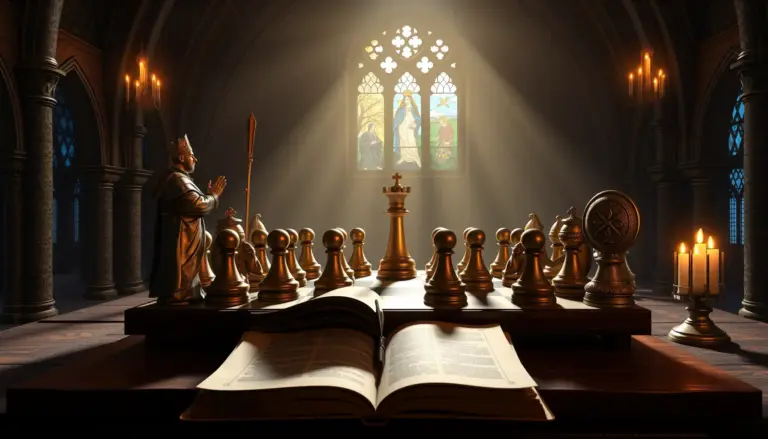
chess, more than a game, It is a laboratory of the mind where memory and the calculation of variants are intertwined in an intellectual dance. Every move on the board is a projection exercise: anticipate plays, evaluate consequences and store patterns that, over time, they become instinct. But, How to transform this process into a systematic skill? The answer is not only in playing more games, but in understanding the cognitive mechanisms that underlie the variant calculation and in training memory strategically. This article unravels the keys to mastering these skills, exploring everything from neuroscientific foundations to the techniques that great teachers have used to elevate their game to superhuman levels.
Memory in chess: beyond memorizing openings
Memory in chess is often mistakenly associated with the ability to recite openings like a parrot.. However, Studies show that elite players do not memorize isolated movements, sino structures. A classic study by Adriaan de Groot, cited in 10 memory errors that slow down your chess, revealed that teachers recognize patterns on the board as easily as a reader identifies words on a page. This is due to the working memory, a cognitive function that allows you to retain and manipulate information temporarily, essential for the calculation of variants.
But, How is this skill trained?? The answer is in the spaced repetition and in the deep analysis of games. For example, the method of retrospective analysis, where a player mentally reconstructs a game without looking at the board, strengthens pattern retention. This approach not only improves memory, but also sharpens the ability to anticipate plays, as detailed in Analyze your chess games to improve: practical guide. The key is to focus on the ideas behind the movements, not in the movements themselves.
The calculation of variants: the art of seeing the invisible
Variant calculation is the ability to visualize sequences of plays before executing them., an ability that separates casual players from masters. But, How is this skill developed?? Neuroscience suggests that the human brain processes chess in a similar way to how it solves complex mathematical problems.. A study published in Nature found that elite players activate brain regions associated with planning and decision making, like the prefrontal cortex, more efficiently than beginners.
To improve the calculation, Experts recommend exercises like forced analysis, where the player is forced to explore all possible variants in a critical position. This method, used by players such as Magnus Carlsen, not only improves accuracy, but also reduces the paralysis by analysis, a common phenomenon in players who hesitate when faced with multiple options. As the article points out Carlsen: practical chess that defeated brilliance, Norwegian champion prioritizes efficiency over depth, calculating only the variants that have a direct impact on the outcome of the game.
Another effective technique is chain calculation, where sequences of plays are displayed as if they were links in a chain, evaluating each link separately before deciding whether to continue or discard the variant. This systematic approach avoids common mistakes, such as underestimating the opponent's responses or overvaluing one's own threats.
The synergy between memory and calculation: the secret of the great masters
Memory and calculation are not isolated skills, but they reinforce each other. A player with a well-trained memory can quickly recognize patterns, freeing cognitive resources for calculation. For example, a teacher who identifies a typical attack in an opening you do not need to calculate all variants from scratch; instead, He uses his memory to remember the key plays and then adjusts his calculation based on the specifics of the position.
This synergy is clearly observed in the style of players like José Raúl Capablanca, whose ability to simplify complex positions was based on his deep knowledge of pawn structures and tactical patterns. As explained in Center control: Key to master openings and memory, mastery of the center not only facilitates the development of the pieces, but also reduces cognitive load by limiting the opponent's options.
To take advantage of this synergy, players must combine theoretical study with deliberate practice. For example, Analyzing grandmaster games and trying to predict their moves before seeing them is an exercise that strengthens both memory and calculation.. Besides, play quick games (blitz) can help automate tactical responses, freeing the mind to focus on the calculation of more complex variants.
Cognitive errors that sabotage the calculation of variants
The calculation of variants is not infallible; is subject to cognitive biases that can lead to catastrophic errors. One of the most common is the confirmation bias, where the player focuses only on the variants that support his plan, ignoring opponent's responses. This error is especially dangerous in tactical positions, where a single move can change the course of the game.
Another common bias is illusion of control, where the player overestimates his ability to calculate complex variants. This can lead to risky decisions, how to sacrifice material without an accurate evaluation of the consequences. To counteract these biases, players should take a skeptical approach, constantly questioning your own ideas and actively seeking the opponent's answers. As mentioned in Psychological errors in chess that ruin your game, Intellectual humility is a powerful tool to improve calculation.
Besides, mental fatigue can negatively affect variant calculation. Studies have shown that the ability to concentrate decreases after 20-30 minutes of intense play, which increases the probability of errors. To mitigate this effect, Players should take short breaks during long games and practice mindfulness to maintain mental clarity.
Advanced techniques to master calculation and memory
Elite players use advanced techniques to take their calculation and memory to the next level. One of them is the display method, where the player imagines the board and the pieces in his mind, moving them mentally to evaluate positions. This exercise, similar to that used by players of blindfold chess (blind chess), strengthens spatial memory and calculation ability.
Another technique is analysis of games with chess modules, where the player compares their calculations with those of an artificial intelligence to identify errors and improve their accuracy. However, as he warns How chess engines redefined the game, it is crucial not to rely exclusively on AI, as this can stunt creativity and independent calculation skills.
Finally, he training with tactical problems It is an essential tool to improve calculation. Solve math exercises in one, pinning or deflection tactics not only sharpens the ability to visualize variants, but also trains memory to recognize common tactical patterns. Platforms like Lichess or Chess.com offer thousands of tactical problems classified by difficulty, allowing players to progress systematically.
Chess is a mirror of the human mind: reflects our strengths, but also our limitations. Mastering variant calculus and memory is not a linear process, but a journey of self-discovery where each game offers a lesson. The key is not to look for shortcuts, but in understanding that these skills are developed through deliberate practice, constant reflection and willingness to learn from mistakes.
As the great teacher Alexander Alekhine said: “Chess is imagination”. And it is precisely that imagination, combined with a well-trained memory and precise calculation, allowing players to transcend the boundaries of the board. For those looking to improve, the path is clear: study with purpose, play with intention and, above all, enjoy the process. Why, in the end, chess is not just a strategy game, but a metaphor for life itself, where every decision counts and every mistake is an opportunity to grow.