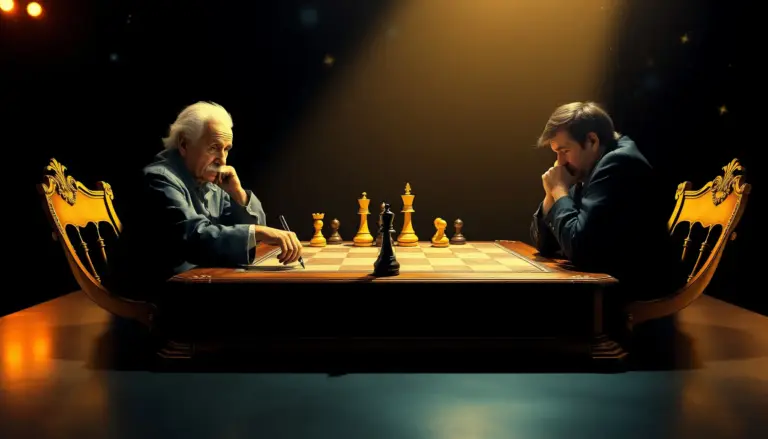
Chess is a game that has fascinated humanity for centuries., not only because of its strategic complexity, but also for its ability to reflect the intensity of the human mind. In each game, players immerse themselves in a universe of calculations, sacrifices and tensions where each movement can be decisive. But, What happens when that tension transcends the board and affects the body in an irreversible way?? throughout history, There have been documented cases of players, immersed in intellectual battle, have suffered fatal consequences. These episodes invite us to reflect on the physical and emotional limits of the human being when faced with an extreme mental challenge.. Is it possible that chess, at its best, can become a game of life or death?
Chess as a mirror of human tension
Chess is not a simple hobby; It is a mental sport that requires a level of concentration and psychological resistance comparable to that of a marathon. During a game, especially in high level tournaments, players experience a significant increase in their heart rate, blood pressure and cortisol levels, the stress hormone. These physiological changes are not exclusive to beginners or amateurs; even the great teachers, like Magnus Carlsen or Garry Kasparov, have described how their bodies react to the pressure of a crucial game. In a study published by the University of Chicago, It was shown that chess players can burn up to 6,000 calories in a single day of tournament, a figure comparable to that of an elite athlete. This physical wear, although less visible than that of a traditional athlete, It is equally real and, in some cases, dangerous.
The tension in chess does not only come from the complexity of the game, but also its competitive nature. Unlike other mental sports, like poker or bridge, chess does not admit chance; every mistake is solely attributable to the player, which increases psychological pressure. This absolute responsibility can generate anxiety, insomnia and even depression in those who fail to manage stress adequately. In this context, It is not surprising that some players have physically collapsed during a match, as if their bodies had reached an invisible limit. To delve deeper into how chess transforms the mind and body, We invite you to read our article on how chess transforms your brain.
Historical cases: when the board became a death trap
throughout history, There have been several cases of players who died while playing a game of chess. These episodes, although rare, They are a reminder of the risks involved in subjecting the body to extreme mental stress without proper precautions..
One of the best-known cases is that of the Soviet grandmaster Vladimir Simagin, who died in 1969 during a tournament in Moscow. Simagin, a player respected for his creative style and his ability to find resources in seemingly lost positions, suffered a heart attack while analyzing a game. The witnesses reported that, minutes before his collapse, Simagin had made a brilliant move that gave him a decisive advantage. However, his heart could not resist the emotion of the moment. This tragic episode not only shocked the chess community, It also raised questions about the health of professional players and the need to monitor their physical well-being..
Another emblematic case is that of the German international teacher Klaus Junge, who died in 1945 to the 21 years while playing a game in Hamburg. Boy, considered one of the most promising talents of his generation, He had achieved fame after defeating several grandmasters in European tournaments.. However, His life was cut short abruptly when, in the middle of a game, suffered a stroke. Doctors attributed his death to a combination of stress., Malnutrition and the extreme conditions of post-war Germany. Junge not only left a chess legacy, but also a warning about the dangers of ignoring the body's signals in pursuit of victory.
In the modern era, The most notable case was that of the Uzbek grandmaster Rashid Nezhmetdinov, who in 1974 suffered a heart attack during a tournament in the Soviet Union. Nezhmetdinov, Known for his aggressive style and his ability to complicate games, had been a rival feared by players like Mikhail Tal and Tigran Petrosian. His death, occurred on the stage of the tournament itself, generated a debate about the responsibility of the organizers in guaranteeing the health of the participants. Should chess tournaments include mandatory medical checkups? Is it ethical to allow players with pre-existing conditions to compete without supervision?
Chess and health: a fragile balance
The cases mentioned are not isolated, but they do not represent a general trend. Most chess players, even those who compete at a professional level, They manage to manage stress without serious consequences for their health. However, These episodes serve as a reminder that chess, like any activity that requires a high level of concentration and mental effort, can have negative effects if not practiced in moderation and care.
Stress in chess not only affects professional players; Amateurs may also experience physical and emotional symptoms after intense games. The difference lies in the frequency and intensity with which they face these situations.. While a grandmaster can play dozens of games a year under extreme pressure, an amateur usually participates in occasional tournaments, which reduces the risk of physical collapse. Nevertheless, It is important to recognize that chess, in its essence, It is a game that can generate addiction, and as such, can lead players to ignore their body's warning signals. If you are interested in exploring more about this topic, We recommend you read our article on why chess is so addictive.
To mitigate the risks associated with stress in chess, Experts recommend adopting healthy habits, like a balanced diet, regular exercise and relaxation techniques, like mindfulness. Besides, It is essential that players learn to recognize their limits and take breaks when necessary. In high level tournaments, It is common for organizers to include breaks between games to allow players to recover physically and mentally.. However, in amateur competitions, where conditions are usually less regulated, the responsibility lies with the players themselves.
The legacy of those who fell: lessons for the future
The cases of players who died while playing a game of chess are tragic, but they also offer us valuable lessons about the importance of balancing the passion for the game with health care.. These episodes remind us that, although chess is a mental sport, Its effects extend to the body and mind in a profound way.. Ignoring this reality can have irreversible consequences..
Currently, The chess community has taken measures to prevent similar tragedies. Many tournaments include emergency medical services, and some professional players have support teams that monitor their health during competitions. Besides, Greater awareness has been promoted about the importance of mental health in chess, a topic that for decades was ignored or stigmatized. Initiatives like the therapeutic chess have shown that this game can be a powerful tool to improve emotional well-being, as long as it is practiced responsibly.
However, there is still much to do. Chess remains a highly competitive sport, where the pressure to win can cloud players' judgment. It is the responsibility of the organizers, Coaches and players themselves ensure that the game takes place in a safe and healthy environment. This includes not only physical measurements, like medical checkups, but also a cultural change that prioritizes well-being over victory at any cost.
Conclusion: chess as a metaphor for life
Chess is a game that has captivated humanity for its ability to reflect life's challenges.: the strategy, patience, creativity and, above all, resilience. However, as we have seen, It can also be a reminder of the limits of the body and mind when faced with extreme pressures.. The cases of players who died while playing a game are tragic, but they invite us to reflect on how we manage stress and pressure in our own lives..
chess, at its best, It shouldn't be a game of life or death., but a tool to improve our ability to think, plan and solve problems. To achieve this, It is essential that the players, whether they are professionals or amateurs, Take a balanced approach that combines a passion for the game with taking care of your physical and mental health. Only then can we fully enjoy the benefits that chess has to offer., without falling into the risks that its extreme practice entails.
In the end, chess is a metaphor for life: a board where every move counts, but where the most important thing is not to win, but learn and grow in the process.