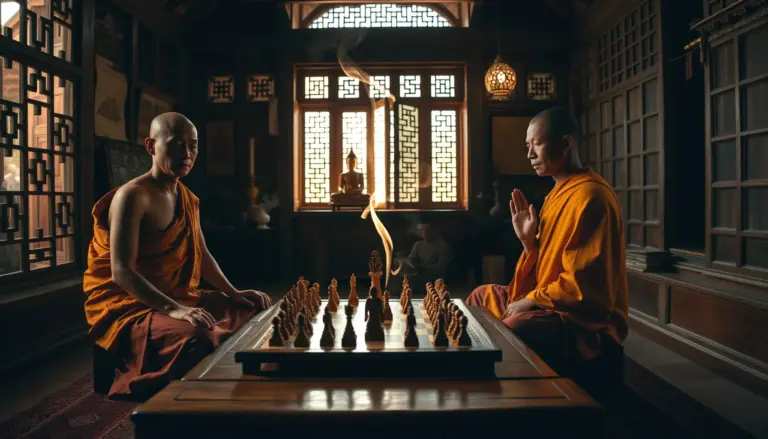
chess, that ancient game that has challenged minds throughout the centuries, It's not just a strategy board., but also a setting where some of the most impressive records in history have been written. From games that seem straight out of a science fiction script to feats that border on the superhuman, Chess has proven to be a fertile ground for excellence, creativity and, sometimes, lo inexplicable. What drives a player to push the boundaries of what is known?? How do some masters achieve seemingly impossible feats?? In this article, We will explore those moments where chess transcends the ordinary and becomes a spectacle of genius, resistance and, in some cases, craziness.
To understand the magnitude of these records, It is essential to recognize that chess is not just a game, but a reflection of the human ability to solve problems under pressure. As the article on chess and science, This mental sport shapes the mind in ways that science is only beginning to understand.. From memory to creativity, Chess requires a perfect balance between logic and art, something that the records that we will explore below make evident.
The longest game: when resistance exceeds time
In the world of chess, Patience and endurance are virtues as valuable as intelligence. However, There is a record that takes these qualities to the extreme: longest game ever recorded. In 1989, during the Belgrade tournament, players Ivan Nikolić and Goran Arsović faced each other in an epic battle that lasted no less than 269 movements. This game, which spanned more than 20 hours, not only challenged the physical limits of the players, but also the rules of chess themselves.
The fascinating thing about this game is not only its duration, but the context in which it was developed. Then, FIDE rules (International Chess Federation) They did not limit the number of moves in a game, allowing players to embark on endless marathons. However, after this record, FIDE introduced the rule of 50 movements, which establishes that if there is no capture of pieces or movement of pawns in 50 consecutive plays, the game can be declared in tables. This rule, although controversial, sought to prevent players from falling into endless cycles of repetition, how it happened in this historic game.
But, What drives two players to prolong a game to such an extreme?? The answer can be found in the psychology of chess. In the article about psychological errors in chess, explores how pressure, Fear of losing and stubbornness can lead players to make irrational decisions. En el caso de Nikolić and Arsović, It is likely that both were so immersed in the battle that they lost sight of the real objective: gain. Instead, They became prisoners of their own resistance, trapped in a cycle of repetitive movements that, ironically, led them to a tie.
The fastest checkmate: when genius prevails in seconds
If the longest game represents extreme resistance, the fastest checkmate is its antithesis: genius in its purest and most ephemeral form. in chess, The fastest possible checkmate is known as “madman's mate” o “mate of the two movements”. This record, although uncommon in serious games, It is a perfect example of how a minor mistake can lead to instant defeat..
The madman's mate occurs when white, in his second movement, They manage to checkmate the black king. The sequence is as follows: 1.f3 e5 2.g4?? Dh4#. In this case, White advances his pawns recklessly, leaving his king exposed to a devastating attack from the black queen. Although this mate is more of a curiosity than a serious strategy, Its existence serves as a reminder that, in chess, a single mistake can be fatal.
This record, although simple, raises a fascinating question: why some players, even at advanced levels, they make such basic mistakes? The answer can be found in human nature. in chess, like in life, overconfidence can be a silent enemy. In the article about the ego in chess, Discusses how arrogance can cloud a player's judgment, leading him to underestimate his opponent and make mistakes that, under normal conditions, would avoid. The mate del loco is an extreme example of this phenomenon., where inattention and overconfidence combine to create a disaster in just two moves.
The oldest tournament: Hastings and its legacy of tradition
Chess has not only witnessed individual records, but also of collective milestones that have marked its evolution. One of the most notable is the Hastings tournament, considered the oldest chess tournament in the world. Celebrated for the first time in 1895, This tournament is not only a symbol of tradition, but also a setting where records have been set and some of the most exciting pages in chess history have been written..
The Hastings Tournament 1895 It is especially memorable for two reasons.. First of all, It was the stage where the young American Harry Pillsbury surprised the world by winning the tournament, defeating some of the best players of the time, as Emanuel Lasker and Wilhelm Steinitz. Pillsbury, that I only had 22 years at that time, showed a combination of talent, audacity and preparation that made him a chess legend. His victory at Hastings was not only a record in itself, but also a turning point in his career, which led him to be considered one of the best players in the world.
In second place, the Hastings tournament 1895 It is remembered for being the stage where the “King's Gambit”, an aggressive opening that seeks to sacrifice a pawn in exchange for rapid development of the pieces. This opening, which was used successfully by several players in the tournament, became a symbol of the creativity and risk that characterize elite chess. As mentioned in the article on Hastings and his legacy, This tournament was not only a milestone in the history of chess, but also a catalyst for innovation in the game.
The youngest player to become a Grandmaster: when talent defies age
Chess is a game that, traditionally, has been dominated by players with decades of experience. However, in recent decades, We have witnessed a fascinating phenomenon: the emergence of prodigies who achieve incredible feats at increasingly younger ages. The most impressive record in this regard is that of the youngest player to become a Grandmaster., a title that is only awarded to the best in the world.
This record is currently held by American Abhimanyu Mishra, who in 2021 He became a Grandmaster at the age of 12 years, 4 months and 25 days. Mishra not only broke the previous record, established by the Russian Sergey Karjakin in 2002, but also showed that modern chess is evolving at a dizzying pace. His achievement is even more impressive when you consider that, in Karjakin's time, the record was considered almost unattainable.
But, what makes a child 12 years can reach a level of excellence that many adult players never achieve? The answer may be found in a combination of factors, from access to technology to training methodology. In the article about chess prodigy children, The keys to the success of these young geniuses are explored. Among them, highlight family support, access to elite coaches and, above all, the ability to absorb information at an accelerated pace. Mishra, For example, He started playing chess at two and a half years old., which gave him a significant advantage in terms of experience and cognitive development.
However, This record also raises questions about the limits of human talent. Is it possible that, in the future, let's see a child 10 years become Grandmaster? Or is there a biological limit that prevents the human brain from developing certain skills before a certain age?? These are questions that science and chess will continue to explore in the coming years.
The game with the most checkmates in history: when the board becomes a battlefield
Chess is a game of strategy, but it can also be a spectacle of creativity and audacity. One of the most curious and least known records is that of the game with the most checkmates in history.. This record is held by a game played in 1973 between the Soviet masters Vladimir Simagin and Viacheslav Ragozin, where none other than 17 checkmate in a single game.
How is it possible for a game to have so many checkmates?? The answer lies in the very nature of chess.. In this game, both players opted for an aggressive style, constantly looking for opportunities to attack the opposing king. However, instead of ending the game with a definitive checkmate, the players continued to move their pieces, creating situations where the opposing king was in check again and again. Although this may seem like a strategic error, actually reflects a mentality of “game for the game”, where the goal is not just to win, but also explore the possibilities of the board.
This record, although uncommon, It is a reminder that chess is not just a game of logic, but also creativity. As mentioned in the article on chess and lateral thinking, The ability to think outside the box can lead to innovative solutions and, in some cases, to records like this. In a world where chess is increasingly dominated by technology and memorization, This game is a tribute to the very essence of the game: creativity.
Chess is a universe of possibilities, where records not only reflect individual excellence, but also the evolution of the game over the centuries. From the extreme endurance of the longest game to the instant genius of the fastest checkmate, Each record offers us a window into the human mind and its ability to overcome limits.. But beyond the numbers and statistics, These records remind us that chess is, first of all, a game of passion, creativity and, above all, humanity.
In a world where artificial intelligence and technology are redefining the limits of chess, These records invite us to reflect on the future of the game. Will we continue to see human feats that defy the impossible, or the machine will end up taking over? One thing is for sure: as long as there are players willing to dream, Chess will continue to be a stage where the extraordinary becomes reality. and maybe, in the future, new records will surprise us, proving that, on the board 64 casillas, the only limit is our imagination.