Chess is an ancient game that has fascinated millions of people around the world.. Although the basic rules are known to most, There are hidden strategies and principles that only the most advanced players master.. It is “secret rules” They do not appear in traditional manuals, But they can make the difference between a victory and a defeat. From psychological tactics to unconventional movement patterns, chess holds secrets that few dare to explore.
In this article, We will reveal some of these unknown principles that can transform your game. It's not just about memorizing openings or studying endings, but to understand the essence of chess from a deeper perspective. Are you ready to discover what almost no one has told you??
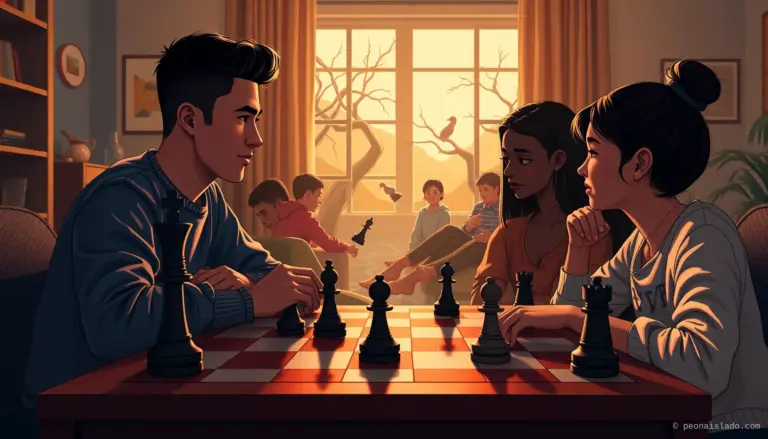
The power of psychology on the board
Chess is not just a game of logic, but also of mind. Many players underestimate the impact of psychology on their games, But great teachers know that controlling emotions and manipulating the opponent's perceptions can be as decisive as a brilliant move.. One of the most effective techniques is “strategic reflection time”.
When a player takes more time than usual on a seemingly simple play, can generate doubts in your opponent. The rival begins to wonder: “Why are you thinking so much? Is there something I'm not seeing?”. This uncertainty can lead to errors, since the human brain tends to overanalyze when it detects a hidden threat. Experienced players use this device to divert the opponent's attention from the actual position on the board..
Another psychological tactic is “distraction movement”. It consists of making a play that, although it is not the strongest in technical terms, force the rival to change his plan. For example, sacrifice a pawn in a balanced position to force the opponent to defend instead of attack. This not only breaks your concentration, but it can also lead you to make mistakes in your quest to regain the advantage.
Finally, he “mirror effect” It is a subtle but powerful technique.. If your opponent plays aggressively, imitating his style can destabilize him. Many players are not prepared to face their own game, which leads them to make mistakes due to overconfidence or frustration.
The importance of weak pawns
in chess, pawns are often underestimated, but its correct management can decide a game. A key concept is that of “weak pawn”, one that cannot be defended by other pawns and is vulnerable to enemy attacks. However, What many don't know is that a weak pawn can become a strategic tool if used correctly..
A weak pawn on an open file can serve as “lure”. By advancing it, you force the rival to dedicate resources to capturing it, which can weaken their pawn structure or open lines for your pieces. For example, in the Sicilian Defense, the pawn on d6 is usually a target, but its controlled advance can create counterplay on the queenside.
Another strategy is “passed pawn”, a pawn that has no enemy pawns in front of it and can advance towards the promotion. Although it seems obvious, many players do not know how to create or exploit it. A passed pawn in the center of the board can be more dangerous than one on the flank, since it limits the movement of the rival pieces and forces the opponent to maintain a constant defense.
Finally, he “isolated pawn” It's a double-edged sword.. Although it can be a weakness, can also become an advantage if used to control key squares. For example, an isolated pawn on d4 in the Italian Opening can serve as a base for a kingside attack, as long as it is kept protected by pieces.
The art of prophylaxis
Prophylaxis is one of the most advanced and least understood techniques in chess. It consists of anticipating the rival's plans and neutralizing them before they materialize.. Unlike passive defense, prophylaxis involves active play, where each move seeks to limit the opponent's options.
A classic example is the “blocking of boxes”. If your opponent has a strong knight on a central square, instead of attacking him directly, you can place a piece that limits its movement. For example, a bishop on g5 can block a knight on f6, preventing it from jumping to d5 or e4. This not only neutralizes your threat, but it can also open up opportunities for your own pieces.
Another technique is “parts diversion”. If your opponent is preparing a flank attack, you can make a move that forces him to relocate his pieces. For example, a check on the opposite flank can force the opposing king to move, breaking their coordination and buying time to reorganize your defense.
Prophylaxis is also applied at the opening. Many players memorize variants without understanding their purpose. A prophylactic player, instead, choose openings that limit the opponent's options. For example, the Caro-Kann Defense is less popular than the Sicilian, but their solid pawn structure makes early attacks difficult, forcing the opponent to play with precision.
The positional sacrifice: when less is more
The sacrifice of material is one of the most spectacular tools in chess, but not all sacrifices are tactical. He “positional sacrifice” It is a subtle technique that involves giving up material in exchange for a long-term strategic advantage. Unlike tactical sacrifices, seeking a checkmate or immediate recovery of material, positional sacrifices require a deep vision of the game.
An example is the “quality sacrifice”. Giving up a rook for a bishop or knight can seem like a disadvantage, but if the bishop controls key squares or the knight has a dominant position, positional advantage can compensate for material loss. For example, in the Dragon Variation of the Sicilian Defense, Black players often sacrifice the exchange on c3 to gain a strong bishop on g7 and a kingside attack.
Another type of positional sacrifice is “advanced pawn”. In some openings, like King's Indian Defense, Players advance a pawn to c5 or f5 to open lines and create weaknesses in the opponent's structure. Although this pawn can be captured, Its advance forces the opponent to dedicate resources to its defense, which can weaken other areas of the board.
Positional sacrifice is also used to “break coordination” of the rival. If your opponent has well placed pieces, a sacrifice may force him to relocate them, creating holes in your defense. For example, sacrificing a pawn on e5 can open up the e-file for your rook, while the opponent must spend moves recovering the material instead of developing his game.
Conclusions: beyond the basic rules
Chess is a game of infinite possibilities, and mastering its secret rules can raise your level significantly. From board psychology to managing weak pawns, going through prophylaxis and positional sacrifices, Each of these concepts offers a new perspective on how to approach a game.
The most important thing is to understand that chess is not just about memorizing openings or calculating variants., but to develop a strategic mindset. The techniques we have explored are not tricks, but tools that require practice and deep understanding. A player who masters psychology can destabilize his opponent without the need for brilliant moves; He who understands the value of weak pawns can turn them into weapons; and whoever applies the prophylaxis can anticipate the opponent's plans before they materialize.
The positional sacrifice, for his part, It's a reminder that material isn't everything.. Sometimes, Giving up a piece can be the key to gaining a lasting advantage. These principles are not exclusive to great teachers, but they are within the reach of any player willing to delve deeper into the game.
Ultimately, chess is a journey of constant learning. The secret rules we have revealed are just the beginning. If you want to improve, don't limit yourself to the basics: explore, experiment and, above all, play with an open mind. The board is full of possibilities, and only those who dare to go beyond will discover their true potential.