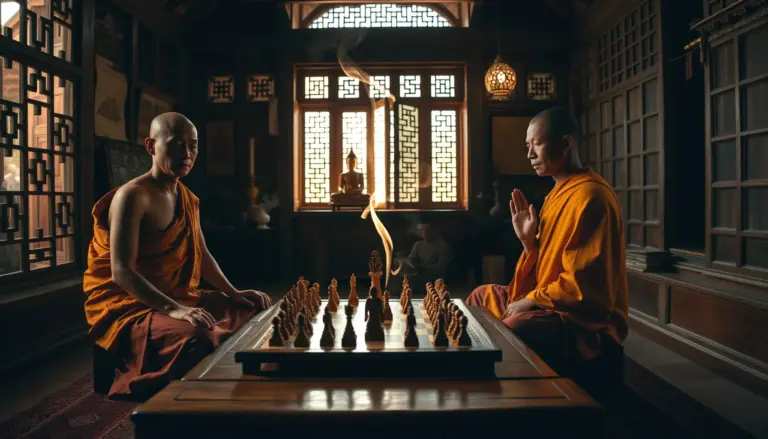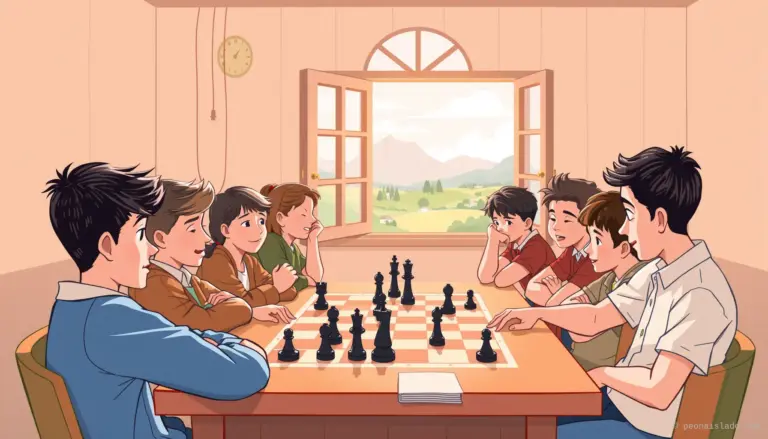
In a world that is increasingly digitally connected but emotionally distant, Modern loneliness has become a silent epidemic. Social networks, instant messages and video calls promise closeness, but often they leave a deeper void: the absence of authentic and meaningful connections. In this context, chess emerges as an unexpected antidote, not only for its ability to challenge the mind, but for its power to weave human ties in an environment where genuine interaction is scarce.. This ancient game, that combines strategy, patience and creativity, offers more than just entertainment: becomes a bridge between people, a refuge against isolation and a tool to rebuild the social fabric. Throughout this article, We will explore how chess can become an ally against loneliness, analyzing its impact on mental health, its role as a community facilitator and its ability to reconnect people with themselves and others.
Chess as a mirror of the human mind
Chess is not just a game; It is a microcosm where the deepest cognitive and emotional processes of the human being are reflected.. Neuroscience studies have shown that playing chess activates multiple areas of the brain, including the prefrontal cortex (associated with decision making), the parietal lobe (responsible for spatial processing) and the hippocampus (related to memory). This brain stimulation not only improves skills such as concentration and planning, but also acts as a mental exercise that counteracts the effects of isolation.
But beyond the cognitive benefits, chess works like a emotional mirror. Each game is a silent dialogue between two minds, where plays reveal not only strategies, but also moods, fears and aspirations. In a study published in the journal *Frontiers in Psychology*, It was found that chess players develop greater empathy by anticipating their opponent's intentions, a skill that carries over to social interactions off the board. This ability to “file” to the other, even if it is in a competitive context, fosters a human connection that transcends words.
Besides, Chess teaches how to manage frustration and uncertainty, two emotions that tend to be exacerbated by loneliness. Losing a game is not a failure, but an opportunity to analyze errors and improve. This growth mindset, promoted by chess, helps people face loneliness with resilience, transforming the experience of isolation into a space of self-discovery.
From the individual to the collective: chess as a social catalyst
Modern loneliness is not just an individual problem, but a social phenomenon that requires community solutions. chess, in its essence, It's a social game: requires at least two people to exist, and its practice encourages face-to-face interaction in a world dominated by screens. However, Its impact goes beyond simple company. In cities around the world, from New York to Buenos Aires, have arisen chess clubs that function as spaces of inclusion, where people of different ages, cultures and social strata gather around a board.
A notable example is the program “Chess in the Schools”, implemented in public schools in the United States, which has shown that chess improves not only academic performance, but also the social skills of the students. According to organization data, Children who participate in these programs show a 30% more positive interactions with his companions, reducing bullying and encouraging collaboration. This effect is replicated in adults: in Spain, the project “Chess in the Street” takes boards to public squares, attracting older people who find gaming a way to combat isolation.
Chess has also found a new home in the digital world, where platforms like Chess.com o Lichess connect millions of players online. Although virtual interaction does not replace human contact, These communities offer a sense of belonging to those, due to distance or shyness, They cannot attend a physical club. During the pandemic, the number of users on these platforms skyrocketed, proving that, even in forced solitude, chess can be an emotional lifesaver.
The ritual of the game: how chess structures time and space
One of the deep causes of modern loneliness is loss of rituals. In a fast-paced society, where time is fragmented into notifications and pending tasks, People have lost the pause spaces that once gave meaning to daily life. chess, with its slow pace and clear structure, offers an antidote to this temporary disconnection. Each game is a ritual in itself: from the preparation of the board to the final handshake, the game imposes an order that contrasts with the digital chaos.
This order is not trivial. According to psychologist Mihály Csíkszentmihályi, author of the theory of flow, Activities that require concentration and have clear rules generate a state of deep immersion that reduces anxiety and increases the feeling of well-being. chess, by demanding full attention, acts as a form of active meditation, taking the mind away from worries and anchoring it in the present. In a study conducted by the University of California, It was observed that chess players experience a reduction in 25% in cortisol levels (the stress hormone) during and after a game, an effect comparable to that of mindfulness practice.
Besides, chess structures social space. In a coffee, a park or a game room, the board creates a neutral territory where social hierarchies are diluted. It doesn't matter if you are an executive or a student, an old man or a child: in chess, everyone is equal before the rules. This symbolic equality facilitates the creation of links, since it eliminates the barriers that usually separate people in other contexts.
Chess as a therapeutic tool: beyond entertainment
The potential of chess to combat loneliness is not limited to its social or cognitive dimension; It also has therapeutic applications. In recent years, Mental health professionals have begun to incorporate chess into therapies to treat depression, anxiety and post-traumatic stress disorder. The reason is simple: the game provides a secure framework to explore difficult emotions without the risk of direct judgment.
In it Barcelona Psychiatric Hospital, For example, A therapeutic chess program was implemented for patients with schizophrenia. The results, published in the journal *Schizophrenia Research*, showed that participants who played chess regularly experienced an improvement in their executive functioning (ability to plan and make decisions) and a reduction in symptoms of social isolation. chess, being a strategy game, forces players to anticipate consequences, which helps them develop a greater tolerance for frustration and visualize alternative futures, crucial skills for those struggling with loneliness.
Another area where chess has proven to be useful is in the treatment of loneliness in old age. A study conducted by the University of Edinburgh found that older adults who participated in chess activities reported a greater sense of purpose and a reduction in feelings of abandonment. The game, Being an activity that can be practiced in a group or individually, adapts to the needs of each person, offering both companionship and autonomy.
Even in prison environments, Chess has been used as a tool for social reintegration. Programs like “Chess Behind Bars” in the United States they teach inmates not only to play, but to develop skills such as patience, empathy and impulse control. For many, chess becomes a metaphor for life: every move has consequences, and learning to think before acting is a valuable lesson for those seeking to reintegrate into society.
In a world where loneliness has become an epidemic, chess emerges as an unexpected but powerful remedy. It's not just a game, but rather a multifaceted tool that addresses loneliness from multiple fronts: cognitive, social, emotional and therapeutic. Through its ancient rules, Chess teaches us to connect with ourselves and with others, to structure our time and our space, and find meaning in human interaction.
The benefits of chess are tangible: improves mental health, encourages community building, reduces stress and offers a sense of belonging. But its true value lies in its ability to remind us that, even in the digital age, authentic connections are still possible. The chess board, with his 64 casillas, It is a microcosm where loneliness is transformed into dialogue, competition in collaboration and isolation in community.
In a future where technology will continue to advance, loneliness is likely to remain a challenge. However, chess offers us a valuable lesson: the solution is not in more screens, but in more meaningful interactions. Whether at a local club, in a public square or through a screen, chess invites us to sit in front of another human being, to share a moment of active silence and discover that, in the end, The best strategy against loneliness is simply to be present. The movement is yours.