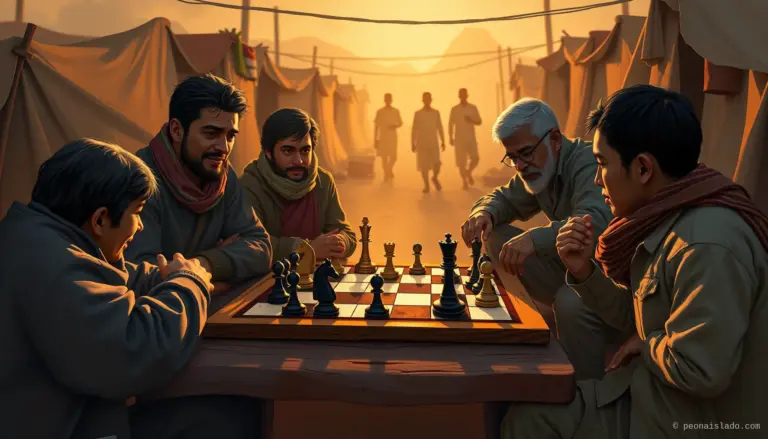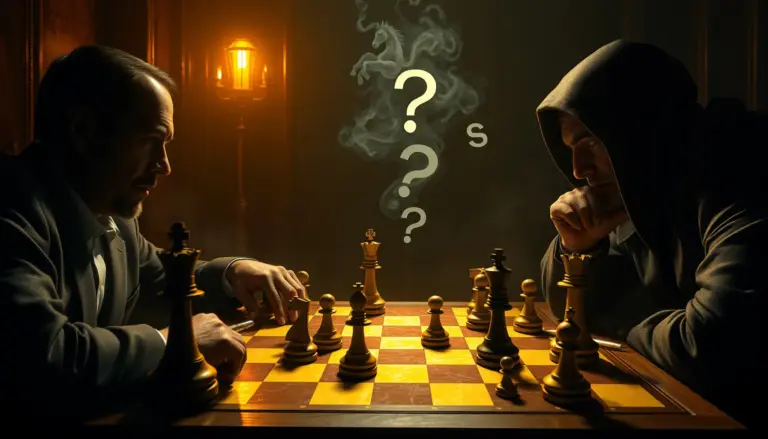
Imagine a board 64 boxes where not only two minds confront each other, but two souls. Where every movement is a whisper of complicity, a test of patience and an exercise of mutual trust. Couple chess is not a simple hobby; it's a ritual that unravels hidden dynamics of the relationship, transforming the game into a mirror of intimacy. But, Does it really strengthen ties or expose cracks we'd rather ignore??
The board as a setting for non-verbal communication
In a game of chess, words are unnecessary. Each piece moved is an encrypted message that the other must decipher: a bold advance, An unexpected sacrifice or a meticulous defense reveal more about the player's emotional state than any conversation.. Studies in Ajedrez and mindfulness show that this strategic silence activates brain areas linked to empathy, forcing players to anticipate not only the plays, but the intentions of the other. For couples, This results in an unprecedented active listening practice. How many times in everyday life do we pay as much attention to our partner's gestures as we do to an imminent checkmate??
However, This non-verbal language can also be a minefield. A tactical error can be interpreted as disinterest, an aggressive play as hostility, and a forced draw as resignation. Here, chess acts as a latent tension detector, exposing communication patterns that, in other contexts, could go unnoticed. The key question is: Are we willing to face what the board reveals to us??
The psychology of checkmate: can, control and vulnerability
chess is, in essence, a power play. Whoever dominates the center of the board exercises control over the flow of the game, a metaphor that resonates deeply in human relationships. When a couple plays, This dynamic is transferred to the emotional realm: Who leads the strategy? Who fits? Who sacrifices pieces—or emotions—for a greater good??
Research on psychology in chess point out that players who assume dominant roles on the board often replicate these patterns in their personal lives. This can be beneficial if both partners find a balance, but dangerous if one of the two constantly feels at a disadvantage. chess, so, not only reflects the distribution of power in the relationship, but it can also reconfigure it. A lost game is not just a defeat in the game, but an opportunity to rethink dynamics of control and submission.
The vulnerability emerges when a player, used to winning, faces an unexpected defeat. in chess, as in love, humility is a key piece. Accepting a mistake without blaming others—or fate—strengthens emotional resilience. But, How many couples are prepared to lose without their self-esteem suffering??
Chess as couples therapy: beyond the game
Chess is not just a mental sport; It is a recognized therapeutic tool. Programs therapeutic chess They are used to treat everything from anxiety to post-traumatic stress, thanks to its ability to structure thought and channel emotions. In the context of a relationship, this potential multiplies. A game can become a safe space to express frustrations, celebrate achievements or simply reconnect.
For example, in conflict situations, The board acts as a third mediator. Instead of arguing directly, couples can “dialogue” through the pieces, externalizing their emotions in concrete movements. This reduces the emotional burden of difficult conversations and allows you to approach problems from a more objective perspective.. Besides, chess encourages patience, a rare virtue in the age of instant gratification. Learning to wait for the right moment to act—whether on the board or in life—is a lesson that transcends 64 casillas.
But there is a risk: If chess becomes an extension of the couple's conflicts, can aggravate tensions instead of relieving them. That's why, It is crucial to establish clear rules before playing. Is joking allowed?? Is it worth analyzing the game after? What meaning do we give to a defeat?? Without these agreements, the game can be transformed into a battlefield rather than a bridge.
Shared creativity: when chess becomes art
Chess is not just logic; it's also creativity. The most memorable games—like “The Immortal” by Anderssen—are works of art in themselves, where piece sacrifice and bold combinations defy reason. When a couple plays, This artistic facet can become a shared language, a way to co-create something unique.
Imagine a game in which both players collaborate to build a strategy, anticipating each other's movements as if they were choreographers of a dance. Or a game where, instead of competing, explore unconventional variants, like him alternative chess, where the rules are reinvented. This approach transforms chess into a playful experience and not a test of skills., reducing pressure and increasing complicity.
Creativity in chess also manifests itself in the way the game is taught.. A couple can invent their own metaphors to explain openings or endings., creating a private code that strengthens your connection. For example, compare the pawn with a “silent messenger” or the tower with a “memory keeper” adds layers of personal meaning to the game. In this sense, chess becomes a legacy that the couple builds together, something they can pass on to future generations.
Chess as a mirror of life as a couple
Chess and romantic relationships share a fundamental structure: both are games long term strategy. on the board, like in life, The decisions made in the first plays—or stages—condition future development. A careless opening can lead to a chaotic middlegame, in the same way that poor communication in the early years of a relationship can lead to conflict years later.
But there is a crucial difference: in chess, The rules are clear and the objectives are defined (checkmate the opposing king). in love, instead, The rules are fluid and the objectives can change over time. This ambiguity is what makes chess such a powerful metaphor.. When playing, couples can observe how they handle uncertainty, how they react to unforeseen events and how they celebrate—or regret—the results.
A study published in the Journal of Social and Personal Relationships found that couples who play chess regularly report higher levels of satisfaction in their relationship, especially in areas such as communication and conflict resolution. The reason is simple: chess forces players to think like the other, to anticipate their movements and adapt to their strategies. This ability, known as theory of mind, It is essential for empathy and emotional connection.
However, Chess can also reveal deep incompatibilities. If one of the members of the pair prefers an aggressive playing style and the other opts for a defensive strategy, conflicts on the board may reflect irreconcilable differences in real life. In these cases, the game does not strengthen the relationship, but the puts to the test, forcing the couple to decide if they are willing to negotiate or if, on the contrary, their differences are insurmountable.
Conclusion: To play or not to play?
Couple chess is a double-edged sword. On the one hand, can be a powerful tool to improve communication, strengthen trust and explore shared creativity. On the other, can expose hidden tensions, highlight power imbalances and, at worst, become a constant reminder of the differences.
The key is in the approach. If chess is played with curiosity, respect and willingness to learn from others, can be a catalyst for mutual growth. And, instead, becomes an extension of everyday conflicts, it is better to leave the board aside. After all, the goal is not to win the game, but to strengthen the bond.
As the great teacher Savielly Tartakower said: “Chess is the gymnastics of the mind”. But when you play as a couple, It can also be the gymnastics of the heart. The next time you sit in front of your loved one, remember: every movement is an opportunity to get closer, not only to checkmate, but to the other.