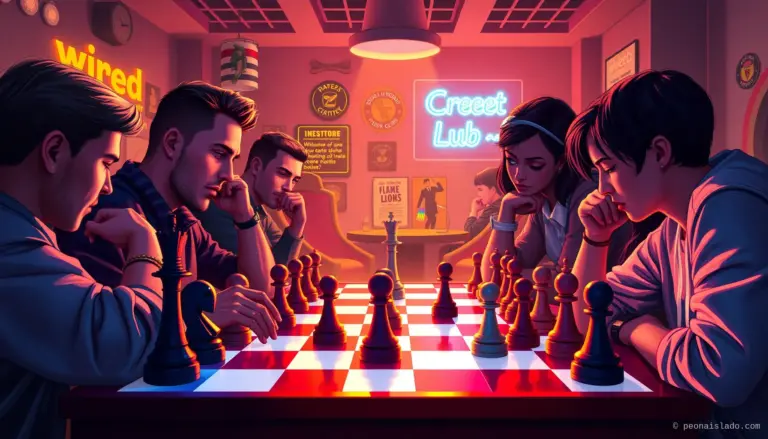
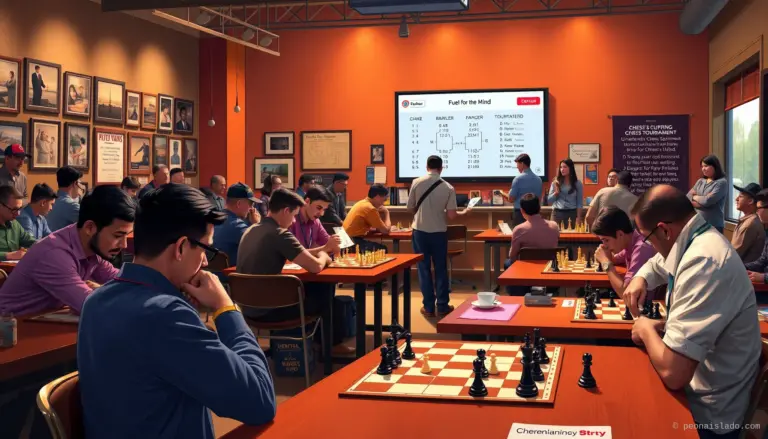
Imagine a board 64 boxes where the pieces are not made of wood or plastic, but human beings dressed in costumes that recreate the essence of kings, damas, rooks and pawns. The silence is broken by the creaking of medieval armor, the whisper of strategies whispered between players and the murmur of the public that, more than spectators, They become accomplices in a ritual that transcends time. Los living chess festivals They are not just an artistic representation of the ancient game, but a unique fusion of theater, history and strategy that has captivated communities around the world. From the medieval squares of Europe to the exotic landscapes of Asia and America, These events transform chess into a collective spectacle where each move is a choreography and each game, a life lesson.
Living chess as a bridge between the past and the present
The origin of living chess festivals dates back to the Middle Ages, when the game was a symbol of power and military strategy. In cities like Marostica, in Italy, the tradition dates back to the 15th century, when two nobles competed for the hand of a queen in a game of human chess, thus avoiding a duel to the death. Hoy, This city revives this event every two years with a giant board in the central square, where hundreds of actors recreate the historical game with period costumes and meticulously rehearsed choreographies. This festival not only preserves a local legend, but also demonstrates how chess can be a symbol of power and life, capable of uniting generations under the same story.
But living chess is not exclusive to Europe. In Ströbeck, Germany, There is a tradition that dates back to the 11th century, where villagers have played human chess for over a thousand years. Here, the game is not just a show, but an integral part of cultural identity. The players, dressed like chess pieces, They move to the rhythm of Renaissance music, while the public follows every movement as if it were a soccer game. These types of events not only celebrate chess as a sport, but it elevates it to the category of art and creativity, where strategy is intertwined with bodily expression and historical narrative.
More than a game: living chess as a social tool
In many parts of the world, Living chess festivals have transcended their recreational function to become tools of social transformation. In Medellín, Colombia, For example, he street chess has been used as a form of urban resistance and community building. During the city's Living Chess Festival, young people from vulnerable neighborhoods participate as human pieces, not just to entertain, but to transmit a message of peace and improvement. These types of initiatives demonstrate how chess, even in its most performative version, can be a bridge to redemption and hope, especially in contexts where violence and inequality have left deep marks.
In Mosul, Irak, living chess has taken on an even deeper meaning. After years of conflict and destruction, the local community has used this format to rebuild the social fabric. In 2021, A festival was organized where ex-combatants and civilians participated together as pieces on a giant board, symbolizing reconciliation and cultural renaissance. These types of events not only revitalize interest in chess, but also offer a platform to heal collective wounds. Here, the board becomes a safe space where differences are put aside in favor of a common goal: strategy and cooperation.
Innovation and technology: living chess in the digital age
With the advancement of technology, Living chess festivals have evolved to incorporate interactive elements that attract new generations. In Estonia, For example, experiments have been carried out with digital boards that project movements in real time, while human players move following the instructions of artificial intelligence. This hybrid approach not only modernizes the experience, but also raises fascinating questions about the future of chess. Can technology coexist with the human essence of the game? Or are we facing a new form of hybrid chess, where analog and digital merge to create something unique?
In Tokio, Japan, the living chess festival has incorporated augmented reality to create an immersive experience. Spectators can wear special glasses that allow them to see game statistics, biographies of the historical players represented and even projections of possible future moves. These types of innovations not only attract a younger audience, but also demonstrates how chess can adapt to the times without losing its essence.. The technology, far from being a threat, becomes an ally that enriches the experience and expands the creative possibilities of the game.
Living chess as a tourist and economic phenomenon
Living chess festivals not only have a cultural and social impact, but they have also become an economic engine for many regions. In Witches, Belgium, he “Witches Living Chess” attracts thousands of tourists every year, generating significant revenue for hotels, local restaurants and shops. This event, held in the market square, Recreate historical games with actors dressed in 15th century costumes, while the public enjoys live music and medieval food tastings. The chess combination, History and gastronomy create a unique experience that positions the city as a first-class tourist destination.
In Marostica, Italia, The biennial living chess festival is one of the most anticipated events in the country, with assistance that exceeds 30,000 spectators. The city is transformed into a medieval setting, with craft markets, falconry shows and theatrical performances that complement the main game. These types of festivals not only revitalize the local economy, but also reinforce the sense of identity and belonging of the communities. chess, in this context, becomes a vehicle to revive towns and preserve traditions that, otherwise, could be forgotten.
The future of living chess: challenges and opportunities
Despite its growing popularity, living chess festivals face significant challenges. One of the main ones is sustainability, especially in events that require a large investment in logistics, clothing and promotion. Many initiatives depend on public funds or private sponsorships, which makes them vulnerable to changes in political or economic priorities. Besides, in an increasingly digital world, Attracting new generations to a format that seems stuck in the past can be a challenge.
However, The opportunities are equally promising.. The incorporation of technology, such as virtual reality or artificial intelligence, may open new avenues to make living chess more accessible and attractive. For example, Interactive experiences could be created where spectators actively participate in the game, voting for moves or even controlling virtual pieces. Besides, the globalization of chess, powered by platforms like Chess.com y Lichess, has generated renewed interest in the game, which could translate into greater support for traditional festivals.
Another key opportunity is expansion to new audiences. Living chess has the potential to be a powerful tool in education, especially in schools where strategic thinking and creativity are sought to be encouraged. Imagine a classroom where students not only learn chess on a board, but they live it through theatrical performances. This approach would not only make learning more dynamic, but it would also reinforce skills such as teamwork and problem solving., as explored in the article on chess in education.
Living chess festivals are much more than a show. They are a celebration of human intelligence, a bridge between cultures and generations, and a powerful tool for social transformation. In a world where technology threatens to isolate us, These events remind us of the value of the collective, of the tactile and the human. Each game played on a giant board, every choreographed movement, every spectator who stops to observe, It is one more piece in the great puzzle of chess history.. And as long as there are communities willing to keep this tradition alive, the game will continue to be a universal language, able to unite us in strategy, art and life.
So next time you hear about a living chess festival, don't just see it as a curious event. Think of it as an invitation to participate in something bigger.: a game where we are all pieces, where every move counts and where, in the end, what really matters is not winning or losing, but the connection that is created along the way. Why, after all, chess is not just a game. It's a universal language that transcends borders, times and differences.