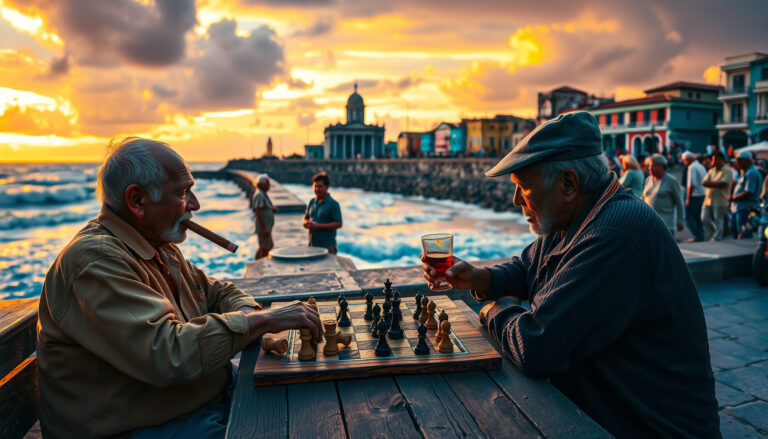
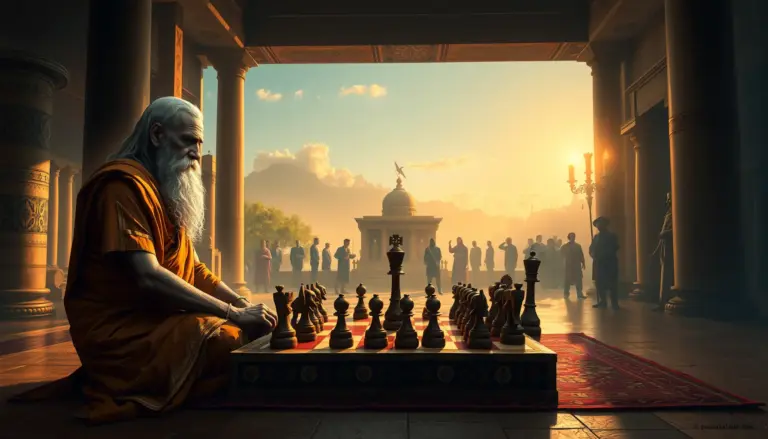
Chess and poker are two games that, prima facie, They seem to inhabit different worlds. A, a board of 64 squares where pure strategy and anticipation govern every move; the other, a card game where chance, Psychology and risk management intertwine in a dance of betting. However, beneath that surface of differences, both share an essential core: They are mirrors of the human mind, laboratories where intelligence is tested, patience and the ability to read not only the plays, but also to people. What do they really have in common?? More than you think, and exploring those connections can reveal unexpected lessons about how we think., we decide and, ultimately, we live.
In this article, We will unravel the invisible threads that unite chess and poker, from the psychology behind each decision to the strategies that transcend the game to be applied in everyday life. Why, in the end, both the board and the poker table are settings where a silent battle is fought: that of understanding the world and those who inhabit it.
The psychology of risk: when fear and ambition dictate the game
in chess, every move is a bet. Not in the literal poker sense, where money changes hands, but on a more abstract level: the risk of leaving a piece exposed, of sacrificing a pawn for a positional advantage, or falling into a trap set by the rival. The difference is that, in chess, the risk is calculated, almost mathematical. in poker, instead, risk mixes with uncertainty, and that's where human psychology comes into play most crudely..
Both games require impeccable emotional management. in chess, a mistake can be irreversible, and the frustration of a miscalculated move can cloud judgment for the rest of the game.. in poker, the pressure is even more intense: You should not only manage your own emotions, but also interpret those of your opponents. An expert poker player knows that an involuntary gesture, a nervous tic or even the rhythm of breathing can reveal a weak or strong hand. This ability to read others is not foreign to chess, where the great masters like Bobby Fischer have shown that understanding your opponent's personality—their aggressive or defensive style, your risk tolerance—can be as crucial as mastering openings and endings.
But there is an element that poker takes to the extreme: *tilt* management. This term, taken from the world of video games, describes the state of frustration that clouds judgment and leads to making irrational decisions. in chess, *tilt* can manifest itself as an obsession with recovering a lost piece, leading to cascading errors. in poker, It's even more dangerous, because money at stake amplifies emotions. both games, however, They teach the same lesson: who controls his emotions, dominate the game.
Strategy vs. improvisation: the balance between the predictable and the unexpected
Chess is a game of perfect information. Everything is in sight: the pieces, their possible movements, immediate threats. The strategy is built on the basis of patterns, memorized openings and positional analysis. A player like Magnus Carlsen does not win only because of his calculation ability, but for their ability to recognize structures and anticipate long-term plans. Instead, poker is a game of incomplete information. You don't know what cards your opponent has, nor what cards will come on the flop, turn o river. Here, strategy mixes with improvisation, and the ability to adapt to the unknown becomes crucial.
However, This difference is not as absolute as it seems.. in chess, even with all the information available, There is a moment when improvisation enters the scene. When the game deviates from the theoretical lines, when the opponent makes an unexpected move, the player must rely on his intuition and creativity to find solutions. It's what the great teacher Rudolf Spielmann called “the art of sacrifice”, that ability to break established rules to create something new on the board.
in poker, on the other hand, pure strategy also has its place. Professional players don't just rely on their ability to read others; They also study probabilities, hand ranges and betting patterns. A good poker player knows when to fold, When should you bet big and when should you bluff, all based on a cold calculation of the possibilities. In this sense, both games complement each other: Chess teaches you to think about long-term structures and plans., while poker trains the ability to make quick decisions under pressure, with limited information.
This duality between strategy and improvisation is not exclusive to games. in life, like in chess and poker, There are times when we must follow a meticulous plan and others when intuition and adaptability are key. The lesson here is clear: rigidity kills creativity, but improvisation without foundation is just chaos. The balance between the two is what defines great players—and successful people—in any field..
The art of reading: how to decipher the rival without saying a word
in chess, the rival's reading is subtle. It is not about interpreting gestures or looks, but to analyze his playing style. Are you a positional player?, who prefers to control the center and wait for the right moment to attack? Or is he a tactician, always looking for complications and spectacular sacrifices? Every move on the board is a clue, and the great teachers are experts in deciphering the “code” of his opponent. This skill is not very different from the one poker players use to detect a bluff or identify betting patterns..
in poker, however, reading the rival goes beyond analyzing plays. Here, body language, tone of voice and even the time it takes a player to make a decision can reveal valuable information. A player who hesitates before raising a bet could be bluffing.; another who bets quickly and confidently could have an unbeatable hand. This ability to read people is what separates good players from true masters.. And although chess does not depend on these physical nuances, it does require a deep understanding of human psychology. A player who knows his opponent's weaknesses—his tendency to overvalue certain pieces, your impatience with closed positions—you can exploit them to gain advantage.
This ability to read others has practical applications outside of the poker board and table.. in business, For example, Understanding the motivations and fears of a customer or competitor can be the difference between closing a deal or losing it.. In personal relationships, The ability to perceive unexpressed emotions can avoid conflict and strengthen connection. Both chess and poker are, in this sense, strategic empathy schools: They teach us to see beyond the obvious and to anticipate the intentions of others.
The human factor: when the machine cannot replace intuition
In the age of artificial intelligence, both chess and poker have been conquered—at least in part—by machines. Programs like Stockfish and AlphaZero have shown that, in chess, computational superiority is overwhelming. in poker, algorithms like Pluribus have managed to beat the best human players in multi-opponent games. However, There is something that machines cannot yet replicate: the human factor.
in chess, great masters not only calculate variants; they also feel the game. They know when a position “smells” victory or defeat, even if they can't explain why. This intuition, developed through years of experience, This is what allows players like Magnus Carlsen finding brilliant plays in seemingly even positions. in poker, intuition is even more crucial. A human player can detect a bluff not just because of the odds, but on a hunch, a feeling that something doesn't fit. The machines, for now, They don't have that ability..
But the human factor is not limited to intuition. It also includes the ability to adapt to changing contexts., to improvise when plans fail and, above all, to connect emotionally with the rival. in chess, a player can use psychology to induce errors: For example, feign confidence in a weak position so that the opponent becomes confident and makes a mistake. in poker, This emotional manipulation is even more evident. A player can bluff not only to win a hand, but to create an image that allows you to win future hands.
This human dimension is what keeps both games fascinating., even in a world dominated by technology. Machines can calculate millions of variants per second, but they can't feel the emotion of a game, nor the satisfaction of a victory achieved with ingenuity and creativity. Y, in the end, That's what makes chess and poker more than just games.: They are expressions of what makes us human.
Lessons for life: what chess and poker can teach us
If chess and poker have something in common beyond rules and strategies, It is its ability to teach us valuable lessons about life. Both games are metaphors for the challenges we face every day.: risk management, decision making under pressure, reading the intentions of others and the importance of staying calm in critical moments.
First of all, both games teach us to think before acting. in chess, An impulsive move can cost you the game; in poker, a thoughtless bet can empty your bankroll. in life, Decisions made without analysis often lead to unintended consequences. Patience, in both cases, it is a virtue. Knowing how to wait for the right moment to act—whether moving a bishop on the board or betting on a poker hand—is what separates beginners from experts..
In second place, Both games show us the importance of adapting to the unknown. in chess, Even the best-laid plans can fall apart due to an unexpected move by your opponent.. in poker, you never know what cards will come next. life, of course, It is full of unforeseen events: an unexpected dismissal, a disease, a change of plans. The ability to adapt, improvising and finding creative solutions is what allows us to get ahead.
Finally, Chess and poker remind us that success does not depend only on our skills, but also how we interact with others. in chess, Understanding your opponent's playing style can give you a decisive advantage. in poker, reading your opponents is as important as knowing the rules. in life, Empathy and the ability to connect with others are essential skills, whether in the professional field, familiar o social.
In the end, both chess and poker are more than games. They are mirrors that reflect our strengths and weaknesses., our virtues and our fears. They teach us to think, to feel and act with intelligence and creativity. Y, above all, they remind us that, in life as on the board or the poker table, the true teacher is not the one who never loses, but the one who learns from each defeat and continues playing with passion and determination.
So the next time you sit down at a chess board or poker table, remember: you're not just playing a game. You are practicing for life.