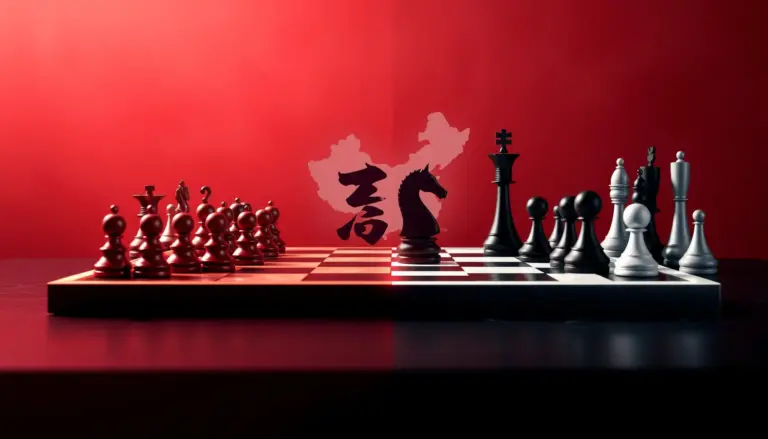
Chess has been an elite game for centuries., reserved for brilliant minds and halls of intellectuals. However, in recent decades, something changed. Suddenly, the board 64 Casillas stopped being a niche hobby to become a global phenomenon, infiltrating popular culture, social networks and even in education. What happened so that chess stopped being seen as a boring or complex game and became a symbol of strategy?, intelligence and even rebellion? This article explores the key moments that marked his transition to the mainstream, from the Cold War to the digital age, passing through iconic figures and platforms that democratized their access. It's not just the story of a game, but about how humanity rediscovered the value of thinking before acting.
Chess as a political weapon: the cold war in 64 casillas
To understand how chess became mainstream, we must go back to one of the most tense periods in modern history: the cold war. For decades, The United States and the Soviet Union fought an ideological battle where chess became a symbolic battlefield. The USSR, with its state training system, dominated the international stage, producing champions like Mikhail Botvinnik, Tigran Petrosian and Anatoly Karpov. These players were not just athletes; They were ambassadors of a system that demonstrated the intellectual superiority of communism. Every victory on the board was a political victory, and every defeat, a national humiliation.
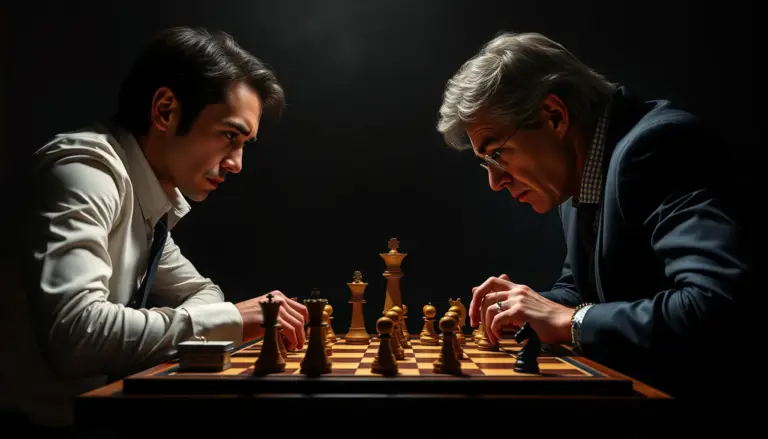
The turning point came in 1972, with the Match of the Century between Bobby Fischer and Boris Spassky in Reikiavik. Fischer, an eccentric and cool American, challenged the Soviet establishment and, against all odds, won the world title. This event was not only a sporting milestone, but an unprecedented media phenomenon. for the first time, chess made headlines around the world, and Fischer became a global celebrity. His victory was interpreted as a triumph of individualism over collectivism., and chess stopped being a game to become a symbol of power, strategy and even espionage. As detailed in the article Chess and espionage: the cold war in 64 casillas, the board was filled with codes, betrayals and rivalries that transcended the game.
The Cold War showed that chess could be much more than a hobby: It was a reflection of geopolitical tensions and an instrument of propaganda. This period laid the foundation for the game to gain global visibility, although a push was still needed for it to reach the masses.
Bobby Fischer: the first pop icon of chess
If the Cold War put chess on the map, Bobby Fischer brought it into popular culture. Fischer was not just a genius on the board; He was a charismatic character, controversial and, above all, media. His aggressive playing style and eccentric personality made him a fascinating figure to the general public.. At a time when chess was seen as a game for intellectuals or eccentrics, Fischer made it cool.
His victory in 1972 It was not only a sporting achievement, but a cultural phenomenon. Appeared on magazine covers, television shows and even inspired songs. Fischer showed that chess could be as exciting as any other sport, and that his players could be as charismatic as rock stars. However, his legacy is ambiguous. While some venerate him as a genius, others remember him for his controversial statements and his personal decline. The truth is that Fischer opened the doors for chess to be seen as more than just a parlor game.. As explored in Bobby Fischer: the chess that conquered pop culture, His influence endures in how we perceive chess players today.: not like distant figures, but as complex and fascinating characters.
Fischer paved the way for chess to stop being a niche game, but a key element was still missing for its massification: technology.
The digital revolution: how the internet democratized chess
The true leap of chess towards mainstream came with the digital age. before the internet, playing chess required finding an opponent in person, attend clubs or tournaments, or settle for correspondence games. Everything changed with the arrival of platforms like Chess.com, Lichess and the rise of analysis engines like Stockfish. Suddenly, Anyone with an internet connection could play against opponents from all over the world., learn from the best players or even face artificial intelligence.
But the impact of technology was not limited to accessibility. Digital platforms transformed chess into a spectacle. Hoy, millions of people follow games live on Twitch or YouTube, where streamers like Hikaru Nakamura or GothamChess have turned the game into an entertainment phenomenon. Chess is no longer just for those who practice it; It is also for those who enjoy watching it, analyzing plays or even betting on the results.
Besides, Technology allowed chess to be integrated into other areas. For example, in the article Chess in TikTok: how Generation Z made it viral and cool, Explores how social media has brought gaming to young audiences, with memes, challenges and tutorials that make it more accessible and fun. Chess is no longer just a strategy game; It is a cultural phenomenon that adapts to digital trends.
The digital revolution not only democratized chess, but turned it into a universal language. However, One last push was missing for the game to reach its maximum popularity.
The Queen’s Gambit: chess as a cultural phenomenon
In October 2020, Netflix released The Queen’s Gambit, a miniseries based on the novel by Walter Tevis. The Beth Harmon Story, a chess prodigy fighting her personal demons while dominating the board, captivated millions of viewers. The series was not only a critical success, but it unleashed an unprecedented phenomenon: and boom of chess.
From night to morning, sales of chess boards and books skyrocketed. Platforms like Chess.com reported an increase in 300% in new users, and online tournaments reached participation records. The Queen’s Gambit not only did it make chess popular; he did it cool. The series presented the game as a mix of strategy, drama and fashion, attracting audiences who previously viewed it as boring or inaccessible.
But the impact of the series goes beyond the numbers.. The Queen’s Gambit humanized chess, showing that behind every game there are stories of improvement, addiction, genius and, above all, passion. As analyzed in The Queen’s Gambit: Fact or fiction in chess?, the series took creative liberties, but he managed to capture the essence of the game: its ability to challenge the mind and, at the same time, reflect human complexity.
Con The Queen’s Gambit, Chess stopped being a game and became a cultural phenomenon.. It was no longer just for geniuses or intellectuals; it was for everyone.
Chess in the post-pandemic era: a haven for the modern mind
The COVID-19 pandemic accelerated many trends, and chess was no exception. With millions of people confined to their homes, the game became a refuge for the mind. Platforms like Chess.com and Lichess saw a massive increase in users, and chess was positioned as an activity that combined entertainment, intellectual challenge and social connection.
But chess was not only a hobby during the pandemic; It also became a tool to deal with anxiety and stress.. In a world marked by uncertainty, the dashboard offered a control space, where every move had clear consequences and where strategy could defeat chaos. As pointed out in Chess: refuge from global anxiety, The game became an antidote to loneliness and hopelessness, providing structure and purpose in difficult times.
Besides, The pandemic showed that chess could adapt to any context. From online matches to hybrid tournaments, the game found new ways to stay relevant. Even in the educational field, Chess gained ground as a tool to develop cognitive and emotional skills in children and adults.
Hoy, chess is no longer just a game; It is a global phenomenon that transcends borders, cultures and generations. His transition to mainstream It was not the work of chance, but the result of a combination of factors: the cold war, iconic figures like Bobby Fischer, the digital revolution and, finally, its ability to adapt to modern times.
Conclusion: chess as a mirror of humanity
The moment chess became mainstream It was not an isolated event., but a process that reflects the evolution of society. From its role as a political weapon during the Cold War to its transformation into a digital and cultural phenomenon, chess has proven to be much more than a game. It is a mirror of humanity: a space where intellectual battles are fought, legends are forged and the limits of the mind are explored.
Hoy, chess is everywhere: in schools, on social networks, in television series and even in the most prestigious tournaments in the world. Its massification has not only democratized access to the game, but it has redefined its meaning. It is no longer just a hobby for a few; It is a tool for personal development, a universal language and, above all, a reminder that, in an increasingly complex world, strategy and critical thinking remain essential skills.
Chess teaches us that, in the end, life is like a game: every move counts, every decision has consequences, and the real challenge is not to win, but learn to think. and in that, the board 64 boxes remains unbeatable.