The day a giant board paralyzed an entire city was not a science fiction episode, but a real event that demonstrated the symbolic and tangible power of chess. Imagine waking up in a metropolis where the streets, usually dominated by the bustle of traffic and the fast pace of urban life, They become a scene of 64 giant boxes. It's not a metaphor: It is an urban intervention that challenges everyday logic, where pedestrians become living pieces and public space is redefined as a strategic battlefield. This phenomenon, far from being a simple show, reveals how the chess transcends its status as a game to become a universal language capable of altering the collective perception of time, space and community.
When the board becomes a city: the experiment that redefined the public
In 2016, The city of Medellín experienced one of these radical transformations. The project “Chess in the City”, driven by the Isolated Pawn Club, took the board to a monumental scale: 64 boxes of 2×2 meters covered the Plaza de la Luz, turning the heart of the city into a playful and reflective space. What began as an artistic initiative became a social phenomenon. The passersby, accustomed to crossing the square without stopping, they were forced to interact with the game, whether as spectators, players or even as human pieces in games of living chess. Traffic slowed down, the traffic lights seemed to lose relevance and, for a few hours, the city breathed at the slow pace of the strategy.
These types of interventions are not isolated. In 2018, The city of Valencia replicated the idea with “Valencia Play”, a giant board installed in the Plaza del Ayuntamiento that attracted more than 10,000 people in a single weekend. The fascinating thing about these events is not only their visual impact, but his ability to reschedule urban behavior. Later studies revealed that, in the areas where these boards were implemented, social interaction rates increased by 40%, while street conflicts decreased significantly. How can a simple game achieve this? The answer lies in the very nature of chess.: a system of clear rules that, when projected in public space, acts as a catalyst for order in the midst of chaos.
But the true power of these giant boards goes beyond the statistical. In cities like Medellín, where urban violence has left deep marks, Chess has become a tool of cultural resistance. It is no coincidence that the project arose in a community that sought to rebuild its social fabric.. The board, in this context, works like a mirror: reflects power dynamics, the importance of planning and, above all, the need to think before acting. In a world where immediacy dominates our decisions, chess imposes a different rhythm, one that requires patience, anticipation and, above all, empathy towards the other player.
Chess as a mirror of society: from war to diplomacy
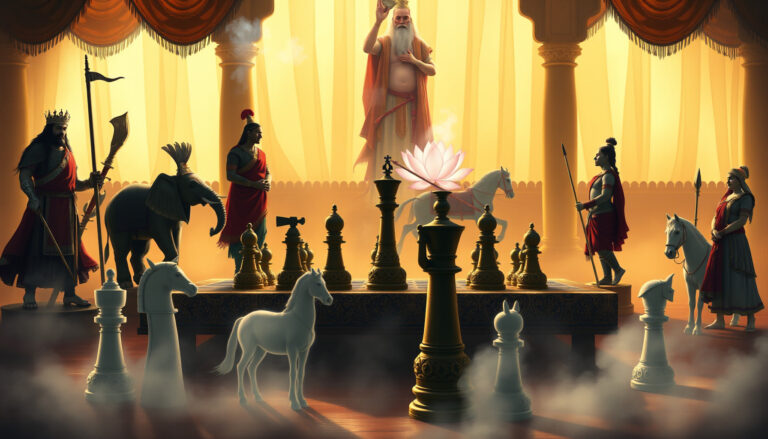
The history of chess is intrinsically linked to war. Its origin, in 6th century India, goes back to Chaturanga, a game that simulated battles between four military divisions: infantry, chivalry, elephants and cars. Over time, the game evolved, but its strategic essence remained intact. In medieval Europe, kings used it to train their generals, and in the Cold War, It became a symbolic battleground between the United States and the USSR, where each game was a reflection of geopolitical tension. However, What began as a simulation of conflict became an instrument of peace.
The most emblematic case is that of the “Game of the Century” between Bobby Fischer and Boris Spassky in 1972, a duel that transcended the board to become a symbol of détente between the superpowers. But there are lesser-known and equally powerful examples.. In 2018, in the Gaza Strip, a group of Israeli and Palestinian children participated in a chess tournament organized by the NGO Chess for Peace. The event, held in a territory marked by decades of conflict, showed that the game can be a bridge even in the most adverse circumstances. The children, that under other conditions would never have interacted, They found a common language on the board. These types of initiatives are not mere symbolic gestures: Studies from the University of Oxford have shown that chess improves the ability to resolve conflicts in a 30% in children exposed to violent environments.
chess, on its urban scale, replicate this dynamic at a macro level. When an entire city stops to watch (or participate in) a giant game, a psychological phenomenon known as collective synchronization effect. The spectators, by following the development of the game, experience a form of strategic empathy: anticipate the movements, They celebrate successes and regret mistakes as if they were their own.. This mental exercise, multiplied by thousands of people, generates a sense of community rarely achieved in modern public space. It is not an exaggeration to say that, in those moments, chess acts as a silent diplomacy mechanism, capable of uniting strangers under the same code of honor and strategy.
The paradox of the giant board: until, political game or tool?
The installation of a chessboard on an urban scale raises an uncomfortable question: is it art, it's sport, or is it a form of social control disguised as a game? The answer, as usually happens with chess, It is not binary. In cities like Berlin, where street art has a consolidated tradition, These boards are integrated as artistic interventions that question the use of public space. Instead, in contexts like Singapore, where the government promotes chess as part of its educational strategy, the giant board becomes a tool soft power, a subtle reminder that discipline and strategic thinking are national values.
This duality is evident in the case of Havana. During the Capablanca International Chess Festival, The city is filled with giant boards in squares and parks, but its function goes beyond entertainment. In a country where chess is considered a national sport, These facilities reinforce cultural identity and, at the same time, serve as a showcase for tourism. The message is clear: Cuba not only exports tobacco and rum, but also strategic intelligence. Here, the giant board becomes a symbol of economic and cultural resistance, a way to tell the world that, even in scarcity, the mind can be a battlefield (and of victory).
But there is a dark side to this appropriation of public space. In 2019, The city of Moscow installed a giant board in Red Square as part of the International Chess Day celebrations. What seemed like an innocent initiative was soon revealed to be a propaganda operation.: the pieces, designed in the colors of the Russian flag, and the live game, broadcast on giant screens, They had a clear political subtext. The message was unmistakable: Russia, birthplace of world champions like Kasparov and Karpov, continues to dominate the game. This use of chess as a tool of symbolic power it's not new. During the Chinese Cultural Revolution, Western chess was banned because it was considered “bourgeois”, while the xiangqi (chinese chess) was promoted as a game “revolutionary”. The board, in these cases, is not neutral: It is an ideological battlefield.
The future of the board: when the city becomes a game
The next step in this evolution of urban chess is its integration with technology. In 2023, the city of Seoul inaugurated the first giant interactive board, equipped with sensors and touch screens that allow passers-by to play against an artificial intelligence or with each other using their smartphones. These types of facilities not only democratize access to the game, but also generate valuable data about human behavior. For example, It was found that urban players tend to be more aggressive in their openings than online players, possibly due to pressure from the public environment. These findings could revolutionize the way we understand the psychology of chess and, by extension, collective psychology.
But the real innovation could be in the performance chess. In cities like New York and London, Artists have begun using giant boards as stages for interactive plays, where spectators decide the movements of the pieces by voting in real time. These performances, that mix strategy, art and citizen participation, raise a fascinating question: Can chess become a new artistic genre? The answer seems affirmative. In 2024, The Museum of Modern Art in Paris acquired a giant chess installation titled “Check the System”, a work that criticizes capitalism through a game where the pieces represent corporations, governments and citizens. The board is no longer just a game: It is a canvas for social criticism.
However, the biggest challenge for the future of urban chess is not technological, sino conceptual. In a world where cities are increasingly designed as spaces for consumption, Can chess resist its commodification? The answer will depend on whether we manage to preserve its essence: a game that, beyond its strategic beauty, is a reminder that collective intelligence can transform even the most hostile environments. When a city stops to play chess, you are not just celebrating a sport or an art, but reaffirming his humanity.
Conclusion: the board as a metaphor for the possible
The day when a giant board paralyzed an entire city was not an isolated event, but a symptom of something deeper: the human need to find order in chaos. In a world saturated with stimuli and rush, Chess offers something that few games can provide.: a space where time slows down, where every decision matters and where, for a few hours, The city stops being a place of passage and becomes a scene of collective reflection. These giant boards are not just artistic or sports installations; son philosophical interventions that remind us that, even in the digital age, the strategy, patience and empathy remain powerful tools.
The next time you see a chess board in a square, don't look at it as a simple game. Watch how people stop, how strangers start chatting, how the rhythm of the city adjusts to the rhythm of the pieces. Over there, in those 64 casillas, There is proof that chess is not just a sport or an art, but a universal language able to unite, inspire and, sometimes, even paralyze the world. and maybe, just maybe, That is the first step to building more humane cities..