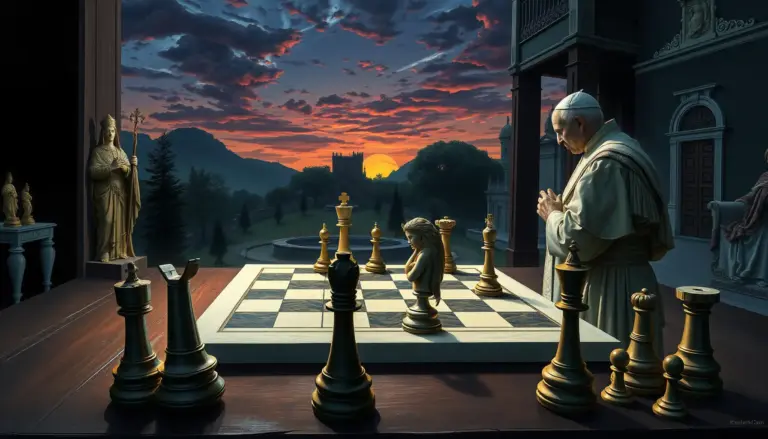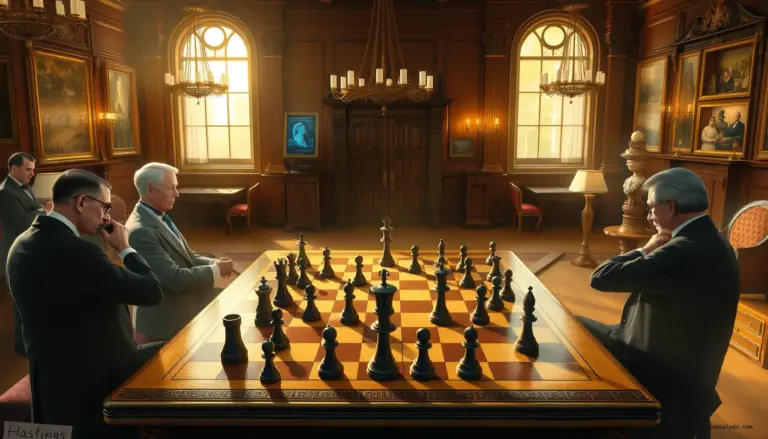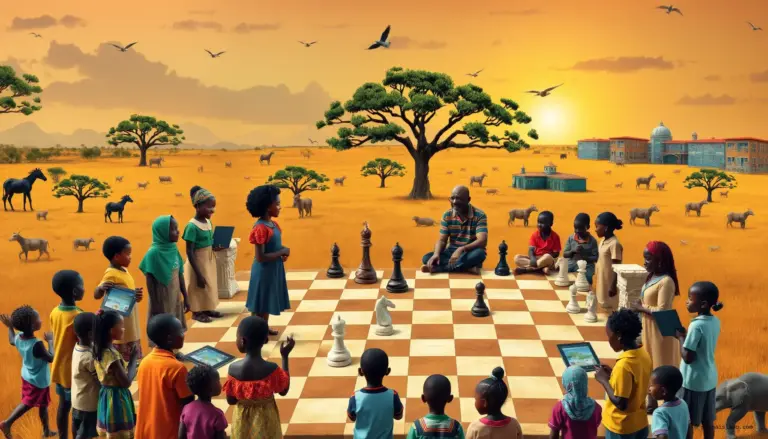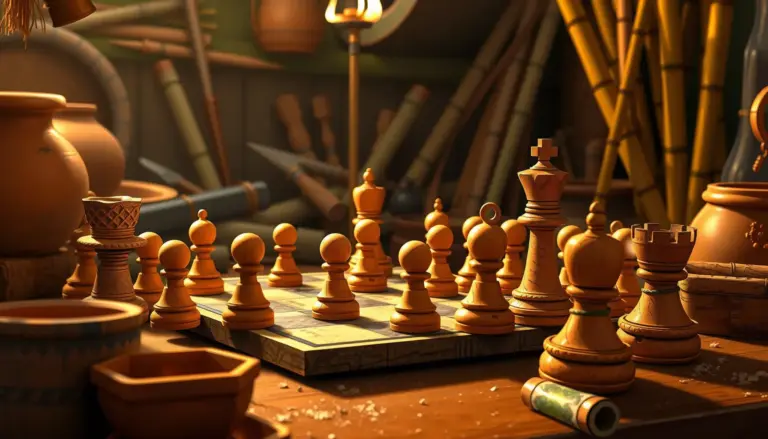
Imagine walking down a silent hallway where each display case holds not only pieces of carved wood, but fragments of intellectual battles that shaped empires, revolutions and even the way we understand strategy today. Chess museums are those forgotten temples where the ancient game reveals its deepest dimension: to be a mirror of human history. However, most of these spaces remain hidden, overshadowed by the fame of the big tournaments or the spectacular nature of the media games. What secrets do they harbor?? Why should they be on every board lover's itinerary?? This trip will take you to discover those corners where chess is not just a sport, but a cultural legacy that defies time.
The Chess Museum of Havana: where the game is revolution
In the heart of Old Havana, he Capablanca Chess Museum It is much more than a collection of antique pieces. Founded in 1962, This space was born as a symbol of the Cuban Revolution, who saw in chess a tool to democratize knowledge and challenge intellectual elites. Its walls keep handwritten games by José Raúl Capablanca, he “Mozart of chess”, but also boards carved by political prisoners during the Batista dictatorship, turned into objects of resistance. What is fascinating here is not only the handmade chess kings of ebony and ivory, but the way the game is intertwined with national identity. Cuba, a country with barely 11 million inhabitants, has produced more great teachers per capita than any other nation. This museum explains why: chess is not a luxury, but a right.
The visit includes a room dedicated to the Cuban Chess School, where training manuals that combine tactics with Marxist philosophy are exhibited. A revealing detail: in the years 60, Fidel Castro promoted massive tournaments in public squares, using chess as a metaphor for class struggle. Hoy, the museum welcomes tourists, but also to children from humble neighborhoods who participate in free workshops. As a sign at the entrance points out: “Winning is not taught here, is taught to think”.
The Moscow Chess Museum: the cold war board
If Havana represents the resistance, he Moscow Central Chess Museum embodies power. Located in a neoclassical building near the Kremlin, For decades, this space was the stage where the USSR exhibited its intellectual supremacy. Inaugurated in 1980, houses more than 3,000 historical pieces, from medieval boards to the games used in duels between Karpov and Kasparov, whose confrontations transcended sports to become symbols of the Cold War.
What few know is that this museum was also a spy center. During the world championships, KGB agents analyzed the games in real time, looking for patterns that revealed psychological weaknesses of Western rivals. A display case shows the board used in the Match of the Century of 1970, where the USSR defeated a team of “rest of the world” in Belgrade. The message was clear: chess was an extension of geopolitical power. Hoy, the museum preserves that aura of mystery, with rooms dedicated to secrets of Soviet rule, such as Botvinnik's training methods or the rigged games to humiliate Fischer in 1972.
A curious fact: in 2016, the museum organized an exhibition titled “Chess and Propaganda”, where Soviet posters were displayed comparing the players to heroes of the homeland. one of them, of 1951, showed a Soviet peasant defeating an obese capitalist, with the motto: “Socialism wins 64 casillas”.
The Amsterdam Chess Museum: until, rebellion and cursed boards
In a 17th-century building next to Amsterdam's canals, he Max Euwe Center rinde homenaje a Max Euwe, the only world chess champion who was also a mathematician. But this museum is much more than a tribute to Euwe: It is a space where chess merges with contemporary art and counterculture. One of its most impressive rooms is dedicated to the cursed boards, pieces created by artists that challenge the rules of the game. For example, he “Chess of Madness” by Salvador Dali, where the pieces are surreal figures that seem to melt, or the “Resistance Chess” of the Dutch collective Provo, used in protests against the Vietnam War.
The museum also explores the relationship between chess and music, with a collection of scores by composers such as Prokofiev, who wrote works inspired by Capablanca's games. But its hidden gem is the room dedicated to street chess, where painted boards are displayed on slum walls, converted into symbols of urban resistance. As Euwe said: “Chess is a game of kings, but also of poets and rebels”.
The Chess Museum of New Delhi: the legacy of the persian sages
In a corner of National Museum of New Delhi, a modest room houses one of the oldest collections in the world: he Chaturanga Room, dedicated to the Indian ancestor of modern chess. Terracotta pieces from the 6th century are exhibited here, found in excavations in the Indus Valley, which show that the game was already played in India long before reaching Europe. What is fascinating is how this museum connects chess with philosophy and spirituality. A display case shows a 12th century manuscript, written by the Persian wise man Al-Adli, where the rules of the shatranj (Arabic version of chaturanga) and compare the board with the universe: “The pieces are the stars, and the player, God”.
The museum also explores the influence of chess on Islamic culture, with boards decorated with Arabic calligraphy that include verses from the Koran. A revealing detail: in the 9th century, Caliph Haroun al-Rashid sent an ivory and ebony chess set as a gift to Emperor Charlemagne, a gesture that symbolized the cultural exchange between East and West. Hoy, he Chaturanga Room It is a reminder that chess is not just a game, but a bridge between civilizations. As a sign at the entrance points out: “No pieces are displayed here., the history of humanity is exhibited”.
The Chess Museum of Buenos Aires: the game that united Borges and Perón
In the San Telmo neighborhood, he Argentine Chess Museum occupies a colonial house where, according to legend, Jorge Luis Borges played games with his friends. But this museum is also a testimony of how chess became a symbol of national identity.. One of its most impressive rooms is dedicated to Argentine Chess School, that in the years 40 y 50 produced players like Miguel Najdorf, who popularized the variant that bears his name. The curious thing is that the museum does not hide the relationship between chess and politics.: A display case exhibits letters between Najdorf and Juan Domingo Perón, where the president asked him for advice on using the game as a propaganda tool.
But the museum's true treasure is its collection of artistic chess, with pieces designed by artists like Xul Solar, who created a board where the squares represent constellations. There is also a room dedicated to therapeutic chess, with testimonies from psychiatric patients who used the game to overcome trauma. As Borges said: “Chess is an infinite game, like literature”. This museum proves it.
When leaving these spaces, It is clear that chess museums are not just for players. They are for those who seek to understand how a game of 64 Casillas has shaped wars, revolutions, art and even the way we think. The next time you travel, look for these hidden corners. You will not only see chess pieces, but fragments of human history, waiting to be discovered. and remember: on each board, There is a lesson that goes beyond checkmate.
chess, in its essence, It is a silent dialogue between the past and the present. These museums are your libraries, where each piece tells a story and each game is a chapter of a book that has not yet been written. Visiting them is not just an act of curiosity, but of reconnection with a tradition that has survived empires, wars and revolutions. As Capablanca said: “Chess is more than just a game; It is an intellectual diversion that has some art and a lot of science”. And these museums prove it, box by box.