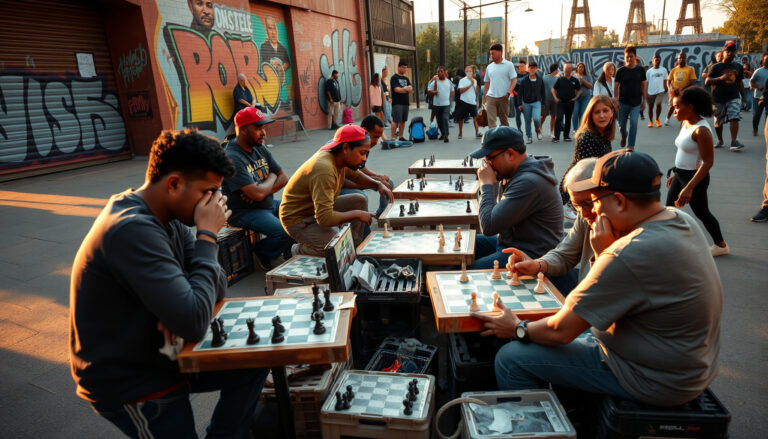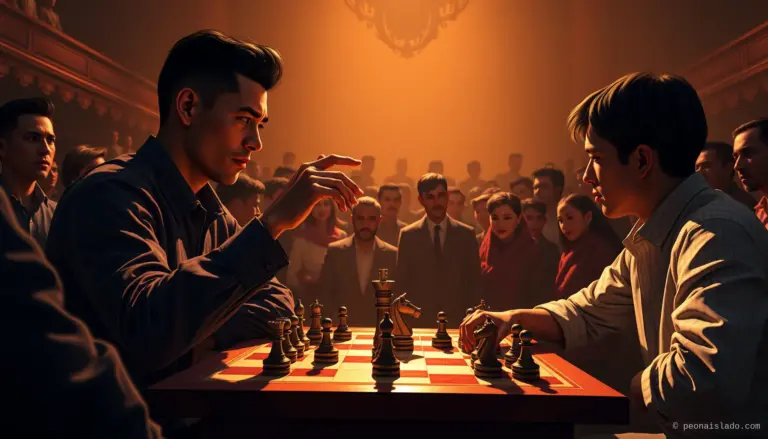
chess, more than a game, It is a battlefield where the mind faces itself. Each long game is a cognitive marathon that requires not only technical knowledge, but a psychological resistance capable of sustaining concentration for hours. How do great teachers maintain mental clarity when fatigue sets in and time is running out?? The answer is not just in memory or strategy, but in the construction of psychological habits that transform pressure into fuel. In this article, We will explore techniques that turn fatigue into advantage, from emotional management to the architecture of routines that sustain focus in critical moments.
The myth of absolute concentration: why we fail when we need it most
Concentration is not a binary state—on or off., but a muscle that gets tired. Studies in neuroscience show that, after 90 minutes of intense intellectual activity, the brain reduces its processing capacity by a 40%. in chess, where each move can decide the fate of a game, this decline is lethal. However, elite players don't fight fatigue; they anticipate it. Magnus Carlsen, For example, structures your games in blocks of 20 minutes, alternating deep analysis with controlled breathing pauses. This technique, known as time chunking, avoids neuronal saturation and maintains tactical acuity.
But the real challenge is not physical, but emotional. Anxiety about the result—that “what if I lose?” that lurks in the mind—is the silent enemy of concentration. Here, the psychology in chess offers key tools: from the visualization of scenarios to the depersonalization of the error. As sports psychologist Barry Hyatt points out, “chess is a 80% uncertainty management and 20% calculation”. master that 80% It's what separates the champions from the challengers..
war rituals: how habits build mental resilience
Rituals are not superstitions; They are psychological anchors. Visit the bathroom before each game, adjusting the watch with three touches or even always carrying the same pen are not whims, but mechanisms to activate the chess mode. These repetitive gestures reduce pre-competitive anxiety by creating a sense of control in a chaotic environment.. Grandmaster Hikaru Nakamura, For example, always eats a banana during the break of long games, not for nutrition, but because the act of peeling it gives 30 seconds to reset your mind.
Science supports this practice. A Harvard University study showed that rituals reduce the perception of stress in a 25% by activating the prefrontal cortex, the area of the brain responsible for decision making. in chess, where every mistake can cost a game, These little habits are lifesavers.. But the most effective rituals go beyond the physical: include the emotional preparation. Before sitting at the board, elite players mentally review their favorite openings, not to memorize them, but to remind themselves that they are on familiar ground. This technique, call priming, prepares the brain for battle.
Time management is another pillar. In long games, the clock is not just a counter, but a mirror of the mind. Players like Ding Liren divide their time into three phases: opening (30% weather), middle game (50%) and endings (20%). This distribution prevents panic at key moments and forces deep thinking when it is most needed.. As he explains article on winning mentality, “time is not spent; is reversed”.
The art of losing control: why disconnection is the key
Paradoxically, extreme concentration can be counterproductive. When a player obsesses over every detail, the brain enters a state of hypervigilance that exhausts cognitive resources. The solution is not to try harder, sino strategically disconnect. Great masters like Vishy Anand practice what they call microbreaks: breaks 10 seconds where they close their eyes and breathe deeply, even in the middle of a game. These moments of disconnection allow the brain to process information unconsciously., like when we solve a problem when we wake up.
The disconnection also applies to the board. In long games, It is common for players to get up and walk around during the opponent's turns. This physical movement not only oxygenates the brain, but it breaks the accumulated tension. As pointed out by article on how to avoid tilt, “the body follows the mind, but the mind also follows the body”. A hunched and tense player is a player with a blocked mind.
Another powerful technique is externalization of thought. Instead of analyzing variants in your head, elite players write them on paper or whisper them quietly. This physical act of “withdraw” the brain's thoughts reduce cognitive load and prevent confusion. It's as if the mental board is wiped clean with each written word..
The paradox of silence: How internal noise sabotages concentration
The biggest obstacle to concentration is not external noise, but the internal. That constant dialogue —”Why didn't I see that check??”, “What is my rival thinking??”— is the real performance killer. Elite players combat this noise with a technique called focus on the process. Instead of obsessing about the result, They focus on the next move as if it were the only one.. This mentality, similar to that of elite athletes, transforms pressure into fluidity.
An extreme example is that of Bobby Fischer, who in his match against Boris Spassky in 1972 I played with headphones to block out any distractions. Hoy, Players use instrumental music or ambient sounds to create a bubble of concentration. But true silence is not achieved with headphones, but with acceptance. As the article explains Ajedrez and mindfulness, “concentration is not the absence of thoughts, but the ability to observe them without clinging to them”.
Acceptance also applies to errors. In long games, it is inevitable to make mistakes, but elite players see them as opportunities to learn, not as failures. This mentality is trained with exercises such as post-mortem analysis, where, after each game, errors are reviewed without judgment. As the great teacher Alexander Alekhine said: “Chess is a game of mistakes; Whoever commits the last wins”.
The architecture of resistance: how to build a marathon brain
Concentration in long games is not improvised; is built. Elite players follow training routines that strengthen their mental resilience, similar to those of athletes. One of the most effective is the interval training, where quick games alternate with deep analysis sessions. This practice simulates tournament conditions and teaches the brain to recover quickly.
Another key tool is stress simulation. Players like Fabiano Caruana practice games with a set clock to generate artificial pressure. The goal is not to win, but get used to thinking under stress. As he explains article on scientific routines, “the brain does not distinguish between real and simulated stress; what matters is the answer”.
Food also plays a crucial role. complex carbohydrates (like oats) and healthy fats (like avocado) provide sustained energy, while refined sugars cause energy spikes followed by crashes. Elite players avoid excessive coffee, given that, although it improves short-term focus, can increase anxiety. instead, They opt for green tea or water with electrolytes to maintain hydration, key to cognitive function.
Conclusion: chess as a mirror of the human mind
Long games of chess are a microcosm of life: moments of clarity followed by chaos, decisions that define the course and the constant fight against fatigue. But what makes chess unique is that, in their 64 casillas, there is no room for improvisation. Each concentration technique, every psychological habit, It is a lesson transferable to any area where the mind must perform under pressure.
The key is not to avoid fatigue, but in dominate it. As the philosopher José Ortega y Gasset said, “chess is the gymnastics of intelligence”. But more than that, It is the gymnastics of the will. In a world where distraction is the norm, Chess teaches us that concentration is not a gift, but a skill that is cultivated. And in that cultivation, we find not only victories on the board, but a stronger mind, resilient and capable of facing any challenge.
If you want to delve deeper into how to apply these techniques to your game, we invite you to explore our guide on memory and calculation, where we break down how great teachers process information in real time. because in the end, chess is not just a game; It is a laboratory of the human mind.