He 20 July is not just another date on the calendar. For millions of people around the world, This day symbolizes the very essence of chess: a game that transcends borders, cultures and times, but that also has a specific origin and a story that deserves to be told. Why was this date chosen to celebrate the World Chess Day? The answer takes us to a crucial moment in the history of the game: the founding of the International Chess Federation (FIDE) in 1924, a milestone that marked the beginning of a new era for chess as a global discipline. But beyond its historical significance, This day is an invitation to explore why chess is still relevant today., How has it evolved and why?, in the digital age, It is still the perfect game to get started in strategy, patience and critical thinking.
Chess is not just a mental sport; It is a mirror of humanity. In their 64 boxes reflect the intellectual battles of geniuses like Bobby Fischer, the geopolitical tensions of the Cold War, the technological innovations that have redefined the game and even the efforts to use the board as a tool for social transformation. This article not only celebrates the World Chess Day, but also explores the reasons why this date is the ideal time to enter a universe where every movement counts., Each strategy reveals a lesson and each game is an opportunity to grow.
The birth of FIDE: chess as a universal language
To understand why the 20 July is World Chess Day, you have to travel to Paris in 1924. During the Olympic Games that year, a group of visionaries met with a clear objective: unify chess under a global organization that would promote its practice, standardize the rules and elevate it to the category of an internationally recognized sport. Thus was born the International Chess Federation (FIDE), an entity that, since then, It has been the pillar on which modern chess has been built.
The choice of 20 July was no coincidence. It coincided with the closing of the Paris Olympic Games, an event that symbolized unity between nations through sport. chess, although it was not (and it still isn't) official part of the Olympic Games, found on this date a symbol of its own universality. FIDE not only set out to organize tournaments and world championships, but also democratize the game, taking it to places where it was previously unknown or accessible only to elites. In less than a century, Chess went from being a pastime in aristocratic salons to a global phenomenon, with more than 600 millions of players around the world.
But FIDE not only unified rules; It also unified cultures. In a world divided by wars, ideologies and borders, chess became a common language. During the Cold War, For example, The games between the United States and the USSR were not simple sporting events, but symbolic battles that reflected the tension between two superpowers. Chess became a silent diplomacy, where the pieces on the board spoke louder than words. Hoy, FIDE continues to be a bridge between nations, promoting not only competition, but also the inclusion, education and social development through play.
Chess in the digital age: rebirth or mirage?
If the 20th century was the era of chess globalization, The 21st century has witnessed its digitalization. Platforms like Chess.com, Lichess and the rise of analytics engines like Stockfish and AlphaZero have revolutionized the way gaming is played, chess is learned and taught. But this transformation has not been without debate.: Is classical chess in danger of extinction? ¿O, on the contrary, technology has achieved what FIDE dreamed of in 1924: make the game more accessible than ever?
The answer is not simple. On the one hand, digital chess has democratized access to the game. Hoy, Anyone with an internet connection can face players from all over the world, analyze games with artificial intelligence engines or even learn from great masters through tutorials on YouTube. The phenomenon of The Queen’s Gambit, the Netflix series that in 2020 brought chess into pop culture, It is a clear example of how technology can revitalize interest in gaming. In a matter of months, platforms like Chess.com reported an increase in 500% in new users, many of them young people who discovered chess thanks to the series.
But this explosion of popularity has also brought challenges. fast chess, the blitz and the bullet (one or three minute games) have gained ground against classical chess, where each player has at least an hour to think about their moves. Some purists argue that this speed sacrifices the game's strategic depth., reducing it to a competition of reflexes rather than thought. Besides, The use of chess engines to analyze games has generated controversies about fraud and the authenticity of the human game.. Can a player who relies too much on AI develop his own style? Or is technology redefining what it means to be a great teacher??
The truth is that digital chess is neither good nor bad in itself.; it is a tool. As pointed out in an article about How chess engines redefined the game, AI has allowed players to improve their skills exponentially, but it has also forced us to rethink the role of human beings on the board. Hoy, great teachers don't just compete against other humans, but also against machines that calculate millions of positions per second. This has led to an evolution in the game: It's no longer just about memorizing openings, but to understand deep concepts, develop creativity and, above all, learn to think like a strategist.
Chess as a tool for social transformation
Beyond competition and technology, Chess has proven to be a powerful tool for social transformation. In places where formal education is limited or where conflict has left deep scars, chess has become a refuge, a way to heal and rebuild. From prisons to refugee camps, passing through schools in conflict zones, the chess board has witnessed stories of resilience, hope and change.
An inspiring example is the use of chess in the Democratic Republic of the Congo, where organizations like Chess in Slums They have used the game to rehabilitate child soldiers. In a context where violence and trauma are part of everyday life, chess offers an alternative: teaches to think before acting, to plan strategies and control emotions. For these children, each game is a metaphor for life: on the board, like in reality, decisions have consequences, and patience and discipline can make the difference between defeat and victory.
But chess not only transforms lives in extreme contexts. In schools around the world, It has become an invaluable pedagogical tool. Countries like Armenia, where chess is a mandatory subject since 2011, have shown that gaming improves academic performance, concentration and math skills. In Colombia, For example, he Isolated Pawn Club has used chess as a tool for social change in Medellín, teaching children and young people from vulnerable neighborhoods to think strategically, to solve problems and work as a team. Chess not only provides them with a constructive activity, but also gives them a sense of belonging and self-esteem.
Even in business, chess has found its place. More and more companies incorporate gaming into their training programs to develop leadership skills, decision making and stress management. As pointed out in an article about chess for CEOs, the board is a laboratory where complex scenarios can be simulated, test strategies and learn from mistakes without the real consequences of a business. For the leaders, chess is a metaphor for professional life: in both cases, success depends on the ability to anticipate movements, adapt to changes and stay calm under pressure.
Why the 20 July is the perfect day to start playing chess?
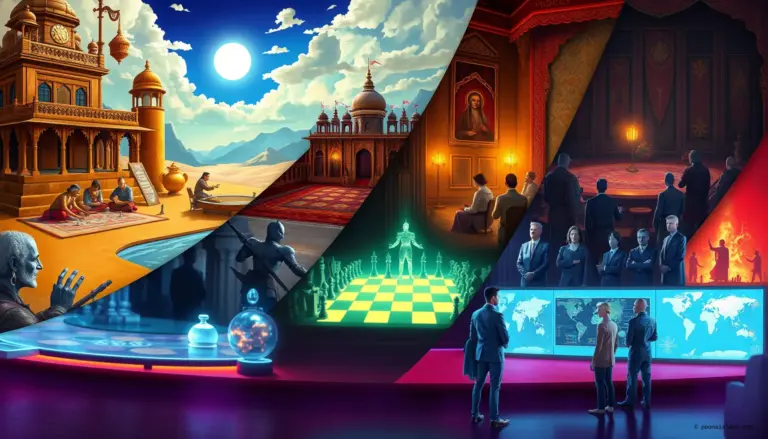
If chess is an ancient game with roots in India, Persia and Europe, and if its evolution has been marked by historical milestones, technological and social, why the 20 July is the ideal day to get started? The answer goes beyond the founding of FIDE. This day is an invitation to reflect on what chess represents: a game that, despite its apparent simplicity, contains infinite depth.
For beginners, chess can seem overwhelming. The rules are simple, but mastering the game takes time, patience and practice. However, he 20 July is a reminder that chess is not just for geniuses or experts. It's a game for everyone: children, adults, beginners and masters. Every game is an opportunity to learn something new, whether it's an opening, a tactic or a lesson about life. As the great teacher Savielly Tartakower said: “Chess is the art that illustrates the beauty of logic”.
Besides, Chess is one of the few games that does not require a significant investment. A board and some pieces are enough to get started, and today, thanks to technology, not even that is necessary. Free platforms like Lichess allow you to play online, analyze games and learn from other players without spending a dime. This makes it an accessible game for anyone., regardless of your age, gender or socioeconomic status.
But perhaps the most powerful reason to start playing chess is 20 of July is its ability to connect people. In an increasingly divided world, where political differences, cultural and social seem insurmountable, chess offers a meeting space. Two people who do not speak the same language, who come from different cultures or have opposite views of the world can sit in front of a board and communicate through the pieces. Chess does not judge; only rewards intelligence, creativity and strategy.
The future of chess: between tradition and innovation
Chess has survived empires, wars and technological revolutions. Hoy, in the 21st century, keeps evolving. Artificial intelligence has redefined the boundaries of gaming, Online tournaments have broken geographical barriers and women's chess is gaining the recognition it deserves. But, Where is chess headed in the coming decades??
One of the most interesting trends is the fusion between chess and technology. Virtual and augmented reality promise to take gaming to new dimensions, allowing players to immerse themselves in three-dimensional boards or compete in interactive environments. Imagine a tournament where the pieces come to life, where players can “walk” around the board or where the AI acts as a referee in real time. This would not only make the game more attractive to new generations, but it would also open up unimaginable educational and therapeutic possibilities.
Another trend is the growing professionalization of chess. Hoy, grandmasters not only compete for titles and prize money, but they are also influencers, content creators and media figures. Magnus Carlsen, the current number one in the world, It is an example of how chess can transcend the board and become a cultural phenomenon. His aggressive playing style, His charisma and presence on social networks have inspired a new generation of players who see chess not only as a sport., but as a lifestyle.
But perhaps the biggest challenge for chess in the future is to maintain its essence in an increasingly fast-paced world.. classic chess, with its long games and its emphasis on deep strategy, runs the risk of being relegated to rapid chess and blitz. However, As an article on classic vs rapid chess, both formats can coexist. Speed chess attracts new players, while the classic remains the heart of the game, where true masters are forged.
He 20 July, therefore, It's not just a celebration of the past., but also a look to the future. It is a reminder that chess, more than a game, It is a legacy that is passed down from generation to generation., adapting to the times without losing its essence.
He World Chess Day It's much more than a date on the calendar.. It is a tribute to a game that has united humanity for centuries, that has challenged brilliant minds and transformed lives in the most unexpected places. Since its foundation in 1924, FIDE has worked tirelessly for chess to be recognized not only as a sport, but as an educational tool, inclusion and social development. Hoy, in the digital age, chess continues to evolve, but its essence remains intact: It's a strategy game, patience and creativity that transcends borders and generations.
Getting started in chess 20 July is not just learning to move pieces; is to enter a universe where each game is a lesson, Every mistake a learning opportunity and every victory a reminder that, in life as on the board, Strategic thinking and perseverance are the keys to success. Whether as a casual player, serious competitor or just as a spectator, chess offers something for everyone. And in an increasingly complex world, where quick decisions and immediacy seem to dominate, chess reminds us of the importance of stopping, think and plan.
so this 20 July, It doesn't matter if you are a beginner or a master, whether you play on a wooden board or on a touch screen: take a moment to celebrate chess. Because more than a game, It is a mirror of humanity, a laboratory of the mind and, above all, an invitation to think, create and connect.