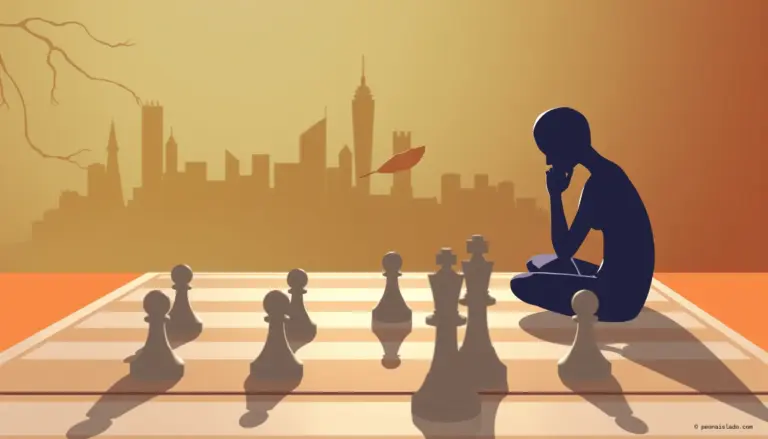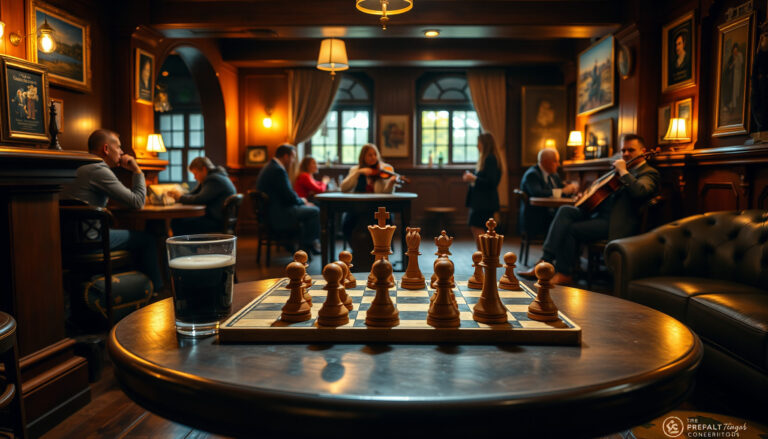
Chess is much more than just a strategy game.; It is a reflection of life, war and human psychology. Each piece on the board not only fulfills a tactical function, but it also contains deep and symbolic meanings that have been interpreted throughout the centuries.. Since ancient times, Chess has been seen as a metaphor for society, where each figure represents roles, hierarchies and power dynamics. But, What secrets do the king really hide?, the queen, the bishops, the horses, rooks and pawns? Why do their disposition and movements reflect not only military strategies, but also universal archetypes?
In this article, We will explore the hidden meaning behind each chess piece, unraveling its historical origin, its cultural symbolism and its connection with the human mind. We will discover how these elements, apparently simple, can reveal lessons about leadership, sacrifice, protection and ambition. Beyond the rules of the game, Each piece is a mirror of the forces that govern the world, from politics to spirituality. Get ready to see chess with a new perspective, where each movement is a narrative and each game, a battle of meanings.
the king: the heart of power and vulnerability
The king is, definitely, the most important piece of chess, but also the most paradoxical. Its value is absolute: losing it means losing the game. However, your mobility is limited, making it a symbol of fragile power. This duality reflects the very nature of leadership.: whoever holds the highest authority is also the most exposed to attacks. Historically, The king in chess represents the figure of the monarch in feudal society, where his survival depended on both his strength and the protection of his subjects.
From a psychological perspective, the king embodies the ego, that center of identity that, although essential, must be guarded. In many cultures, the king symbolizes the sol, the source of life that, if it is eclipsed, plunges everything into darkness. in chess, Castling—a move that protects the king while activating the rook—is a reminder that true leadership is not done alone., but in alliance with others. The king's vulnerability also teaches us that power is not invincible: requires strategy, humility and, above all, the ability to delegate.
Curiously, in some ancient chess variants, like him shatranj lost, the king could not move more than one square, which reinforced his image as a static figure, almost divine. This limitation was not a weakness, but a representation that the supreme power does not impose itself with sudden movements, but with calculated decisions. Hoy, in modern chess, the king remains a reminder that, even at the top, prudence is the best ally.
the queen: the evolution of girl power on the board
The queen is the most powerful piece in chess, capable of moving in any direction and distance, which makes it a symbol of freedom and versatility. However, Its history is fascinating because it did not always occupy this place. In it shatranj, His predecessor was firzán (o visir), a weak figure that could only move diagonally one square. It was in medieval Europe that the queen acquired her current power, coinciding with a period in which female figures such as Isabella the Catholic or Catherine de' Medici exerted an unprecedented influence on politics..
This change was not accidental.. The queen in chess reflects the transformation of the role of women in society: from being a secondary figure to becoming the most lethal piece of the game. Its unlimited mobility symbolizes the ability to adapt, strategic intelligence and strength, in many cultures, was traditionally associated with the feminine. in mythology, goddesses like Athena (goddess of war and wisdom) of Kali (hindu goddess of destruction and creation) They share their duality with the queen: They are protective and destructive at the same time..
But the queen also embodies a paradox: although it is the strongest piece, your loss is not always fatal, unlike the king. This suggests that, in life, female power—whether in politics, art or science—has historically been underestimated, even when its influence is decisive. in chess, The queen is a reminder that true strength does not always lie in hierarchy, but in the ability to act with flexibility and determination.
The bishops and the knights: the duality of strategy
Bishops and knights are pieces that, although less powerful than the queen, play crucial roles in chess strategy. Their difference in movements is not only technical, but symbolic: represent two opposite but complementary ways of addressing the challenges.
He bishop moves diagonally, which makes it a symbol of long-term perspective and vision. In Christian iconography, the bishop is associated with bishops, figures who spiritually guide their communities. Its diagonal movement suggests that, sometimes, to advance, you have to look beyond the obvious, exploring indirect paths. in life, This translates into the ability to see opportunities where others only see obstacles.. However, the bishop has a limitation: can only move on squares of the same color, symbolizing that even the broadest vision has its blind spots.
He horse, instead, moves in the shape of “L”, a move that seems illogical but is surprisingly effective. This piece represents the creativity and surprise. in mythology, the horse is a symbol of freedom and transformation (like Pegasus or the horses of the Norse gods). His unpredictable jump in chess reflects how, in life, The most innovative solutions often emerge from unconventional approaches. The horse also symbolizes sacrifice: in many openings, a horse is given to gain positional advantage, teaching that, sometimes, you have to give up something valuable to achieve a greater goal.
Together, The bishop and the knight represent the duality between methodical planning and bold improvisation.. in chess, like in life, the balance between both is key: without strategic vision, the horse can be chaotic; without creativity, the bishop can become predictable.
The rooks and the pawns: strength and anonymous sacrifice
Rooks and pawns are pieces that, although opposite in hierarchy, they share a deep connection: both represent fundamental concepts of human existence: the protection and the sacrifice.
The torre It is a piece of rectilinear movement, able to advance unimpeded in rows and columns. Its design evokes medieval fortresses, and its function in chess is to defense and control. In many cultures, the tower symbolizes stability: in tarot, The Tower card represents the destruction of obsolete structures to make way for new realities. in chess, Its power lies in its ability to dominate open spaces, but also in its vulnerability when isolated. This reflects a universal truth: Even the strongest structures can collapse if they are not supported by a coherent strategy.
Los pawns, instead, They are the most numerous pieces but also the most fragile. Your forward movement, box by box, symbolizes the gradual progress and constant effort. in life, the pawns represent the common people, whose anonymous work supports figures of power. However, its potential is enormous: a pawn that reaches the end of the board can become any other piece (except the king), a reminder that even the most humble can achieve greatness.
The relationship between rooks and pawns is fascinating: in many openings, pawns are sacrificed to open lines that rooks can control. This teaches that, sometimes, progress requires temporary losses. in history, great social movements have been driven by the sacrifice of many for the benefit of a few. chess, in this sense, It's a metaphor for society.: no pawns, the towers would have no room to move; no towers, the pawns would be vulnerable.
Conclusions: chess as a mirror of the human condition
Chess is not just a game, but a microcosm where the dynamics of power are reflected, strategy and human psychology. each piece, from king to pawn, contains meanings that transcend the board: the king tells us about the fragility of leadership; the queen, of the evolution of feminine power; bishops and knights, of the duality between planning and creativity; and the rooks and pawns, of protection and anonymous sacrifice.
Beyond the rules, chess is a tool to understand life. It teaches us that power is not absolute, that the strategy requires flexibility and that, sometimes, The smallest moves can change the course of a game. In a world where hierarchies and fights for control are constant, Chess invites us to reflect on our own role: Are we kings who need protection, queens who defy the rules, bishops who see beyond the obvious, or pawns that advance step by step towards an uncertain destiny?
In the end, The true meaning of chess is not in winning or losing, but in understanding that each piece, every movement, It's a metaphor for our own battles.. and maybe, by mastering the game, let's learn to better control our lives.