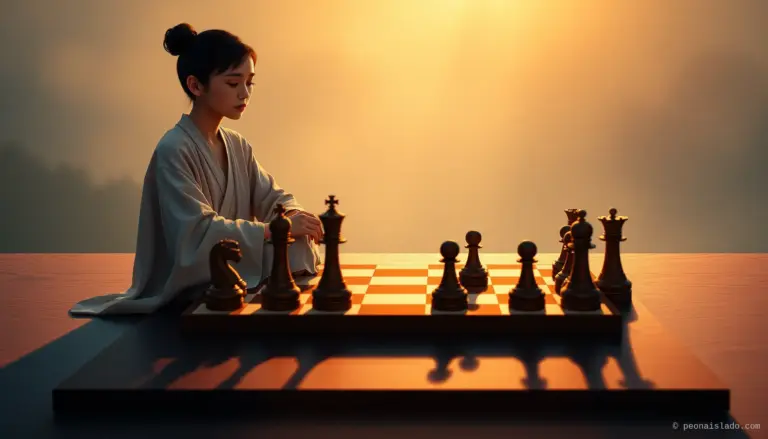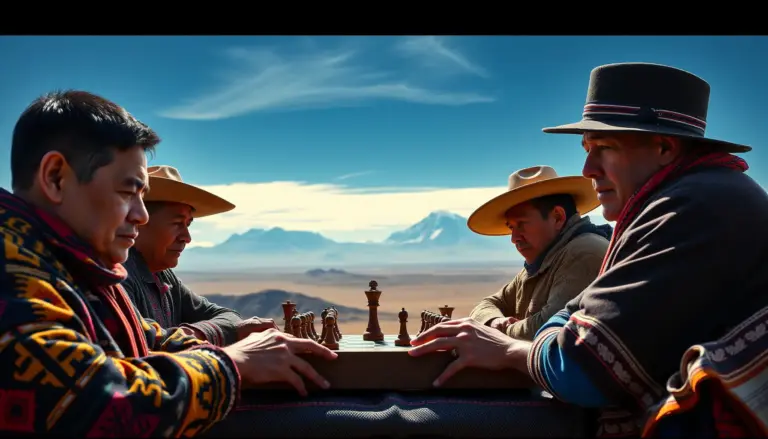
Imagine a board 64 boxes where there are no borders, languages or prejudices. Where a Syrian migrant, A Ukrainian refugee and a German boy can sit face to face, communicate without words and build something more valuable than a victory: belonging. chess, that ancient game that has survived empires, wars and revolutions, has become an unexpected bridge for integration in Europe. It's not just about moving pieces, but about weaving human networks on a continent where migration continues to be a polarizing issue. How does a strategy game achieve what policies and speeches do not always achieve??
Chess as a universal language: beyond words
Every year Europe receives hundreds of thousands of migrants who face language barriers, cultural and social. In this context, chess emerges as a esperanto silent. A study from the University of Oxford (2022) revealed that the 78% of migrants participating in community chess programs in Germany reported an improvement in their sense of integration, even when their command of the local language was limited. The reason is simple: the board does not require translation. The rules are the same in Damascus as in Berlin, and checkmate is universal.
But chess goes beyond being a simple hobby.. How we explore “chess: the universal language that unites cultures”, This game acts as a metalanguage that facilitates social interaction. In cities like Paris or Stockholm, Chess clubs have created spaces where migrants and locals share not only games, but also stories. The board becomes a neutral scenario where differences are diluted in the strategy.
A notable example is the project Chess for Integration in sweden, where tournaments are organized between newly arrived migrants and local residents. The results are eloquent: he 65% of the migrant participants stated that they felt “more connected” with its host community after six months of activity. chess, in this case, works as a inclusion ritual, a space where respect for the rules of the game is transferred, almost without realizing it, respect for the social norms of the new environment.
From survival to strategy: how chess reconstructs identities
For many migrants, especially those who have experienced conflict or forced displacement, chess offers something deeper than entertainment: a tool to rebuild your self-esteem and sense of agency. In refugee camps like those in Greece or Italy, organizations like Chess in Slums have implemented programs where play is used as psychosocial therapy. Because? Because chess requires planning, patience and resilience, skills that are essential for those who have had to reinvent their lives from scratch.
A documented case in the Lesbos refugee camp showed how a group of young Syrians, after participating in chess workshops for three months, improved their ability to make decisions under pressure and reduced anxiety symptoms. This is no coincidence. As the article points out “Therapeutic chess: how it saves lives in hospitals”, the game stimulates areas of the brain related to memory, concentration and emotional control. For someone who has lost their home, your job or even your family, Regaining control over a board can be the first step to regaining control over your life.
Besides, chess encourages growth mindset, a key concept in psychology that refers to the belief that abilities can be developed with effort. In a migration context, where employment or educational opportunities may be limited, Chess offers a space where progress is tangible. Every lost game becomes a lesson, and every victory, in a validation that the effort is worth it.
The board as a classroom: education and empowerment for migrants
In Europe, Chess has also been integrated into educational programs aimed at migrants, especially children and young people. Countries like Spain, where chess is an optional subject in some autonomous communities, have extended their teaching to reception classrooms for recently arrived students. The logic is clear: Chess not only improves cognitive skills, but also facilitates adaptation to the local educational system.
A report from the International Chess Federation (FIDE) highlighted that migrant children who participate in school chess programs show a 30% more likely to successfully integrate into their new schools. This is because the game provides them with a common frame of reference with his companions. While learning the rules of chess, They also internalize values such as fair play, perseverance and teamwork, that are transferable to other areas of school and social life.
But the impact goes beyond academics.. In cities like Vienna, Specific chess clubs have been created for migrant women, where play is combined with empowerment workshops. As pointed out “Women in chess: pioneers who changed the rules”, Chess has historically been a male-dominated space., but in these clubs, Migrant women find a place where their voice and strategy are valued. The board becomes a symbol of equality, where the gender, nationality or social status do not determine who can win.
Chess as a tool for social cohesion: beyond the “us” y “they”
One of the biggest challenges of integration is overcoming the dichotomy between “locales” y “migrants”. chess, being a game that does not depend on physical strength or language proficiency, level the playing field. In community tournaments, like those organized by the NGO Chess for Refugees in Berlin, mixed participation is encouraged, where teams made up of migrants and local residents compete together. This not only breaks stereotypes, but also creates lasting bonds.
A study by the University of Amsterdam analyzed the impact of these tournaments on the mutual perception between migrants and locals. The results were revealing: he 82% of local participants reported having a more positive view of migrants after playing with them, while the 76% of migrants reported feeling “most accepted” in your community. chess, in this sense, acts as a social catalyst, accelerating integration processes that, otherwise, could take years.
Besides, the game encourages strategic empathy, that is to say, the ability to anticipate the intentions of others. In a game of chess, It is not enough to think about your own movements; you have to put yourself in the rival's place. This ability, transferred to everyday life, can help migrants and locals better understand each other's perspectives, reducing prejudices and misunderstandings.
Challenges and limits: when the board is not enough
However, chess is not a panacea. Although its benefits are undeniable, also faces limitations in the immigration context. For example, in communities where illiteracy or lack of access to basic resources are a priority, a chess board may seem like a luxury. Besides, in some cultural contexts, the game is not known or is viewed with skepticism, which makes its adoption difficult.
Another challenge is the gender gap. Although chess is theoretically accessible to everyone, In many cultures, migrant women face additional barriers to participating in public spaces.. As discussed in “Women's chess: evolution and challenges towards equity”, it is crucial to design programs that are sensitive to these realities, such as exclusive workshops for women or activities in private settings.
Finally, Chess alone cannot solve structural problems such as employment discrimination or homelessness. Its true value lies in being a complementary tool, a first step that facilitates integration in other areas. As Grandmaster Garry Kasparov said: “Chess is a way of life, but it's not life itself”.
Today Europe faces one of its greatest challenges: building inclusive societies in an increasingly fragmented world. In this scenario, chess emerges as an unexpected ally, a game that, beyond its apparent simplicity, contains profound lessons about strategy, resilience and humanity. It is not about turning all migrants into great teachers, but to remember that, on a board 64 casillas, we are all equal. And, sometimes, The best way to build bridges is to sit face to face and move a piece.
Chess does not erase borders, but it makes them less intimidating. Does not eliminate differences, but turns them into opportunities to learn. On a continent where migration remains a divisive issue, This ancient game reminds us that, in the end, we all play by the same rules. And, in life like in chess, the important thing is not just to win, but knowing how to move forward when the game gets complicated.