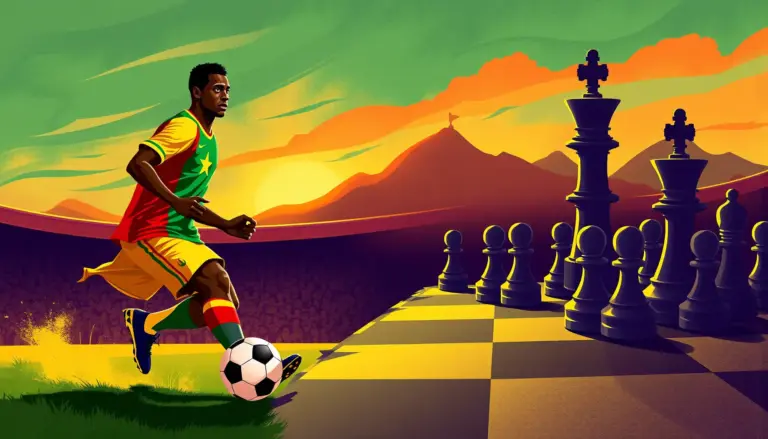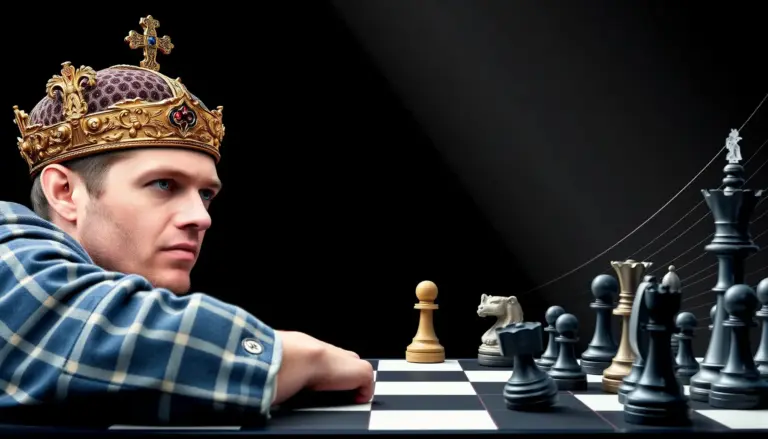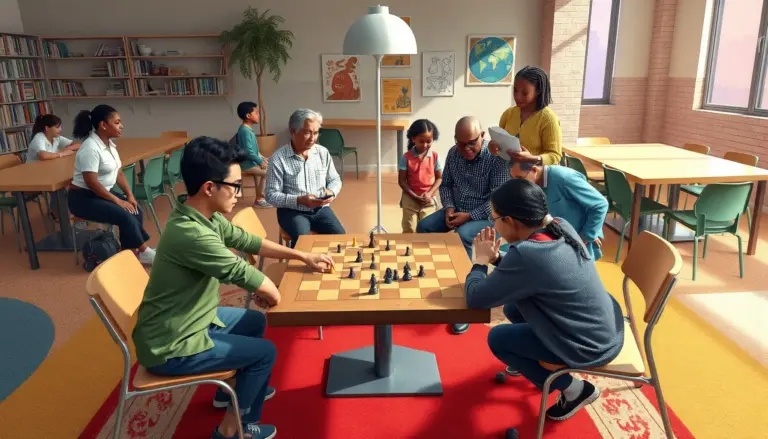
Chess is much more than a strategy game: It is a universal language that transcends borders, cultures and languages. In a world where words often divide, las 64 squares on the board become a space where communication flows without the need for translation. From the streets of Havana to the refugee camps in Syria, Chess has proven to be a bridge between people who, otherwise, they would have nothing in common. But, How does this ancient game manage to connect such different human beings?? What makes it so powerful as a silent dialogue tool?
The answer is not just in the rules, but in what chess represents: a microcosm of life itself, where every movement is a decision, Every game a conversation and every checkmate a shared conclusion. Through this article, We will explore how chess works as a language without words, analyzing their ability to unite, heal and challenge in contexts as diverse as international diplomacy, social rehabilitation and even political resistance. Why, in the end, the board doesn't judge your accent, your religion or your past: just evaluate your ability to think, adapt and, above all, understand the other.
The board as neutral territory: when the pieces speak for you
Imagine a scenario where two people, separated by a historical conflict, they sit in front of a chess board. There are no speeches, no flags, no prejudices: solo 32 pieces and the implicit promise that, for a moment, the game will be the only language that matters. This is not fiction. In 1972, during the cold war, he duel between Bobby Fischer and Boris Spassky In Reykjavik it was not just a chess game, but an act of quiet diplomacy that captured the world's attention. While the superpowers clashed on other fronts, the board became a space where logic and creativity prevailed over ideology.
This phenomenon is not exclusive to high politics. In places like Israel and Palestine, organizations like “Chess for Peace” have used chess to bring together children from both sides of the conflict. In these meetings, the pieces act as mediators: the pawn advancing represents a step towards understanding, the bishop moving diagonally symbolizes the search for alternative solutions, and the king, always vulnerable, remember that security is a shared goal. Chess does not resolve conflicts, but it teaches the players to see the other not as an enemy, but like an opponent in a game where both can win or lose, but never be destroyed.
The magic of chess lies in its ability to reduce human complexity to a system of clear rules.. In a world where verbal language can be manipulated, misunderstood or used as a weapon, the board offers a framework where intentions are transparent: every movement is a statement, every sacrifice a concession, and every checkmate a foregone conclusion. This transparency makes it an accessible language even for those who do not share a common language.. As the great teacher Savielly Tartakower said: “Chess is the art of analysis”. and analyze, after all, It's a way of listening.
Silence as a healing tool: chess in extreme contexts
If chess is a language, then your most powerful grammar is silence. In places where words can be dangerous or insufficient, the board becomes a shelter. This is especially true in trauma contexts., where chess has proven to be an invaluable therapeutic tool. In prisons around the world, from Medellín to San Quentin, chess has been used to teach patience, self-control and strategic thinking to people who, in many cases, They have lived in environments where impulsivity was the only currency.
The case of Vladimir Rašković, Serbian psychiatrist who implemented chess as therapy in psychiatric hospitals, is paradigmatic. Rašković discovered that the game helped patients structure their thinking, to anticipate consequences and, above all, to regain a sense of agency in their lives. In your own words: “Chess gives people something that life has taken from them: the ability to choose”. This idea is key to understanding why chess works so well in vulnerable contexts.. on a board, every move is a decision, and every decision has consequences. For someone who has felt like their life is out of their control, Getting that sense of power back—even in a game—can be transformative..
But chess not only heals on an individual level. In communities affected by armed conflict, as the Democratic Republic of the Congo, the game has been used to reintegrate child soldiers. These young people, many of whom have committed violent acts under duress, They find in chess a space where they can practice decision-making without violence. The pieces do not bleed, mistakes don't kill, and each game offers a chance to start again. In this sense, chess acts as a life simulator: teaches that defeats are temporary and that, with strategy, Even the most desperate positions can be reversed.
Chess as an act of resistance: when playing is a challenge to power
In authoritarian regimes, where freedom of expression is restricted, chess has become an act of silent resistance. During Enver Hoxha's communist Albania, For example, chess was viewed with suspicion by the regime, who considered him a “bourgeois game”. However, the Albanians practiced it secretly, as a way to keep your critical thinking skills alive. In this context, each game was a small act of rebellion: a statement that, even under oppression, the human mind cannot be completely controlled.
This pattern is repeated in other places where chess has been banned or restricted.. In Afghanistan under the Taliban regime, women found in chess a way to challenge imposed norms. Play secretly, under the burqa, became a symbol of resistance. As an Afghan player said in an interview: “When I move a piece, I feel like I'm moving my life forward., even if it's just a centimeter”. chess, in these cases, it's not just a game: It is a declaration that inner freedom cannot be confiscated.
Even in democracies, chess has served as a tool of protest. During apartheid in South Africa, multiracial tournaments were a way to challenge segregationist laws. In Belarus, under the Lukashenko regime, chess players have used their international visibility to denounce political repression. The board, in these cases, becomes a mirror that reflects the injustices of the real world, but also in a space where these injustices can be questioned. As Grandmaster Garry Kasparov said, who was also a political dissident in the USSR: “Chess is a fight against error”. And in contexts of oppression, The biggest mistake is accepting the status quo..
Chess in the digital age: A language in evolution or at risk?
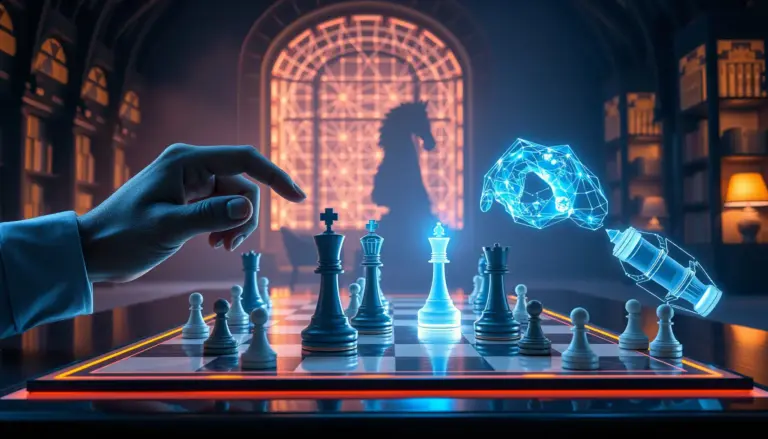
In the internet age, Chess has undergone an unprecedented transformation. Platforms like Lichess and Chess.com have democratized access to the game, allowing millions of people to play with each other regardless of their geographic location. This globalization of chess has reinforced its role as a universal language, but it has also raised new challenges. On the one hand, gaming has become more accessible than ever: hoy, a boy in Nairobi can take on an old man in Tokyo with just one click. On the other, the Digital era has introduced problems such as fraud with AI engines, that threaten to erode confidence in the game.
However, Online chess has also opened up new possibilities for intercultural communication. In virtual forums and communities, Players from around the world share strategies, They analyze games and debate openings, creating a global dialogue that transcends language barriers. chess, in this sense, has become a kind of digital Esperanto: a common language that allows people from radically different cultures to understand each other through movements and patterns.
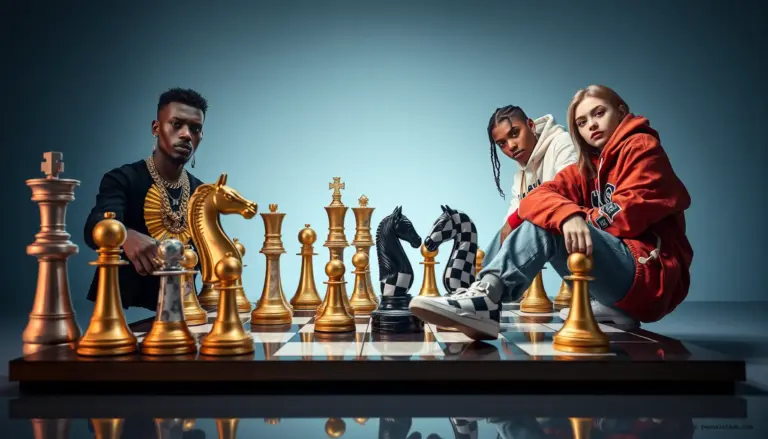
But, What happens when the chess language is mixed with other digital languages? On platforms like Twitch, chess has merged with entertainment, giving rise to a new form of communication where the game is combined with memes, humor and pop culture. This evolution has attracted a new generation of players, especially young people, who see chess not as an elitist pastime, but as a form of creative expression. However, also raises questions about the future of the game: Are we witnessing the birth of a new chess language, or the dilution of its essence as a tool for deep thought?
Conclusion: the board as a mirror of the human
Chess is much more than a game: It is a language that has evolved over centuries to express what words cannot. In a world fragmented by cultural differences, politics and linguistics, the board offers a space where communication is possible without the need for translation. Whether in an international tournament, in a prison, in a refugee camp or in an online game, chess shows that, in the end, we are all players in the same game.
But its true power does not lie in the rules, but in what the game teaches us about ourselves and about others. Chess reminds us that, even in defeat, there are lessons; that every movement is a decision, and that each game is a conversation. In a world where noise often drowns out dialogue, the silence of the board can be the most eloquent form of communication. As the writer Stefan Zweig said: “Chess is the gymnastics of the mind”. and maybe, in an increasingly divided world, We need more than ever that mental exercise that allows us to understand others., no matter what side of the board you are on.
So next time you sit in front of a board, remember: you're not just moving pieces. You are participating in a conversation that has united humanity for centuries, and?, hopefully, will continue to do so for many more.