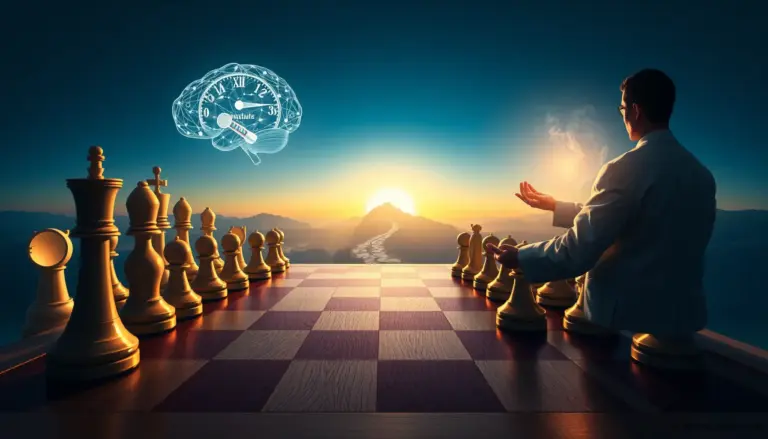
Chess in nursing homes is not just a hobby. It is a silent therapy that awakens memories, sharpens the mind and brings smiles back to those, in many cases, They have seen how time erases fragments of their own history. Imagine a board where each move does not just move a piece, but also reconnects neurons, evokes forgotten anecdotes and builds bridges between generations. This ancient game, that has survived empires and revolutions, Today it stands as an unexpected ally in the fight against cognitive deterioration and loneliness in the elderly. But, How does chess achieve what sometimes not even drugs can achieve??
The board as a brain gym: science behind checkmate
Neuroscience has shown that chess activates multiple areas of the brain simultaneously: the prefrontal cortex (decision maker), the parietal lobe (responsible for spatial processing) and the hippocampus (key to memory). In older adults, This cognitive stimulus can slow the progression of diseases such as Alzheimer's or senile dementia. A study published in The New England Journal of Medicine revealed that those who practiced mentally challenging activities, like chess, reduced by up to 63% the risk of developing cognitive impairment.
But chess not only works on memory. It also strengthens the brain plasticity, that ability of the brain to reorganize itself and form new neuronal connections. In the asylums, where the routine is usually monotonous, a game of chess introduces an element of novelty that forces the brain to adapt. Each play is a small calculation exercise, anticipation and creativity, skills that, when exercising, they stay alive. It is no coincidence that projects like therapeutic chess in hospitals have demonstrated tangible results in patients with brain damage.
Besides, chess encourages memoria procedural, that type of memory that allows us to perform tasks without consciously thinking about each step. For an older adult, remembering how a horse moves or how to castl can be a small triumph that reinforces your self-esteem. And here lies another of its powers: chess not only preserves what already exists, but also helps to rebuild what was lost.
More than a game: chess as emotional therapy
Loneliness in the elderly is a global problem. According to the WHO, more than 20% of older adults in the world suffer from social isolation, a condition that increases the risk of depression and anxiety. chess, however, break that cycle. In the asylums, games become an excuse to socialize, share stories and, above all, feel heard. A University of California study found that residents who participated in group activities, like chess tournaments, showed lower levels of cortisol (the stress hormone) and increased oxytocin production, associated with emotional well-being.
But the impact goes further. Chess teaches patience and resilience, two essential virtues in a stage of life where frustration can be constant. Losing a game is not a failure, but an opportunity to learn. This mentality, grown on the board, carries over into everyday life. As the psychologist Vladimir Rašković points out in his approach to therapeutic chess, the game helps older adults accept their limitations without feeling defeated, transforming vulnerability into strength.
There is also the generational component. In many nursing homes, residents teach chess to young volunteers or their grandchildren, reversing the traditional role of “carer”. This exchange not only reinforces their sense of usefulness, but also creates emotional ties that transcend the board. chess, in this context, becomes a universal language that unites people of different ages and cultures, how we explore this article.
From theory to practice: how to implement chess in nursing homes
Not all older adults have previous experience with chess, but that is not an obstacle. In fact, It is an opportunity to learn together. The key is to adapt the game to your needs. For example:
- Adapted boards: larger pieces, with contrasting colors and non-slip bases for easy grip. There are also embossed boards for people with visual disabilities..
- Guided games: Monitors or volunteers can simplify the rules at first, focusing on basic movements and simple strategies. Over time, complexity may increase.
- Intergenerational tournament: Organizing games between residents and young people not only encourages socialization, but also creates an environment of mutual learning. In this link you will find ideas to design activities of this type.
- Memory workshops: Using chess to exercise short and long term memory. For example, ask participants to remember a sequence of moves or to identify patterns in historical games.
An inspiring case is that of Senior Chess Club in Medellín, where play has been integrated as part of an active aging program. Over there, residents don't just play, but they also participate in talks on the history of chess, They analyze classic games and even organize their own tournaments. The result: a more united community, with fewer cases of depression and a notable improvement in their cognitive abilities.
Chess as a tool for social inclusion
In many nursing homes, Residents with reduced mobility or chronic illnesses are often left out of group activities. chess, however, It is an accessible game that does not require physical strength, just concentration and strategy. This makes it a powerful tool for inclusion.. Besides, Its quiet nature makes it ideal for people with noise sensitivity or autism spectrum disorders (TEA), as detailed in this article about therapeutic chess.
Another key aspect is its low cost. Unlike other therapies, chess only requires a board and pieces, making it viable even in institutions with limited resources. In countries like Spain, projects like “Chess that revives towns” have shown how this game can revitalize entire communities, including their seniors.
But the true value of chess in nursing homes goes beyond the tangible. It is a reminder that, regardless of age, we all have the ability to learn, to compete and, above all, to enjoy. In a world that often marginalizes the elderly, chess gives them something essential back: the right to be protagonists of their own story.
Challenges and how to overcome them
Implementing chess in nursing homes is not without challenges. The most common is the initial resistance of some residents, who can see the game as something “too complicated” o “for young people”. To overcome this, It is essential:
- Focus on benefits: Explain how chess improves memory, reduces stress and encourages socialization. Show concrete examples of other nursing homes where the project has been successful.
- Start with simple activities: It is not necessary to master grandmaster openings. short games, checkmate problems or even memory games with the pieces can be a good starting point.
- Involve staff: Caregivers and therapists must be trained to guide departures and adapt them to the individual needs of each resident..
- Celebrate small achievements: Every game won, every movement well calculated, deserves to be recognized. This reinforces motivation and the sense of progress.
Another challenge is the lack of volunteers or specialized monitors.. Here, The solution may lie in collaborating with local chess clubs, universities or even with online platforms that offer free resources to learn and teach. In this guide you will find practical tips to create a chess club from scratch, adaptable to any context.
Conclusion: checkmate to loneliness
Chess in nursing homes is much more than a game. It's a therapy, a generational bridge and, above all, a tool of dignity. In a world that often relegates older adults to oblivion, this board 64 Casillas offers you something invaluable: the opportunity to continue being protagonists. Every game is a reminder that the mind is ageless, that strategy can defeat time and that, even in old age, life is still a game full of possibilities.
But the true power of chess is not in winning or losing., but in what happens between the plays: shared laughter, the memories that resurface, the complicity of a rival who becomes a friend. In the asylums, where silence sometimes weighs more than words, chess breaks barriers and gives back something that time cannot take away: the joy of feeling alive.
If there is a lesson that this ancient game can teach us, It's never too late to learn, to compete or just to enjoy. And in a rapidly aging world, Chess is emerging as one of the best allies to ensure that old age is not a decline, but a new dawn.