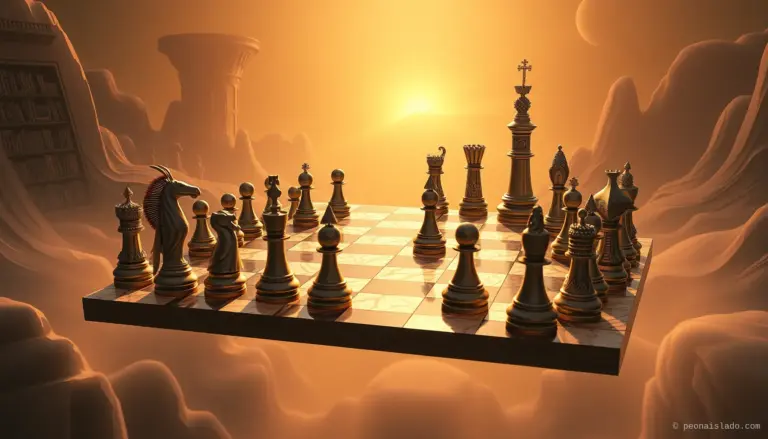
Imagine a pediatric hospital hallway where the silence is only broken by the sound of monitors and hurried footsteps.. Between the white walls, a chess board becomes an oasis of normality for children fighting diseases that rob them of their childhood. It's not magic, but almost: Chess in pediatric hospitals has proven to be such a powerful therapeutic tool that it challenges the limits of traditional medicine.. More than a game, It is a bridge to resilience, a universal language that transforms pain into strategy and uncertainty into checkmate.
Chess as therapy: when the pieces heal more than the medicines
Science has validated what therapists observe every day: Chess stimulates brain areas linked to memory, concentration and decision making, critical skills for children in medical treatment. A study published in Frontiers in Psychology revealed that pediatric cancer patients who participated in chess sessions showed a reduction in 30% in anxiety levels, compared to control groups. But the benefits go beyond what is quantifiable.. In an environment where children lose control over their bodies and their routine, the board gives them back the agency: Every movement is a decision that defies helplessness.
At the Sant Joan de Déu Hospital in Barcelona, the program “Therapeutic Chess” has integrated play as part of the treatment of children with chronic diseases. Therapists highlight how chess allows them to work on patience, frustration tolerance and long-term planning, essential skills to face complex diagnoses. “A child learning to think three moves ahead on the board, You also learn to visualize your recovery”, explains a psychologist from the center. This approach not only complements conventional medicine, but it humanizes an often depersonalized process.
To delve deeper into how chess transforms mental health, We invite you to explore our article on chess for children with autism, where similar strategies applied in neurodivergent contexts are detailed.
The board as a refuge: how chess reconstructs childhood in crisis
Pediatric hospitals are scenes of truncated stories: children leaving school behind, friends and innocence to face battles that no one should fight. In this context, chess emerges as an unexpected refuge. At the Federico Gómez Children's Hospital of Mexico, the project “Check the Disease” has shown that the game is not only distracting, but rather reconnects children with their identity beyond the patient. “when they play, They stop being 'the child with leukemia'’ to become strategists, in rivals, in people”, comments a volunteer from the program.
The dynamics are simple but profound: Chess offers them a space where failure has no medical consequences, where every mistake is a lesson and not a setback. In a study carried out with children undergoing chemotherapy treatment, It was observed that those who participated in internal chess tournaments showed a moderate adherence 20% greater than their treatments, attributed to an improvement in your mood and motivation. Besides, the game encourages socialization between patients, breaking the isolation that often accompanies prolonged hospitalizations.
This phenomenon is not exclusive to hospitals.. In contexts of humanitarian crises, like refugee camps, Chess has served as a tool for collective healing. If you want to know more about its impact in extreme environments, Don't miss our report on chess in refugees, where the board becomes a symbol of hope.
From distraction to rehabilitation: chess as a bridge to normality
Pediatric rehabilitation is a long and painful process, where every small advance is celebrated as a victory. Here, chess reveals itself as an unexpected ally. At the Niño Jesús Hospital in Madrid, used as part of occupational therapy for children with brain or motor injuries. “Chess forces them to coordinate fine movements, to plan and maintain attention, skills that they then transfer to their daily lives”, explains an occupational therapist. For children with cerebral palsy, For example, Adapting the board with magnetic or larger pieces allows them to actively participate, improving your self-esteem and autonomy.
But the most surprising impact is seen in children with neurodevelopmental disorders., like ADHD. A University of California study found that chess sessions of 30 minutes improved the ability to inhibit impulses by a 40%, a result comparable to that of some pharmacological therapies. “Chess teaches them to stop, to analyze and act with intention, something that many of these children do not achieve in other contexts”, says a child neuropsychologist. This finding reinforces the idea that gambling is not just a hobby, but a cognitive and emotional rehabilitation tool.
If you are interested in how chess can enhance child development, we recommend you read our guide to chess in education, where its benefits are explored in the school environment.
The challenge of climbing: when bureaucracy threatens a model that works
Despite the promising results, Chess integration in pediatric hospitals faces significant barriers. The main one is the lack of financing: most programs depend on volunteers or donations, which limits its reach and sustainability. “We have scientific evidence and testimonials that demonstrate its effectiveness, but there is still no political will to escalate it”, the coordinator of a program in Argentina regrets. In countries like Spain or Mexico, some hospitals have managed to incorporate it thanks to alliances with chess federations or foundations, but they are the exception and not the rule.
Another obstacle is the resistance of some health professionals, who see chess as a complement “non-essential” versus more established therapies. “There is a disconnect between what science demonstrates and what is implemented in clinical practice”, warns a researcher from the Alicante Neuroscience Institute. To overcome this skepticism, More longitudinal studies are needed to measure long-term impact, as well as standardized protocols that facilitate their adoption in different contexts.
Nevertheless, there are signs of change. In 2023, the World Health Organization (OMS) included chess in its list of recommended activities for children's mental health, a recognition that could open doors to public financing. Besides, initiatives such as “Chess in Hospitals”, promoted by FIDE, seek to create a global network of hospitals that adopt the model, sharing resources and good practices.
The future: towards a model where chess is part of the treatment
The potential of chess in pediatric hospitals is immense, but its future depends on three key factors: investigation, financing and political will. In the field of research, More studies are needed to explore its impact on specific diseases, such as autism or childhood depression. Regarding financing, public-private alliances could be the solution, combining state funds with the support of companies and foundations. Finally, Political will is crucial to integrate it into pediatric care protocols, guaranteeing access to all children, regardless of your socioeconomic status.
Meanwhile, Existing programs continue to demonstrate that chess is much more than a game. It is an empowerment tool, a catalyst for resilience and, above all, a reminder that even in the darkest moments, the human mind can find light in 64 casillas. As Grandmaster Garry Kasparov said: “Chess is a test of the mind against itself”. In pediatric hospitals, that trial becomes a victory against pain, one movement at a time.
If this topic has resonated with you, We invite you to explore how chess transforms other areas of life in our article on chess in life: lessons to make better decisions. because in the end, the board is not just a reflection of the game, but of the human capacity to find hope in strategy.