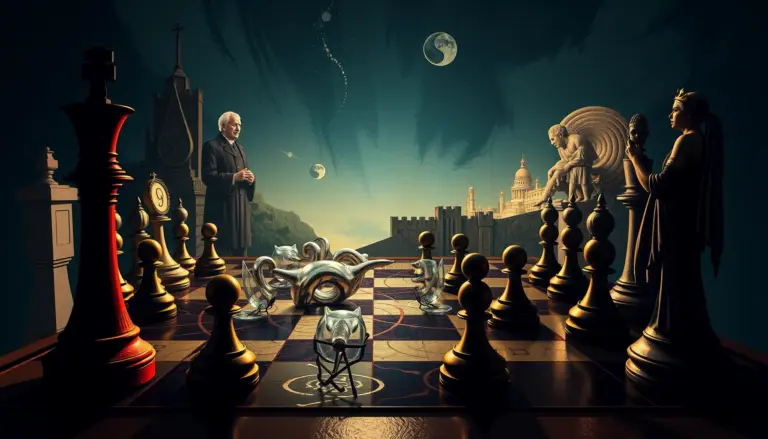
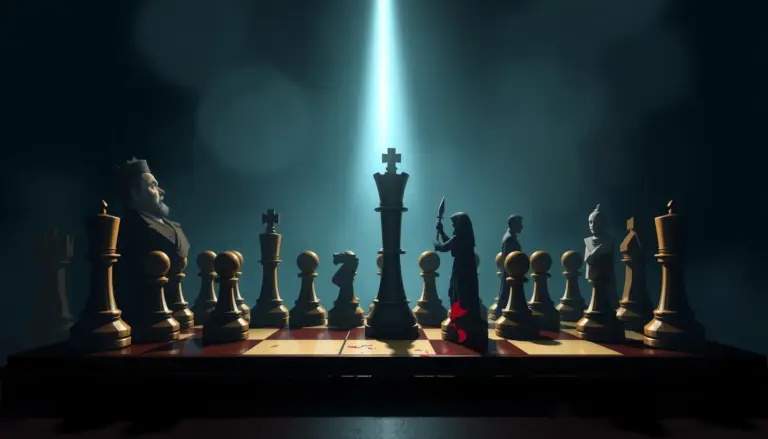
In the heart of Europe, where medieval legends come to life among stone walls and sentinel towers, Slovakia stands as a unique setting for a tradition that merges history, strategy and spectacle: the tournaments of live chess. These events, that transform boards into human battlefields, not only do they revive the splendor of the Middle Ages, but also attract enthusiasts from all over the world, eager to witness games where each movement is a choreography of epic and precision. Slovak castles, silent witnesses to centuries of intrigue and conquest, become the perfect setting for this discipline that defies time. But, What makes these tournaments such a fascinating experience?? How do you manage to combine the rigor of chess with the drama of historical reenactment?? Y, above all, Why has Slovakia become an international reference for lovers of this peculiar sport??
To answer these questions, We will first explore the origin and evolution of living chess, a game that transcends simple entertainment to become a bridge between the past and the present. Then, We will analyze how Slovak castles, with its imposing architecture and its symbolic load, enhance the magic of these tournaments, offering an incomparable setting. Next, We will unravel the logistical and creative details that make these events possible, from the selection of the participants to the preparation of the costumes and the adapted rules. Finally, We will examine the cultural and tourist impact generated by these tournaments, not only in local communities, but also in the international projection of Slovakia as a destination for unique experiences. Through this journey, We will discover why live chess in Slovak castles is much more than a game: It is a celebration of intelligence, history and human creativity.
living chess: a journey from ancient Persia to Slovak castles
living chess, also known as human chess, is a variant of the strategy game that replaces traditional pieces with people dressed in period costumes, which represent kings, queens, bishops and pawns on a giant board. Although its popularity in Europe was consolidated during the Renaissance, Its roots go back to much older civilizations. The first records of games with human pieces come from the 6th century Persia, where chess (shatranj) It was already practiced as a military and strategic exercise. With the spread of Islam, the game reached the Iberian Peninsula, where it evolved to adopt modern rules.
However, it was in the Europa medieval where live chess acquired its most theatrical dimension. During the 12th and 13th centuries, The nobles organized games in public squares or castle courtyards, using his servants or soldiers as pieces. These events not only served to entertain the court, but also to demonstrate power and strategic ability. In Slovakia, This tradition found fertile ground thanks to the abundance of medieval fortresses, many of which are preserved in excellent condition. Castles like that of Sleep, Bojnice o Squirrel They became natural settings to relive these games, attracting historical re-enactors and chess players alike.
What distinguishes live chess from other variants is its ability to humanize the game. Each piece is not a simple object, but a character with gestures, choreographed movements and even short dialogues that add drama to the game. For example, when a pawn is captured, the participant can simulate a fall or cry out in pain, while the king and queen usually move with solemnity, accompanied by lute or trumpet music. This staging not only enriches the visual experience, but also educates the public about the rules of classical chess, making the game accessible even to those unfamiliar with it.
Slovak castles: scenarios that defy time
Slovakia is home to more than 180 castles and fortresses, many of them built between the 9th and 15th centuries, in a period marked by the Tatar invasions, the Hussite wars and the expansion of the Kingdom of Hungary. These structures not only fulfilled defensive functions, but they were also centers of political and cultural power. Hoy, Their state of conservation – thanks to meticulous restorations – makes them ideal places for events such as live chess tournaments., where architecture and history merge with the game's narrative.
One of the most emblematic castles for these tournaments is the Castillo de Bojnice, a fairytale palace with crenellated towers and a moat straight out of Arthurian legend. Your inner courtyard, surrounded by gothic arcades, Transforms into a giant board during tournaments, with boxes of 2×2 meters marked on the ground. The choice of this castle is not accidental: its romantic atmosphere and its association with local legends, like that of Fantasma de Bojnice, They add a mystical component to the games. The participants, dressed in 14th century costumes, They look like characters escaped from an illuminated manuscript, and the public can follow the action from the galleries above, as if they were nobles watching a royal tournament.
Another notable scenario is Castillo de Spiš, one of the largest fortified complexes in Central Europe and a UNESCO World Heritage Site. Its location on top of a hill, overlooking the Carpathians, provides a spectacular backdrop. Here, live chess takes on a more epic character, with games that simulate historical battles, like the resistance of Hungarian knights against the Mongols in the 13th century. Organizers often incorporate narrative elements, such as the reenactment of a siege or the signing of a peace treaty, that develop in parallel to the game. This not only enriches the experience, but also attracts a broader audience, including families and tourists interested in history.
The choice of castle not only influences the aesthetics of the event, but also in his logistics and symbolism. For example, at Orava Castle, built on a rocky cliff, The games are played on an elevated board, forcing participants to move with caution to avoid falls. This added difficulty turns the tournament into a physical challenge as well as a mental one., remembering that, in the Middle Ages, military strategy also depended on the terrain. Besides, many Slovak castles have dungeons o torture rooms that are used to set scenes of “capture” of pieces, where the pawns “defeated” They are taken to these spaces as symbolic prisoners.
behind the scenes: the logistics of a live chess tournament
Organizing a live chess tournament in a medieval castle is no easy task.. It requires meticulous planning, from selecting participants to coordinating moves on the giant board.. Unlike a conventional chess game, where the pieces move with a simple gesture, Here each movement involves a choreography that must be rehearsed in advance to avoid errors or accidents..
The first step is the selection of players. Organizers usually look for chess players with experience in quick or blitz games., since live chess requires making decisions in real time. However, The ability to act is also valued, especially for king roles, queen and bishops, who tend to have more elaborate interactions. In some tournaments, like those celebrated in Bojnice, Local actors or members of historical reenactment groups are invited to bring the pieces to life, while in others, like those of Spiš, The participants are professional chess players who receive training in interpretation.
Once the players are selected, begins the process of costume and characterization. Costumes must be faithful to the era represented, generally between the 12th and 15th centuries, and adapt to climatic conditions, since many tournaments are held outdoors. White pieces usually dress with light tones, like white, gold or silver, while black opts for red, dark blue or black. Kings and queens wear crowns and velvet capes, while the pawns can be armed with wooden swords or shields. This level of detail not only enriches the viewing experience, but also helps viewers quickly identify pieces.
The choreography of movements is another crucial aspect. Each piece is assigned a specific path to move around the board, avoiding collisions with other pieces or with the public. For example, the horses (which in live chess are usually riders on horses or actors who pretend to ride) They must follow a path in “L” without invading occupied squares. To ensure fluidity, organizers usually carry out previous rehearsals, marking routes with tape or chalk. Besides, is designated a arbitrator which supervises both compliance with the rules of chess and the safety of the participants.
Technology also plays an important role. Although live chess is an in-person event, many tournaments incorporate giant screens o live streaming so that the public can follow the game from different angles. At Čachtice Castle, known for his association with Countess Erzsébet Báthory, Drones have been used to capture aerial images of the board, offering a unique perspective. Besides, some events include mobile apps that allow viewers to vote for the best move or receive real-time explanations of the strategies used.
The cultural and tourist impact of live chess tournaments
Live chess tournaments are not only a fascinating spectacle, but they also have a significant impact on the local economy and international projection of Slovakia. These events attract thousands of visitors each year, many of them foreign tourists who combine their attendance with visits to castles and other cultural attractions. According to data from the Slovak Tourist Office, The tournaments held in Bojnice and Spiš have increased the number of visitors by 20-30% during the summer months, generating additional revenue for hotels, local restaurants and shops.
Besides, These events have contributed to revalue the Slovak historical heritage. Many castles that were previously little known outside the country, like that of Beautiful Hôrka o Stretchy, have gained visibility thanks to their participation in live chess tournaments. This has led to an increase in restorations and the creation of themed tourist routes, like the Medieval Castles Route, which includes stops at fortresses where games have been held. Some castles have even incorporated permanent exhibits on the history of chess., with original pieces from the Middle Ages and information panels about its evolution.
From the cultural point of view, The tournaments have served to revitalize local traditions. In many locations, The events are complemented by medieval fairs, where artisans exhibit traditional crafts such as blacksmithing, pottery or sword making. It is also common for chess workshops to be organized for children., where they learn the rules of the game while dressing in period costumes. At Trenčín Castle, For example, has been created a living chess club that brings together young people and adults interested in practicing this discipline, combining sport with historical recreation.
The success of these tournaments has also transcended borders, positioning Slovakia as a reference destination for experience tourism. International media such as BBC Travel, National Geographic y Lonely Planet have highlighted live chess tournaments as one of the most original activities in Central Europe. This has led other countries, like Hungary, Poland and the Czech Republic, have started organizing similar events, although none has managed to match the combination of historical settings, organization and atmosphere that Slovakia offers.
However, The most profound impact may be change in perception of chess. Traditionally seen as an elitist or boring game, live chess has democratized it, attracting diverse audiences, from families with children to young people interested in geek culture. In a world dominated by technology, These tournaments offer an experience analog and tangible, where the strategy is experienced in first person and the story comes to life. For many viewers, Attending a game in a Slovakian castle is not just a tourist plan, but an opportunity to connect with a past that, otherwise, They would only know through books or movies.
Conclusion: living chess as a bridge between eras
Live chess tournaments in Slovak castles are much more than just entertainment: are one celebration of intelligence, creativity and historical memory. through them, Slovakia has managed to rescue a medieval tradition and adapt it to modern times, creating a unique experience that attracts travelers, chess players and history lovers alike. These events show that chess, far from being a static game, It can become a dynamic show where every move tells a story and every game is a lesson in strategy and patience..
The castles, with its centuries-old walls and its legends, provide the perfect setting for this fusion between sport and theater. They are not simple decorations, sino active witnesses of a dialogue between the past and the present, where participants and the public become protagonists of a narrative that transcends time. The logistics behind these tournaments, from the selection of the players to the choreography of the movements, reflects a commitment to excellence that guarantees an unforgettable experience for all attendees.
Besides, The impact of these events goes beyond the cultural or touristic. They have achieved revalue Slovak heritage, positioning the country as an innovative destination on the European tourism map. They have brought chess closer to new generations, proving that this ancient game can be as exciting as any modern sport. Y, above all, have reminded the world that history is not something that should remain in museums, but can—and must—come to life to inspire, educate and entertain.
In a future where technology dominates more and more aspects of our lives, live chess in Slovak castles offers us a valuable reminder: the magic lies in the tangible, in the human, in the ability to transform ideas into shared experiences. That's why, If you ever have the opportunity to attend one of these tournaments, don't let it pass. You will not only witness a chess game, but you will be part of a tradition that has defied the centuries and that, thanks to the passion of its organizers and participants, will be alive for many more years.