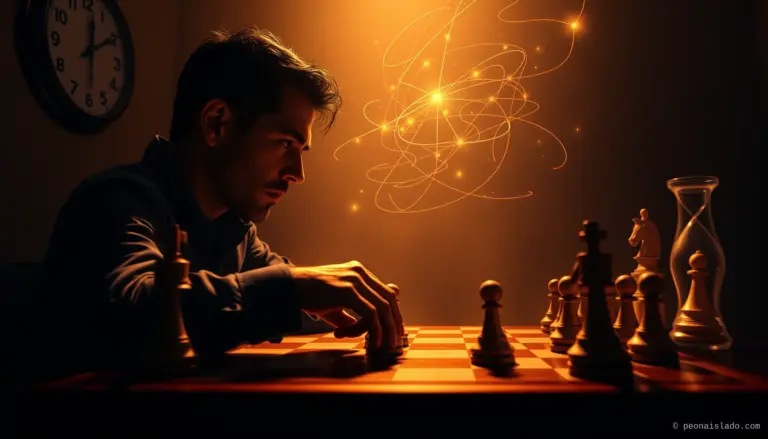
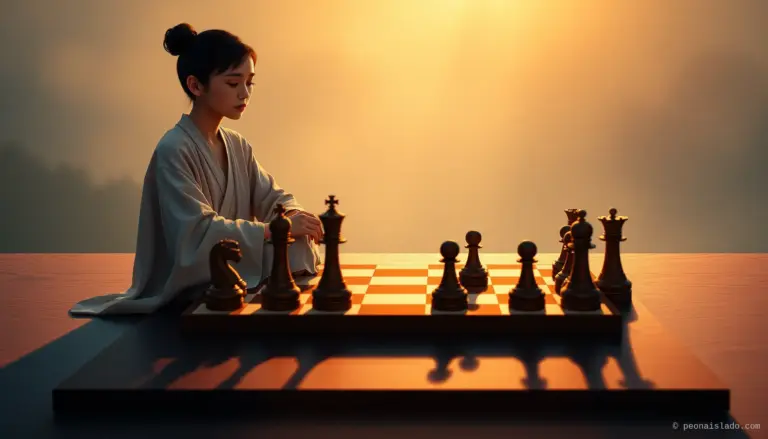
In a world where screens absorb attention and the streets whisper stories of abandonment, chess emerges as an unexpected beacon. It's not just a game of kings and pawns, but a universal language that transcends social barriers, economic and cultural. For youth at risk, The board becomes a mirror where you reflect your fears, dreams and, above all, your ability to reinvent yourself. Every movement is a metaphor for life: a decision that can change the course of a game, or of an existence.
Chess does not judge by origin, but for the strategy. In marginal neighborhoods of Medellín, prisons in Argentina or refugee camps in Europe, Play has proven to be a powerful tool for reconstructing fractured identities.. But, How do you achieve a simple dashboard 64 boxes what entire institutions cannot? The answer is not in the pieces, but in what the game awakens: resilience, critical thinking and the certainty that, even in adversity, there is a way forward.
The board as a refuge: when the rules of the game replace those of destiny
Imagine growing up in an environment where options seem to narrow down to two: survive or surrender. For many young people at social risk, chess offers a third way: choose. In Medellin, For example, projects like the chess in the parks have transformed public spaces into improvised classrooms, where children and adolescents learn that every mistake is a lesson and every victory, a reminder of your own potential.
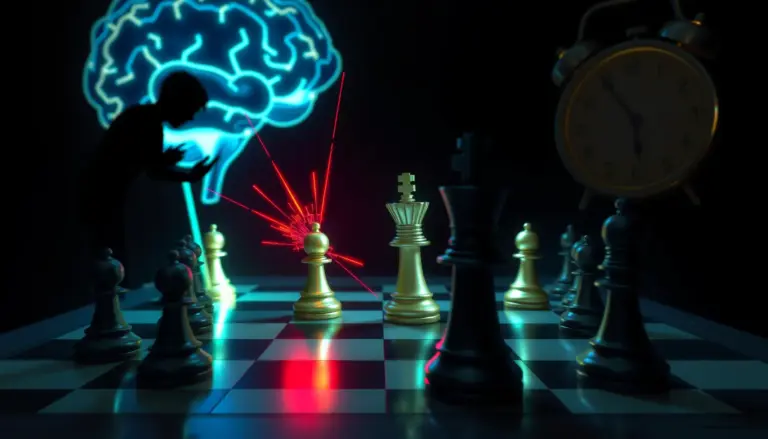
Chess acts as a cognitive refuge. In situations of extreme stress, the brain looks for predictable patterns to feel safe. The board provides exactly that: a system of clear rules, where chance does not exist and merit is measured in well-calculated movements. Studies in therapeutic chess reveal that gaming reduces cortisol levels (the stress hormone) and increases dopamine production, associated with motivation and pleasure. For young people who have grown up in chaotic environments, this structure is revolutionary.
But the impact goes beyond the individual.. In communities where violence is common, chess encourages empathy. By putting yourself in the opponent's shoes, players develop low skill in conflict contexts: the ability to anticipate the consequences of your actions. As the article on chess and empathy, the game teaches that even in competition, there is room for human connection.
From pawns to strategists: how chess redefines the future
Chess not only saves lives; transforms them. In schools in vulnerable areas, Its inclusion has been shown to reduce school dropouts and improve academic performance. A study cited in school chess and abandonment showed that, in a pilot city, the dropout rate dropped 30% after implementing the game as a pedagogical tool. The reason? Chess trains transferable skills: concentration, memory, planning and, above all, patience.
For youth at risk, These skills are a lifesaver.. In a world that rewards immediacy, Chess teaches that the best decisions take time. It is no coincidence that many of the great teachers come from humble backgrounds. The game levels the playing field: on the board, A inner-city kid can beat a Wall Street executive.. This democratization of success is, maybe, its greatest power.
Besides, chess opens literal doors. Local and international tournaments offer scholarships, travel opportunities and, in some cases, professional opportunities. In Latin American prisons, For example, Chess programs have allowed inmates to access sentence reductions or even paid jobs as game monitors. The message is clear: chess not only changes minds, but also destinations.
The silence that speaks: when the board becomes therapy
In a noisy world, chess is an oasis of silence. For young people with trauma, anxiety or depression, this silence is not empty, sino space. In psychiatric hospitals and shelters, therapeutic chess has proven to be as effective as some traditional therapies. As the article explains healing in foster care, the game allows you to externalize internal conflicts: each game becomes a metaphor for personal battles.
El psycologia Vladimir Rašković, pioneer in the use of chess as therapy, discovered that the game helps young people to visualize your problems. When a teenager in conflict moves a pawn, he's not just playing: It is symbolizing a decision, a fear or a hope. The board acts as a mirror, but also as a laboratory where solutions can be tested without real consequences.. This controlled catharsis is especially valuable for those who have grown up in environments where expressing emotions is a luxury..
But chess also teaches modesty. In a world that glorifies instant victory, the game reminds that failure is part of the process. Losing a game is not the end, but a step towards improvement. For young people accustomed to frustration, This message is transformative.. As the article on defeats and victories, learning to lose is, in himself, a victory.
Chess as a bridge: of exclusion to the community
One of the biggest risks for young people in vulnerable situations is isolation. chess, however, It's a magnet for connection.. In refugee camps, For example, the game has served to unite children from different cultures, languages and religions. A board and some pieces are enough to create a common language, where differences are diluted in favor of a shared strategy.
This ability to build community is especially valuable in fragmented urban environments.. In Medellin, he Isolated Pawn Club not only teaches chess, but creates support networks between young people who, otherwise, they would be alone. The board becomes an excuse for deeper conversations: about dreams, fears and the future. In a context where gang membership is often the only option, chess offers an alternative: belong to a community that builds, not that it destroys.
Besides, chess challenges stereotypes. In societies where masculinity is associated with physical strength, The game shows that intelligence and strategy are also forms of power. For girls in sexist contexts, like those who play in Afghanistan under the burqa, The board is a space of freedom where your voice—even if it is silent—has weight..
The future in 64 casillas: Where is social chess going?
Chess as a tool for social transformation is not a passing fad, but a growing trend. Governments, NGOs and educators are recognizing its potential to address complex problems: from violence to digital exclusion. In El Salvador, For example, Chess has been integrated into gang prevention programs, with promising results.
But the challenge is to scale these projects without losing their essence.. Social chess should not become just another tool of marketing institutional, but in a genuine movement that empowers young people. For this, It is key to train local monitors—many of them former players at risk—who understand the realities of their communities. As pointed out by the guide to creating a chess club, The sustainability of these projects depends on their roots in the local culture.
The future also involves technology. Platforms like Lichess o Chess.com They have democratized access to the game, allowing young people from rural areas or with reduced mobility to compete and learn. However, As the article warns about digital chess, It is crucial not to lose the human component: the physical board remains a symbol of resistance and connection.
Ultimately, chess is not a magic solution, but yes a seed. A seed that, planted at the right time, can grow in the most inhospitable places. For a young person at risk, learning to think three moves ahead is not just a chess skill: It's a metaphor for how to navigate life.. And in a world that often tells them they have no future, the board whispers to them: you decide your next move.
Conclusion: checkmate to despair
Chess doesn't save the world, but saves those who inhabit it. For young people at social risk, the board is much more than a game: it's a act of rebellion. Rebellion against the idea that your destiny is written, against violence as the only way out, against loneliness as the only company. Each game is a declaration of independence, a reminder that, even in the dark, there is room for light.
The true power of chess is not in winning, but in learn to play. In understanding that every mistake is a lesson, every defeat a step towards victory, and each opponent an ally on the path to self-knowledge. For those who have grown up in environments where rules are arbitrary and justice is scarce, chess offers something revolutionary: a system where merit always wins.
The challenge now is to take this message beyond the boards. May every young person who discovers chess not only learn to move pieces, but to move your life. That every game played in a park, a prison or a refugee camp be a reminder that, in this game—as in life—, the pawn can also become the king.