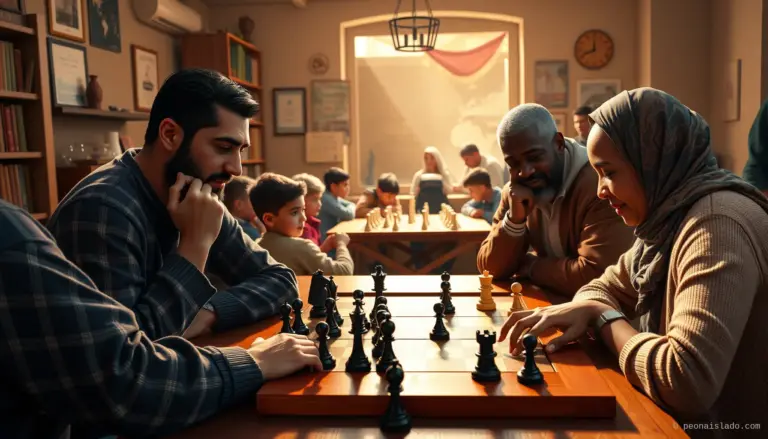
fast chess, with its relentless clocks and dizzying decisions, has become the dominant format of the digital age. But behind its popularity lies an uncomfortable question.: Is it shaping a generation of more intuitive and creative gamers?, or is it eroding the foundations of deep strategic thinking? The answer is not binary, but a delicate balance between adaptation and self-destruction, where each blitz game can be both a laboratory for innovation and a trap that atrophies patience.
The myth of intuition: When speed replaces analysis
Rapid chess—whether blitz (3+0) or time-increment games—rewards the ability to recognize patterns in milliseconds. Players like Hikaru Nakamura o Alireza Firouzja They have elevated this format to an art, where muscle memory and tactical experience seem more valuable than exhaustive calculation. However, This apparent advantage hides a subtle risk: the illusion of understanding.
In classical chess, Every movement is a hypothesis that is subject to scrutiny. in the fast, intuition acts as a cognitive shortcut, But what happens when that shortcut becomes the only route? Neuroscientific studies, like those cited in chess and memory, They show that great teachers don't just memorize positions, but they rebuild the reasoning behind them. The danger of rapid chess is that it can reduce the game to a succession of conditioned reflexes, where strategic depth is sacrificed on the altar of speed.
A revealing example is that of Magnus Carlsen, whose transition from classical chess to rapid and blitz has been the subject of debate. While in long games his style is based on accumulation of small positional advantages, in fast formats resort to aggressive openings and unorthodox tactics. Is this flexibility a sign of adaptive genius or a concession to superficiality? The answer could lie in how you balance both worlds, something we explore in depth in Carlsen's practical chess.
The paradox of time: less is more or less is less?
The clock is the great equalizer of rapid chess. In classic games, time allows us to explore variants, evaluate alternative plans and correct errors. in the fast, every second counts, and time pressure can lead to impulsive decisions. But here lies the paradox: lack of time forces us to prioritize.
A study published in Psychological Science analyzed how rapid chess players develop a decision heuristic more efficient. Instead of calculating all possible branches, They learn to identify the critical plays —those that determine the course of the game— and to ignore the noise. This ability, transferable to classical chess, explains why many great teachers, as Vladimir Kramnik, have defended the blitz as a training tool. However, The risk is that this heuristic becomes too much efficient, eliminating deep analysis capabilities when time permits.
To mitigate this effect, It is crucial to integrate rapid chess into a balanced training routine. For example, combine blitz sessions with exercises tactical vision o positional analysis can prevent intuition from becoming a substitute for rigorous thinking. As the GM points out Jacob Aagaard, “the blitz is not an end in itself, but a mirror that reflects your weaknesses”.
The psychology of the moment: How rapid chess redefines the mindset
Rapid chess not only changes as is played, sino who plays it. In classic formats, patience and mental endurance are cardinal virtues. in the fast, the ability to recover from an error in seconds makes the difference between victory and defeat. This dynamic has deep psychological implications, that we address in psychological errors in chess.
One of the most studied phenomena is tilt, a state of frustration that clouds judgment after an unfortunate play. In rapid chess, tilt can be devastating: a single mistake can trigger a cascade of irrational movements. However, Players who master this format develop a cognitive resilience unique. They learn to reset their mind between games, a skill that transcends the board and is applied in high-pressure environments, like business or decision making under stress.
But there is a dark side. Speed chess addiction—driven by platforms like Chess.com o Lichess— can generate a dopamine dependence associated with quick victories. This leads some players to avoid classical chess for fear of the frustration of long games., where the immediate reward disappears. As the sports psychologist warns Barry Hymer, “fast chess is like fast food: satisfactory at the moment, but unsustainable in the long term”.
Rapid chess as an innovation laboratory
Despite its risks, rapid chess has been a catalyst for innovation in the game. The need to improvise under pressure has led to bold openings, like the Bongcloud Defense or variants of Queen's Gambit that challenge classical principles. Besides, has democratized access to elite chess: players like Nihal Sarin o Praggnanandhaa have shown that mastery in quick formats can be a springboard to success in classical chess.
A paradigmatic case is that of Ding Liren, whose rise to the world title was preceded by a marked improvement in his quick play. Its ability to transition between both formats suggests that rapid chess is not an enemy of deep thinking., but a complement. As explained in key strategies in chess with time increment, The secret is to use the additional time not to calculate more, but for calculate better.
Innovation also extends to pedagogy. Schools like Chinese Chess School have integrated rapid chess into their training programs, teaching young players to develop a positional instinct before diving into theoretical analysis. This approach, detailed in the chinese model, has produced a generation of versatile players, capable of adapting to any pace of play.
The future: Convergence or collision of formats?
The debate about rapid chess vs.. classic is not new, but the digital age has intensified it. Platforms like Twitch They have turned the blitz into a massive spectacle, attracting millions of viewers seeking immediate thrills. Meanwhile, classical chess struggles to remain relevant, with tournaments like the Candidates Tournament implementing tighter time controls to adapt to the demands of the modern audience.
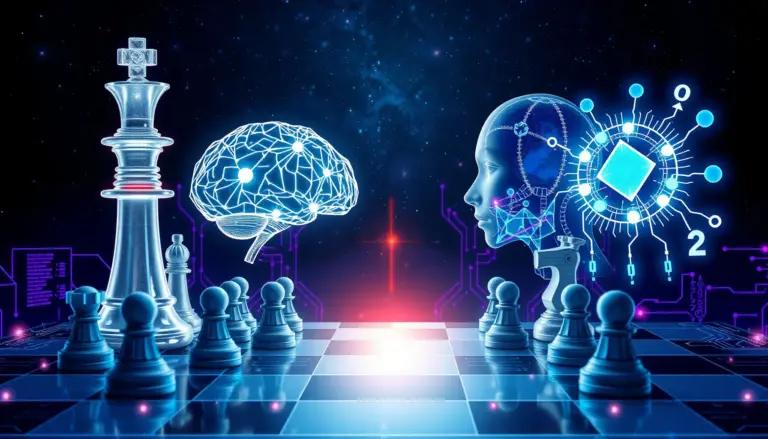
The key question is: Can both formats coexist without cannibalizing each other?? The answer could be in the hybridization. Tournaments like Chess960 or the Ajedrez Fischer Random —where pieces are placed randomly—are examples of how rapid chess can inspire variants that preserve strategic depth. Besides, Artificial intelligence is redefining the limits of both formats: engines like Stockfish o Leela Chess Zero They analyze quick games with the same precision as the classic ones, erasing the border between intuition and calculation.
For the players, the challenge is to find a balance. Speed chess can be a valuable tool for developing creativity and resilience, but only if integrated into a diverse training diet. As the GM suggests Viswanathan Anand, “classical chess is like learning to cook; quick is like improvising a recipe with limited ingredients. Both are necessary, but one cannot replace the other”.
Ultimately, rapid chess is neither a savior nor a villain. It is a mirror that reflects the strengths and weaknesses of those who play it. Its true value—and danger—lies in how we use it: as a shortcut to mastery or as an excuse to avoid the hard work that classical chess demands. The choice, as usual, it's in our hands.
Conclusion: the board as a metaphor for modern life
Rapid chess encapsulates the contradictions of our era: the obsession with speed, the search for instant gratification and, at the same time, the need to adapt to an increasingly complex world. In his lightning games, we see the decision-making dilemmas reflected in real life: When to trust intuition and when to stop and analyze? How to manage time pressure without sacrificing the quality of our choices?
The answer is not to reject rapid chess, but in tame it. Use it as a laboratory to fine-tune our intuition, but without forgetting that true chess - the one that challenges the mind and enriches the spirit - requires time, patience and, above all, the willingness to face uncertainty without shortcuts. as he wrote Stefan Zweig in The chess player, “The board is a miniature world where each piece has its place and its destination”. In the era of rapid chess, that destiny depends on us: whether we allow speed to dominate us or whether we learn to use it as another tool in the search for excellence.
The next move is yours.