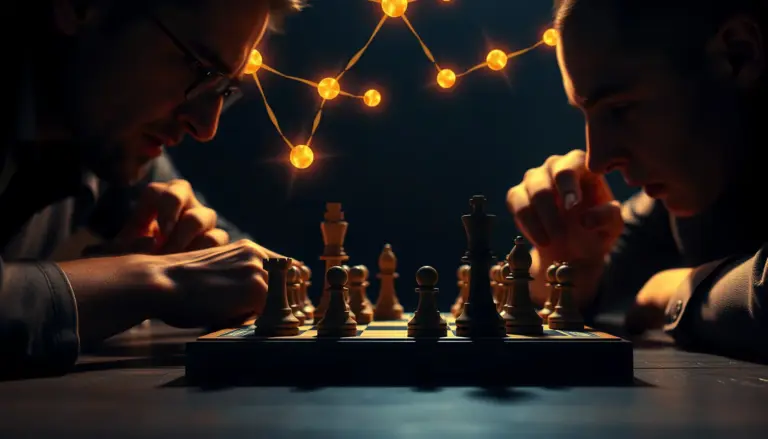
Imagine a Saturday afternoon at your local library. The smell of old books mixes with the murmur of voices that, instead of discussing novels or essays, they analyze openings, impossible piece sacrifices and checkmates. The tables, usually occupied by students or solitary readers, now they house chess boards where children, adults and the elderly face each other in games that transcend simple play. This scenario, increasingly common in cities around the world, it's not a coincidence: It is the result of a silent revolution that transforms public spaces into strategy laboratories, inclusion and community. Las public libraries that become chess rooms on weekends not only do they democratize an ancient sport, but they redefine the role of these cultural centers in the digital age, where human interaction and critical thinking are more necessary than ever.
Why is this phenomenon gaining ground so strongly?? The answer lies not only in chess as a game, but in what it represents: a bridge between generations, an antidote to urban loneliness and a pedagogical tool that, as recent studies show, improves cognitive and emotional skills. But, above all, is an organic response to the need to reconnect with the tangible in a world dominated by screens. In this article, We will explore how these initiatives are changing lives, What makes them sustainable and why they could be the model to follow to revitalize public spaces in identity crisis.
Chess as an act of cultural resistance
In a context where libraries struggle to maintain their relevance in the face of the immediacy of digital, Turning your living rooms into chess spaces on the weekends is an act of cultural resistance. It's not just about offering a hobby, but to recover a tradition that, As the article on chess as heritage, has been a vehicle for the transmission of knowledge, power and resistance throughout the centuries. From the Chaturanga Indian to medieval European tournaments, chess has survived wars, religious prohibitions and technological revolutions because, in essence, It is a universal language.
The libraries, as guardians of written knowledge, They find an unexpected ally in chess. By opening your doors to this game, Not only do they attract new audiences—from children discovering the board for the first time to older adults seeking mental stimulation—, but they also reaffirm their original mission: be spaces for meeting and collective learning. A paradigmatic example is the case of Medellín, where clubs like the Isolated Pawn Club have shown how chess can become a tool for social transformation, especially in vulnerable communities. If this model works in neighborhoods with complex challenges, Why not replicate it in libraries in cities with fewer resources??
The key is to understand that chess does not compete with books, but it complements them. A well-played game is, in itself, a narrative: has a beginning (the opening), a development (the middle game) and an outcome (the end). This literary structure inherent to the game makes it easier for librarians to integrate workshops where participants do not just play, but also read about the history of chess, biographies of grandmasters or even create your own stories inspired by famous games. So, the board becomes a bridge between fiction and reality, between the silence of reading and strategic dialogue.
Label-free inclusion: the board as a social equalizer
One of the most revolutionary aspects of these initiatives is their ability to break social barriers., economic and generational. In a world where polarization seems to be the norm, Chess offers a neutral terrain where the only requirement to participate is the desire to think. It doesn't matter if you are a child 8 years, a stressed executive or an older adult with mobility problems: on the board, they are all the same.
This philosophy of inclusion is aligned with projects such as chess without words, that adapts the game for people with hearing disabilities or autism spectrum disorders. Libraries that take this approach not only expand their reach, but they also send a powerful message: knowledge and leisure should have no limits. For example, in some European cities, Tactile boards for blind people or chess workshops in sign language have been implemented, proving that accessibility is not an obstacle, but an opportunity to innovate.
Besides, chess encourages empathy in a unique way. Unlike other board games, where luck can influence the outcome, In chess, success depends exclusively on the ability to anticipate the opponent's intentions. This dynamic forces players to put themselves in each other's shoes., a skill that, as experts in emotional education point out, It is essential to build more cohesive societies. In a public library context, This translates into more united communities., where people from different backgrounds learn to collaborate and compete with respect.
Chess as therapy: heal in 64 casillas
If there is one aspect of chess that is gaining attention in recent years, it is its therapeutic potential.. Clinical studies have shown that playing chess regularly improves memory, concentration and problem-solving ability, but its benefits go beyond the cognitive. In contexts such as prisons, hospitals or shelters, Chess has become a tool to treat disorders such as ADHD, depression or post-traumatic stress. Why not take advantage of this potential in libraries?
Initiatives such as those described in therapeutic chess for young people with depression show that play can be a refuge for those facing emotional difficulties. in a library, This could materialize in specific workshops for vulnerable groups, such as adolescents at risk of social exclusion or older adults with cognitive impairment. The structure of chess—with its clear rules and focus on strategy—provides a safe framework where participants can explore their emotions without feeling judged..
For example, in some penitentiary centers in Latin America, Chess has been used as part of social reintegration programs, teaching inmates to plan, control your impulses and work as a team. These same principles can be applied in libraries, especially in neighborhoods with high rates of violence, where chess can become a healthy alternative to the street. As the article on chess against violence, the board not only teaches strategy, but also patience and resilience, essential skills for navigating adverse environments.
Sustainable models: how to finance and maintain these initiatives
One of the most frequently asked questions about these initiatives is how to ensure their long-term sustainability.. The answer is not unique, but there are proven models that combine public financing, private and community. First of all, many libraries form alliances with local chess clubs, who provide volunteers to organize tournaments or teach workshops. This reduces costs and, at the same time, strengthens ties between the library and the community.
Another effective strategy is the search for sponsors. Tech companies, Publishers or even local coffee shops may be interested in associating their brand with a project that promotes critical thinking and inclusion.. An inspiring example is that of chess in companies, where companies like Google or Microsoft have incorporated the game into their offices to improve the productivity and well-being of their employees. Why not replicate this model in libraries, offering companies the opportunity to sponsor tournaments or donate materials in exchange for visibility?
Finally, Technology can be an unexpected ally. Platforms like Lichess or Chess.com allow you to organize online tournaments that attract players from all over the world, while virtual reality tools could, in the future, bringing the chess experience to libraries with limited resources. As explored in chess in virtual reality, This technology not only makes the game more accessible, but also opens up new pedagogical possibilities, such as simulations of historical games or interactive training.
The future: Libraries as centers of strategic thinking
The phenomenon of libraries converted into chess rooms on weekends is not a passing fad, but the symptom of a deeper transformation in the way we conceive public spaces. In a world where information is just a click away, libraries can no longer be limited to being repositories of books: They must become centers of critical thinking, creativity and human connection. chess, with its ability to unite people of all ages and backgrounds, It is the perfect tool for this evolution.
But the true potential of these initiatives goes beyond the game. By promoting chess, Libraries are cultivating a new generation of strategic thinkers, able to analyze complex problems, make decisions under pressure and work as a team. These are skills that, As studies show in chess in education, have a direct impact on academic and professional performance. In other words, by promoting chess, libraries are not just offering a hobby, but also preparing their communities for the challenges of the 21st century.
The path is not without obstacles. Lack of financing, resistance to change on the part of some institutions and the need to train librarians in game dynamics are just some of the challenges. However, the benefits—increased community participation, social inclusion and improvement of cognitive skills—far outweigh the costs. As Grandmaster Garry Kasparov said: “Chess is the gymnastics of the mind”. If libraries want to remain relevant in the digital age, there is no better exercise than this.
At the end of the day, What makes these initiatives special is not just chess itself, but what it represents: a reminder that, in an increasingly fragmented world, There are still spaces where people can meet, think and, above all, connect. Libraries that embrace this model will not only survive the future, but they will shape it, proving that knowledge is not something that is kept on shelves, but something that is lived, is shared and, in this case, is played.